Humidity clings to the skin in Lagos before sunrise like a second shirt that never dries. Exhaust from yellow danfo buses and humming generators hangs over the lagoon, while millions of people begin moving toward ferries, markets, and clinics. In a city of that scale, a single fever rarely looks like a headline. People catch malaria. They catch typhoid. They swallow pills at a corner pharmacy, drink sweet tea, and try to make rent.
Then comes the day a fever refuses to behave like malaria.
When an outbreak sweeps across borders and a country records its first Ebola case, cold bulletins usually read like a checklist: date confirmed, region affected, isolation protocol activated, travel advisory issued. Those lines keep the ticker moving. Yet they flatten the exact moment when an ordinary illness stops being ordinary—when a ward nurse wipes sweat from a brow and wonders whether the patient in front of her is carrying something that turns mercy into risk.
To understand what a first confirmed case means in a densely connected hub, we have to look past the press release. We have to trace how a pathogen travels along human habits—caregiving, grief, commuting, and hope—and how quickly fear can outrun facts if nobody slows down to explain what is actually happening.
A Fever in a Crowded Room
Consider a hypothetical scenario based on real clinical bottlenecks documented in West African outbreak responses. Imagine a young man we will call Tunde, thirty-two years old, who works as a logistics coordinator moving goods between neighboring hubs. Three days after a grueling trip, his body aches as if he has been beaten with wooden paddles. His throat burns. His stomach turns violently.
He walks into a busy private clinic on a Tuesday morning. The waiting bench is packed. A mother rocks a fussing toddler; an elderly man coughs behind a handkerchief; a clerk checks his phone between calls. Tunde is not trying to harm anyone. He is trying to get a drip and go home.
This is a hypothetical illustration built around documented transmission patterns, not a real patient's chart.
Yet look at the collision happening in that room. Ebola virus disease does not spread through the air the way measles or influenza does. It spreads through direct contact with the blood, secretions, organs, or other bodily fluids of a sick or deceased person who has symptoms, or through objects and surfaces contaminated with those fluids. A person who has been exposed but feels completely well and shows no symptoms is not contagious yet.
That biological rule sounds simple on paper. In a crowded clinic with scarce running water, shared bathrooms, and overworked staff, simple rules meet harsh friction. Early Ebola looks almost identical to far more common tropical illnesses: sudden fever, severe headache, muscle pain, vomiting, diarrhea. A clinician seeing dozens of patients before noon has to make split-second judgments with limited diagnostics.
Panic.
That is the word I have watched ripple through clinic hallways during health scares—a sudden tightening in people's chests when rumors move faster than lab results. Having spent years working alongside public health teams and watching how communities react when a terrifying disease crosses a border, I know how quickly confusion breeds two dangerous extremes: reckless denial on one side, and cruel shunning on the other.
Why Borders Matter Less Than Human Chains
Viruses do not check passports, and they do not pause at customs posts. When neighboring regions experience rapid spread, cross-border movement accelerates because families, traders, and workers are tied together by survival and kinship, not just geography.
Think of an outbreak like a spark landing near dry brush. (Here I am using a fire metaphor to describe how transmission chains ignite when early cases go unrecognized.) A single spark does not automatically burn down a forest. It needs fuel—unprotected contact during care, delayed isolation, or crowded spaces—and time before anyone notices smoke.
In the 2014–2016 West African Ebola epidemic, health workers learned a painful lesson about speed and trust. When Ebola reached Lagos in July 2014 via an ill traveler arriving by air, public health teams faced a nightmare scenario: a megacity where millions lived cheek by jowl and moved constantly. Rapid contact tracing, strict isolation, and relentless public communication helped contain that chain before it spiraled out across the city. That history proves something vital: a first case is a serious alarm, not an automatic sentence of doom.
Still, every outbreak tests different weak spots. A rural border crossing poses different challenges than a dense coastal metropolis. Supply chains for personal protective equipment, safe burial teams, ambulance coordination, and laboratory turnaround times all shape whether a cluster stops at one person or branches into dozens.
When people ask whether a first case means the whole country is about to collapse, the honest answer is no—provided detection stays sharp and contact tracing keeps pace. When people ask whether the danger is real enough to take seriously, the honest answer is yes. Pretending a first case is "just like the flu" gets people hurt. Treating every neighbor with a fever like a walking bioweapon fractures the very trust clinics need to function.
The Quiet Cost of Fear
If you have never stood outside a quarantine gate or watched relatives argue outside a hospital ward, it is easy to view outbreak control purely as logistics. Beds. Swabs. Checkpoints.
In real life, every epidemiological chart is made of human choices under pressure.
Suppose a shopkeeper hears rumors that a hemorrhagic fever case has been confirmed nearby. A relative falls ill with high fever and vomiting. If the family fears that going to a treatment center means losing control, facing stigma, or never seeing their loved one again, they may hide the illness at home or turn to an informal healer. Every hour of delay gives the virus more opportunity to pass to family members tending the sick person without gloves or gowns.
I will admit something openly: even people who study infectious diseases for a living feel a knot in their stomach when a high-consequence pathogen moves closer. Uncertainty is exhausting. You want neat guarantees—a pill that works instantly, a line on a map that stays frozen, a headline that tells you exactly how to feel. Real biology rarely hands out neat guarantees on day one.
Containment succeeds or fails in the space between official guidance and everyday trust. When communities feel heard and respected, people report symptoms sooner. When they feel blamed or left in the dark, symptoms go underground.
That is why clear, calm, accurate information matters almost as much as laboratory testing. Rumors thrive in silence and jargon. Plain language builds steadiness.
What Actually Protects People on the Ground
When health authorities respond to a first Ebola case amid wider regional spread, their playbook revolves around a few interlocking moves. None of them are glamorous, and every single one depends on people showing up day after day.
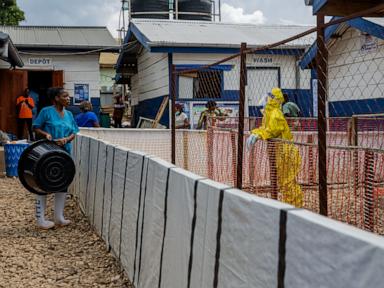
- Rapid isolation and supportive care: Moving suspected and confirmed patients into dedicated treatment units protects other patients and staff while giving the sick person intensive fluid replacement, electrolyte balance, and targeted medical support, which significantly improves survival compared to untreated care.
- Relentless contact tracing: Public health workers interview patients or families to list everyone who had close contact since symptoms began, then monitor those contacts daily for 21 days—the maximum incubation period—so any new fever is caught immediately.
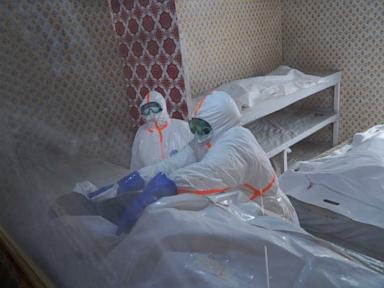
- Safe and dignified burials: Because viral loads can remain high after death and funeral rituals often involve washing or touching the body, trained teams work with families to conduct safe burials that honor cultural respect while breaking transmission chains.
- Honest risk communication: Explaining clearly how the virus spreads—and how it does not—helps people spot warning signs early without falling prey to bogus cures or panicked flight.
Notice what sits underneath all four pillars: time and cooperation. A contact tracer knocking on a door needs the person inside to open it and tell the truth about where they went and who helped care for them.
Seeing Past the Headline
Back in Lagos, the afternoon sun turns the lagoon into hammered brass. Street vendors shout prices over idling engines; ferries cut white wakes across dark water; nurses wash their hands at clinic sinks again and again until their knuckles turn raw.
A headline announcing a country's first Ebola case during a wider regional surge is meant to wake people up. Waking up is good. Staying awake means looking closely at what happens next—not just in ministries and laboratories, but in waiting rooms, family homes, and neighborhood streets where care happens one human being at a time.
A fever can start as a whisper in a crowded room. How a city answers that whisper decides whether it becomes a story of panic—or a test of grit that holds.