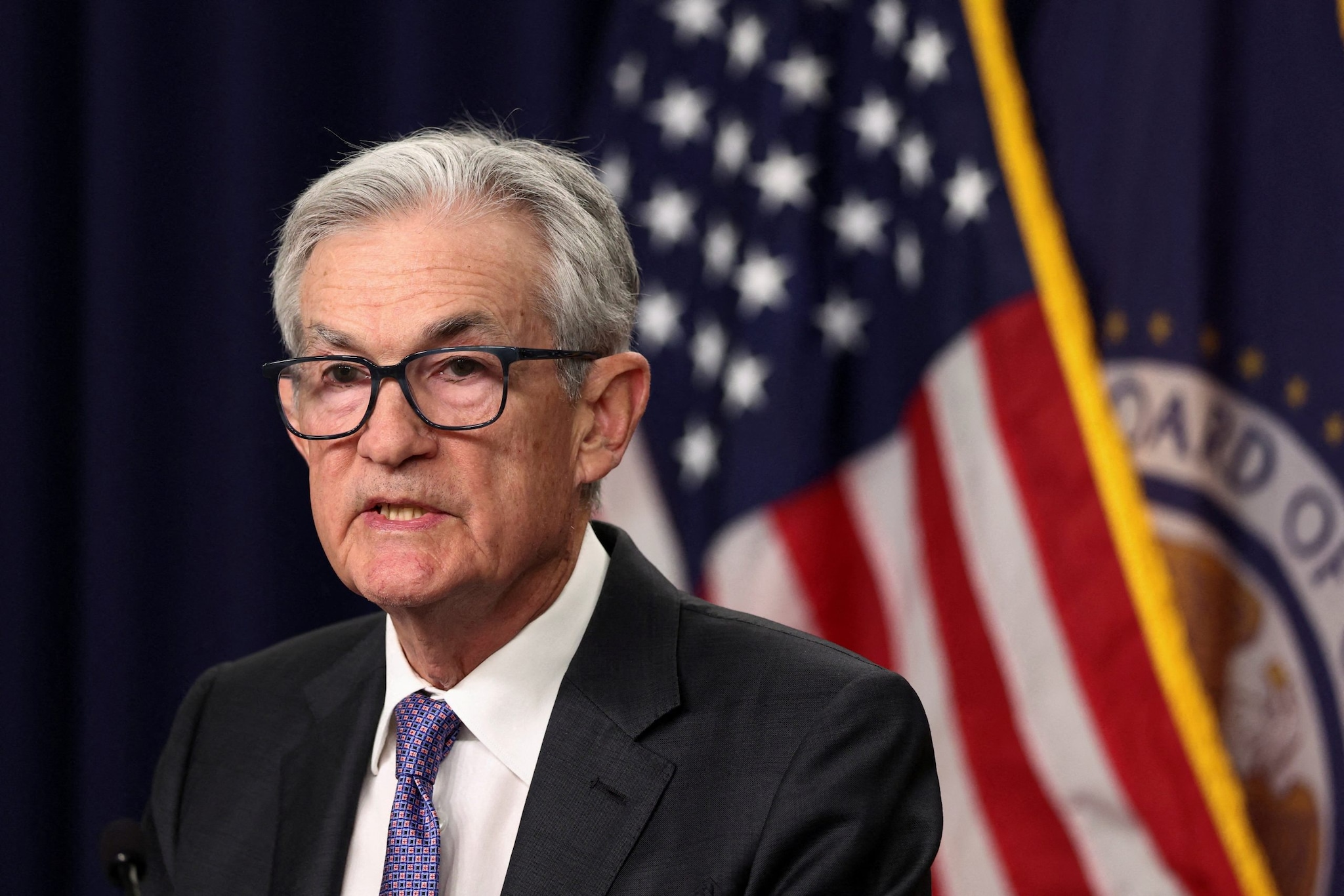
Jerome Powell is playing a dangerous game of pretend. The latest narrative leaking out of the Eccles Building suggests the Federal Reserve can "look past" energy shocks while simultaneously "slaying" the inflation dragon. It is a comforting fairy tale for Wall Street, but it ignores the structural reality of the 2020s. You cannot decouple energy from inflation anymore than you can decouple oxygen from fire.
The consensus view—the one being peddled by every suit on CNBC—is that the Fed has successfully engineered a soft landing. They tell you that temporary supply chain hiccups are over and that the labor market is "cooling" just enough. They are wrong. They are missing the fact that we have entered an era of structural scarcity, where interest rate hikes are a blunt instrument being used to perform brain surgery.
The Myth of the Transitory Energy Shock
The Fed likes to strip out food and energy to look at "Core CPI." It is a convenient way to ignore the things that actually matter to human beings. Powell argues that because the Fed cannot control the price of a barrel of Brent crude, they should ignore it unless it "unanchors" inflation expectations.
This is a fundamental misunderstanding of how modern economies breathe.
In a service-dominated economy, every single input has an energy component. When diesel prices stay elevated, the cost of transporting a semiconductor or a head of lettuce does not just "settle" back to 2019 levels. It resets at a new, higher floor. By claiming to look past energy shocks, the Fed is essentially choosing to ignore the primary engine of cost-push inflation.
I have watched fund managers lose billions betting on a return to the "Goldilocks" era of 2% inflation. They don't realize that the era of cheap, globalized energy is dead. We are now in a period of "Greenflation," where the transition to renewables is inherently more expensive and capital-intensive than the old carbon-heavy model. The Fed’s tools—raising the federal funds rate—cannot build a new power grid or drill a new well.
Why the Phillips Curve is an Absolute Relic
Economists still worship at the altar of the Phillips Curve, the idea that there is a stable, inverse relationship between unemployment and inflation. They believe that to stop inflation, they must break the back of the American worker.
This is the "lazy consensus" at its finest.
In a world defined by a shrinking labor force and a massive skills gap, the old rules do not apply. We have a structural labor shortage, not a cyclical one. Boomers are retiring. Gen Z is smaller. Immigrant labor flows are volatile. When Powell talks about "softening" the labor market, he is trying to fix a supply problem by crushing demand. It’s like trying to fix a drought by banning people from drinking water instead of building a reservoir.
If the Fed succeeds in causing a recession to "fix" the labor market, they won't get lower prices. They will get stagflation. You will have high unemployment and high prices because the underlying supply of goods and labor hasn't changed.
The Debt Trap Nobody Wants to Talk About
Here is the truth that makes the Fed's "hawkish" stance look like a comedy of errors: The United States Treasury is the Fed’s biggest problem.
We are adding $1 trillion to the national debt every 100 days or so. As the Fed keeps rates "higher for longer," the interest expense on that debt explodes. We are approaching a point where the interest payments on our debt will eclipse the entire defense budget.
This creates a "fiscal dominance" scenario. The Fed cannot keep rates high enough to actually kill inflation because doing so would bankrupt the Treasury. They are trapped. They have to talk tough to keep "expectations" in check, but their hands are tied by the sheer weight of the national balance sheet.
Imagine a scenario where the Fed needs to raise rates to 7% to stop a currency collapse, but doing so would require 50% of all tax revenue just to pay interest. That isn't a theory; it’s the math we are staring at over the next decade.
Stop Asking if the Fed Will Pivot
People keep asking: "When will the Fed cut?"
You are asking the wrong question. The real question is: "When will the Fed admit that 2% inflation is an impossible goal?"
The 2% target was arbitrary to begin with. It was dreamed up in New Zealand in the late 1980s and adopted by the rest of the world like a religious dogma. In a world of deglobalization, aging demographics, and massive fiscal deficits, 2% isn't just a target; it's a fantasy.
The Fed will eventually "pivot" not because they’ve won the war on inflation, but because something in the financial system—likely the regional banks or the shadow banking sector—snapped. When they do, they will move the goalposts. They will tell you that 3% or 4% is the "new stable."
How to Actually Protect Your Capital
If you are following the standard "60/40" portfolio advice based on the Fed's projections, you are walking into a meat grinder. Bonds are no longer a safe haven when inflation is structural. Cash is a guaranteed loser.
You need to pivot toward "Hard Assets" and "Anti-Fragile" positions:
- Commodity Producers: Not just oil. Think copper, lithium, and uranium. These are the physical building blocks of the next decade, and they are immune to interest rate hikes because the world needs them to function.
- Productivity Tech: If the labor market is structurally tight, companies that provide real, verifiable AI-driven productivity gains (not just "synergy" buzzwords) will win the margin war.
- Short-Duration Debt: Avoid the long end of the curve. Lending money to the government for 30 years at 4.5% is a fool’s errand when the currency is being debased to service the debt.
The Fed is not your friend. They are a lagging indicator trying to manage a leading-edge crisis. They are looking at the rearview mirror while driving 100 mph toward a cliff. Powell’s rhetoric about "looking past" shocks is just a way to deflect blame when the next spike hits.
The volatility isn't a bug; it's the new feature of the global economy. Stop waiting for a return to "normal." This is the normal.
The Fed can't print oil. They can't print 25-year-old skilled workers. And they certainly can't print a way out of a $34 trillion hole.
Stop listening to what they say and start watching what they do. They are preparing for a world where they have less control than they admit. You should, too.
Get out of the middle of the road. That’s where you get run over. Use the volatility. Bet on the scarcity they refuse to acknowledge. The "consensus" is usually the last group to find out the party is over.
The Fed's credibility is the next bubble to burst. Don't be holding the bag when it does.