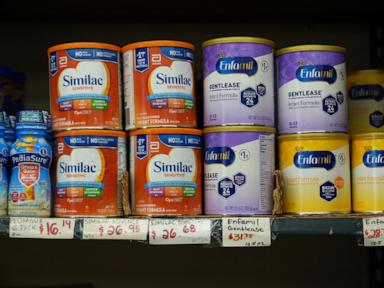
The FDA just gave the American public a collective pat on the head. Following a series of investigations into Cronobacter and lead contamination, the agency released a statement essentially saying: "Don't worry, the formula is safe now."
They are lying by omission.
When a federal agency tells you a product is "safe," they aren't using the dictionary definition of the word. They are using a bureaucratic metric that measures the absence of immediate lethality. They are telling you the powder in the tub probably won't give your child an acute bacterial infection today.
What they aren't telling you is that the very regulatory framework designed to ensure "safety" is the primary reason the American infant formula market is a fragile, stagnant, and nutritionally inferior oligopoly. We have traded innovation for a false sense of security, and our children are paying the price in gut health and developmental milestones.
The Cronobacter Smokescreen
The 2022 formula crisis wasn't a fluke. It was an inevitability. When the FDA shuttered the Abbott Nutrition plant in Sturgis, Michigan, the country spiraled into a shortage that looked like something out of a Soviet-era bread line. The "safety" zealots will tell you this proves we need more oversight.
The reality is the exact opposite.
Excessive, rigid regulation created a moat so deep that only three or four massive players—Abbott, Reckitt, and Nestlé—can afford to swim in it. These companies don't compete on quality; they compete on government contract acquisition (WIC). When you have a captured market, you don't reinvest in state-of-the-art facilities. You milk aging assets until they break.
The FDA’s "safe" stamp of approval is a participation trophy for companies that haven't killed anyone lately. It doesn't account for the slow-motion disaster of metabolic dysfunction caused by corn syrup solids and soy oil—ingredients that are "safe" by FDA standards but are light-years behind the gold standard of human milk.
Europe is Winning and the FDA is Scared
If you want to see what actual safety looks like, look at the black market. Thousands of American parents are "smuggling" European formulas like Holle, Kendamil, and HiPP. Technically, these are unapproved by the FDA because their labels might not list the mineral content in the exact font size required, or they use whole goat milk instead of the highly processed vegetable oil blends favored by US manufacturers.
The FDA frequently issues warnings against these imports, citing "safety concerns" regarding shipping temperatures or labeling. This is protectionism disguised as public health. European standards for prebiotics, the exclusion of certain pesticides, and the use of lactose as a primary carbohydrate source are objectively superior to the "safe" floor set by US regulators.
By banning or obstructing these imports, the FDA isn't protecting infants. It is protecting the market share of domestic conglomerates that are too slow to innovate. We are told to trust the "science," but the science of the FDA is often ten years behind the nutritional science of the rest of the developed world.
The Myth of the "Clean" Facility
The recent "look for contaminants" was a PR stunt. Of course they didn't find much this time; every plant manager in the country was scrubbing floors with a toothbrush because they knew the inspectors were coming.
The problem isn't just the presence of Cronobacter sakazakii. The problem is the sterile-at-all-costs philosophy that ignores the necessity of the infant microbiome. Modern formula is a dead product. It is a chemical approximation of food. While breast milk is a living fluid teeming with beneficial bacteria and $HMOs$ (Human Milk Oligosaccharides), FDA-approved formula is a scorched-earth nutritional profile.
We have spent decades worrying about the 0.0001% risk of a rare pathogen while ignoring the 100% reality that we are feeding infants a diet that lacks the biological complexity required for a robust immune system.
The WIC Stranglehold
You cannot talk about formula safety without talking about the money. About half of all infant formula in the US is purchased through the WIC (Women, Infants, and Children) program. States grant "sole-source" contracts to one manufacturer.
This creates a "winner-take-all" dynamic. If you win the WIC contract for a state like California or Texas, you own the shelf space. Even parents not on WIC buy your brand because it’s the only one the grocery store stocks in bulk.
This kills the incentive for safety-led innovation. Why spend millions on a cleaner, more sophisticated drying process or a better protein-to-whey ratio when your revenue is guaranteed by a government contract? The FDA's safety checks are just the paperwork required to maintain the monopoly.
Stop Asking if it’s Safe, Ask if it’s Adequate
People always ask: "Is my formula brand safe?"
Wrong question.
The question you should be asking is: "Why is my formula permitted to use ingredients that are banned in other developed nations?"
Take a look at the ingredient list on a standard, FDA-cleared tub. You will see:
- Corn Syrup Solids: A cheap carbohydrate that spikes insulin.
- Palm Oil: Linked to decreased calcium absorption and "soap stools."
- Soy Oil: Often hexane-extracted and high in Omega-6 fatty acids which can be pro-inflammatory.
The FDA says these are safe. And they are—if your definition of safe is "the child won't die today." But if your definition of safe involves long-term metabolic health, bone density, and a balanced gut, the current US supply is a failure.
The False Choice of the "Contaminant" Hunt
The FDA’s focus on heavy metals and pathogens is a convenient distraction. It’s easy to measure lead. It’s hard to measure the lost cognitive potential of a generation fed on industrial seed oils and sugar.
By focusing on "potential contaminants," the agency gets to look like a hero for finding nothing. It’s a magician’s trick. Look at the shiny "clean" report while ignoring the list of ingredients that would make a nutritionist cringe.
Imagine a scenario where a car manufacturer is praised for "safety" because their cars don't explode on impact, even though the engines fail after 5,000 miles and the brakes only work half the time. That is the state of the US formula industry.
How to Actually Protect Your Infant
The "status quo" is a trap. If you rely on the FDA to tell you what is best for your child, you are settling for the lowest common denominator.
- Ignore the "FDA Approved" Badge as a Quality Metric: It is a legal requirement, not a gold medal. Look for products that meet or exceed EU standards, specifically those that use lactose as the sole carbohydrate source.
- Demand Intact Proteins: Most "safe" formulas use highly processed proteins. Look for "A2" milk bases or brands that prioritize the integrity of the protein structure.
- Challenge the Pediatrician: Many doctors recommend the big brands because those brands provide the free samples and the funding for their conventions. Ask for the clinical data on the specific fat blends used in the formula they suggest.
The agency's latest report isn't a victory for public health. It’s a victory for the legal departments of three major corporations. They get to keep their "safe" label, the government gets to stop answering hard questions about the 2022 collapse, and the American consumer stays in the dark.
Safety isn't just the absence of poison. It is the presence of the building blocks for life. The FDA has mastered the former and completely abandoned the latter.
Stop waiting for a federal agency to validate your choices. Their "safe" is not your "healthy."
The tub of powder in your pantry is a product of a broken system that prioritizes logistics over longevity. If you want better for your child, stop looking at the FDA's press releases and start looking at the back of the label. The truth isn't in the "all-clear" signal from Washington; it’s in the ingredient list they’re hoping you’re too tired to read.