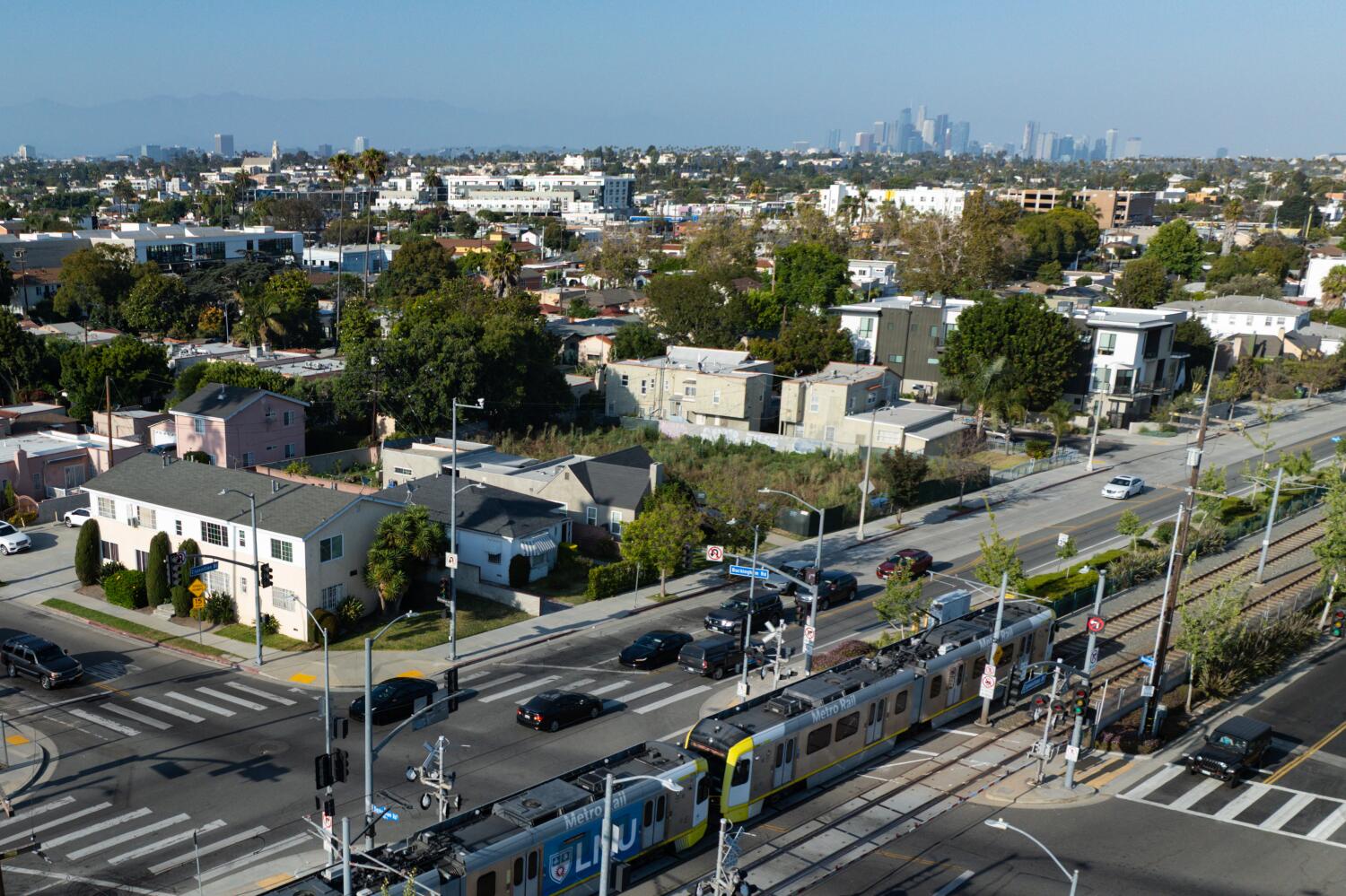
The interactive maps flooding your feed today are selling a fantasy. Local newsrooms and housing advocates are celebrated the activation of California Senate Bill 79, tracking the half-mile radii around transit stops as if they represent a sudden, explosive surge in housing production. They call it the end of exclusionary zoning. They treat it like a frictionless transition into high-density urbanism.
They are dead wrong.
Zoning maps do not build housing. Capital, labor, and localized municipal resistance build housing. By treating SB 79 as an automatic victory that overrides local authority across California’s urban transit counties, the mainstream narrative ignores the structural mechanisms that cities use to neutralize state laws. The reality of transit-oriented development on July 1, 2026, is a story of bureaucratic evasion, broken developer pro-formas, and regulatory friction.
The Illusion of State Preemption
The lazy consensus around SB 79 assumes that because the state has mandated height maximums up to 95 feet and densities up to 160 units per acre near Tier 1 transit stations, local planning departments are forced to comply. This view misunderstands how municipal attorneys operate. The statute itself includes a massive compromise: the Transit-Oriented Development Alternative Plan.
Look at San Francisco. Instead of adopting the state’s default zoning overrides across three-quarters of its parcels, the city introduced a locally tailored alternative plan. They permanently excluded massive industrial employment hubs from the law. They applied temporary exemptions to over 32,000 parcels designated as low-resource areas, deferring any real zoning changes until 2032.
When a city utilizes an Alternative Plan, they only have to prove that their net zoned capacity matches the state's baseline targets on paper. They can shift density requirements away from wealthy, high-resource neighborhoods where opposition is fierce, dumping the hypothetical unit capacity onto parcels that are economically unviable or physically impossible to develop.
Imagine a scenario where a municipality preserves a low-density historic district by doubling the allowed density on a narrow strip of land sandwiched between an active rail corridor and a chemical storage facility. On paper, the net capacity balances out. In the physical world, zero units get financed. The state gets its statutory compliance, the city preserves its status quo, and the housing crisis remains untouched.
The Pro-Forma Death Spiral
Even where cities accept the default state standards without resistance, the underlying economics of SB 79 are broken. The law dictates maximum allowable densities, but it does not dictate construction costs or interest rates.
To achieve the higher tiers of density permitted under the law, developers must build mid-rise structures. In California, pushing past five stories transitions a building from wood-frame construction (Type V) to steel and concrete (Type I or Type III). The cost per square foot escalates dramatically the moment you break that threshold.
Cost Threshold Breakdown
- Wood-Frame (Type V): Economical, fast to build, limited to 4-5 stories.
- Concrete/Steel (Type I): High material costs, specialized labor required, necessary for true mid-rise density.
Furthermore, SB 79 dictates that any project exceeding 85 feet in height must comply with the strict labor standards of SB 423. This requires developers to use a "skilled and trained" workforce or pay prevailing wages. In major urban centers like Los Angeles or Oakland, requiring prevailing wage standards instantly inflates hard construction costs by 20% to 30%.
When you combine a 30% labor premium with current financing costs, the required rent to break even on a new development pushes far past what the local market can bear. I have reviewed development portfolios where projects utilizing state-mandated overrides were mothballed before the architectural drawings were even finished. The math simply does not work.
The Affordability Mandate Paradox
Housing advocates champion the inclusionary requirements built into SB 79. For projects with ten or more units, the law mandates specific carve-outs for low-income households:
- 7% restricted to extremely low-income households, OR
- 10% restricted to very low-income households, OR
- 13% restricted to lower-income households.
This sounds like a victory for equity. In practice, it acts as an unofficial tax on market-rate units. Private developers do not absorb the cost of below-market-rate units out of altruism; they subsidize them by raising prices on the remaining market-rate inventory.
When a project is already facing high labor costs under the SB 423 threshold, adding a 10% un-subsidized affordable housing requirement destroys the project's internal rate of return. Institutional investors require a predictable yield to justify the risk of California real estate. If the yield drops below the risk-free rate of treasury bonds, the capital leaves the state. The result is the ultimate irony: a law designed to create affordable housing near transit ensures that no housing is built at all.
Why Developers Prefer Local Schemes
The media treats SB 79 as the only game in town. They ignore the fact that developers in California’s most progressive jurisdictions already have better options.
Consider San Diego. The region contains dozens of transit stations eligible for SB 79 zoning. However, the City of San Diego already operates its own Sustainable Development Areas program. The local program provides density bonuses and development incentives that far outpace what the state is offering under SB 79, without triggering the same state-level labor mandates or rigid compliance frameworks.
Developers choose the path of least resistance. They will not choose a controversial, litigious new state program when they can use an established, predictable local density bonus. The properties highlighted on popular SB 79 maps are already covered by superior local incentives, making the new law redundant in the very markets where it is needed most.
The Infrastructure Blind Spot
The final systemic failure of the SB 79 implementation is the total disconnection between land-use zoning and infrastructural capacity. State law can declare that a parcel is now zoned for 100 units per acre, but the state cannot magically expand the diameter of a subterranean sewer line.
Cities like Glendale formally opposed the bill during its legislative push because the state overrides fail to account for localized infrastructure constraints. If a developer attempts to use SB 79 to build an 80-unit apartment building on a lot previously occupied by a single-family home, they must connect to a local grid designed in the 1950s.
When the local utility provider informs the developer that they must personally finance a million-dollar upgrade to the neighborhood water main to achieve adequate fire-suppression pressure, the project dies. The state zoning law provides no funding mechanism for these upgrades. It simply drops a theoretical supply mandate onto a fragile physical network and walks away.
Stop looking at the colorful maps showing where mid-rise housing is suddenly legal. If you want to know where housing will actually be built, close the zoning maps and look at the municipal bond measures for infrastructure, the localized labor union agreements, and the alternative plans quietly passing through city councils. Everything else is pure performance.