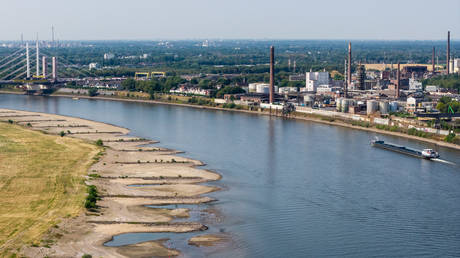
The headlines drop like clockwork every August. A heatwave bakes the continent. Rivers run warm. Thermometers cross forty degrees Celsius. And the mainstream energy press rolls out the exact same tired panic piece: nuclear plants are powering down because it is simply too hot.
The lazy consensus writes itself. Green energy advocates point to the cooling towers, shake their heads, and argue that splitting atoms belongs in a cooler century. Critics claim that climate change renders thermal generation obsolete.
They are wrong. Dead wrong.
I have watched analysts look at a localized reactor derating and declare the entire nuclear paradigm dead, completely missing the engineering reality on the ground. Power reductions during a heatwave are not a fatal design flaw. They are a feature of strict physics and aggressive safety margins designed by paranoid engineers who planned for the worst-case scenario decades ago.
When a nuclear reactor throttles back its output because river water temperatures spike, it is not collapsing under pressure. It is obeying environmental laws and thermodynamic limits by choice. Contrast this with gas and coal plants that quietly bypass ecological regulations, or wind and solar installations that drop to absolute zero output during high-pressure atmospheric stagnant heat domes when electricity demand hits all-time peaks.
Let us look at the actual mechanics.
The Thermodynamic Reality Nobody Understands
Every thermal power plant—coal, gas, nuclear, biomass—is a heat engine. It operates on the Rankine cycle. You boil water, push high-pressure steam through a turbine, and condense the exhaust steam back into liquid water using a secondary cooling loop.
The efficiency of this conversion depends on the temperature difference between the hot source and the cold sink. The cold sink is whatever body of water sits next to the plant—a river, a lake, or the ocean.
When a summer heatwave arrives, the ambient air and the river water warm up. The temperature delta shrinks. Thermodynamics dictates that your thermal efficiency drops. If you push the same amount of heat through a system with a warmer sink, internal pressures rise, and components strain.
Furthermore, environmental regulations restrict the temperature at which water can be discharged back into a river. If a power plant takes in water at twenty-five degrees and heats it up by ten degrees, the outflow hits thirty-five degrees. That might cook local fish populations, disrupt aquatic ecosystems, and violate EU environmental directives.
So, what do nuclear plant operators do? They dial back power generation. They derate the plant by ten to twenty percent.
This is not a system failure. This is a deliberate, highly regulated operational adjustment. The safety systems are working precisely as intended.
The Double Standard of the Energy Transition
Here is where the conventional narrative falls apart into rank hypocrisy.
When a nuclear plant drops output by fifteen percent during a record heatwave, it makes front-page news. Pundits treat it as an existential crisis.
Meanwhile, during that exact same heatwave, what happens to wind and solar?
High-pressure heat domes bring clear skies, zero wind, and brutal heat. Solar panels lose conversion efficiency as their internal silicon temperatures soar—panels actually generate less electricity on a blazing hot summer afternoon than they do on a crisp, clear spring day. Wind turbines sit completely motionless because high-pressure stagnation kills wind speeds.
The grid loses gigawatts of renewable generation overnight, forcing grid operators to fire up dirtier peaker gas plants to keep air conditioners running. Yet nobody writes breathless exposés about how a heatwave destroys solar power.
Nuclear power running at eighty-five percent capacity during a historic heatwave is still producing massive, reliable, baseload electricity. A wind farm producing zero percent capacity during that same heatwave is treated as business as usual.
That is not logic. That is cognitive bias.
The Engineering Solutions We Refuse to Fund
We need to talk about why nuclear plants face these restrictions in the first place. Most European reactors rely on once-through cooling systems. They pull water from a river, pass it through condensers, and return it. It is cheap and efficient, but it ties the plant's operational capacity to local hydrological conditions.
The alternative exists. It is called closed-loop cooling using hyperbolic cooling towers.
Drive past a modern nuclear installation with massive concrete cooling towers, and you will notice something interesting: they rarely derate during heatwaves. Why? Because the water evaporates into the atmosphere inside the tower rather than dumping massive amounts of thermal energy directly back into a local river.
France and other European nations built many of their nuclear fleets decades ago near major rivers for easy once-through access. Retrofitting every single legacy plant with closed-loop systems or auxiliary cooling ponds costs billions of euros.
Governments balk at the capital expenditure. They prefer to subsidize intermittent patches rather than invest in heavy engineering upgrades for carbon-free baseload power. Then, when a summer heatwave forces a temporary output cut, those same governments act surprised.
We are starving resilient infrastructure of capital and then blaming the infrastructure for buckling under the artificial scarcity we created.
The People Also Ask Fallacy
If you type nuclear power heatwave into any search engine, the autofill questions reveal a deep misunderstanding of how the grid actually operates.
"Do nuclear power plants close down during heatwaves?"
No. They rarely shut down entirely. They derate. They reduce output to comply with thermal discharge limits and maintain safety margins. Framing this as a shutdown is a deliberate distortion used to push anti-nuclear agendas.
"Is nuclear energy too vulnerable to climate change?"
Every form of energy generation is vulnerable to climate change. Hydroelectric plants face severe output drops during droughts when reservoirs empty. Solar panels degrade faster under extreme UV and heat stress. Fossil fuel transport lines freeze or buckle. Nuclear power is actually among the most resilient, provided it has access to diverse cooling sources like coastal seawater or closed-loop towers.
The question should not be whether nuclear energy is vulnerable to heatwaves. The question is why we expect zero-emission baseload power to operate under archaic regulatory frameworks while fossil fuels get a pass to warm rivers without consequence.
What Real Energy Security Looks Like
I have watched corporate boards and state energy agencies panic over short-term weather anomalies while ignoring long-term systemic risk.
If Europe wants true energy independence and deep decarbonization, the playbook is clear.
First, stop penalizing nuclear operators for following environmental rules during hot weather. Update regulatory frameworks to allow dynamic thermal mixing zones under strict ecological monitoring, or fund the immediate construction of closed-loop cooling infrastructure.
Second, stop treating nuclear power as an aging relic. Build next-generation reactors—Small Modular Reactors and Generation IV designs—that utilize high-temperature gas cooling, lead-bismuth eutectic, or supercritical carbon dioxide Brayton cycles. These systems do not rely on local river water at all. They can operate effectively in the middle of a desert.
Third, stop pretending that an energy system can run on optimism and weather forecasts.
When the next heatwave rolls across the continent, the lights will stay on because of the nuclear fleet—even when it is running slightly below peak capacity.
The heatwave didn't break nuclear power. It broke the narrative of those who tried to sell you an easy, intermittent fantasy.
Stop complaining about the cooling towers. Build better ones.


