The prevailing narrative regarding climate change and European health is a masterpiece of selective data. We are told, with increasing frequency and volume, that rising temperatures are paving the way for a public health catastrophe. The standard story focuses on heatwaves, "tropical" diseases creeping north, and a continent ill-equipped for a warmer world. It is a compelling, frightening, and largely incomplete picture that ignores the most basic epidemiological reality of the European continent: cold kills significantly more people than heat, and it will continue to do so for the foreseeable future.
The Misleading Arithmetic of Heatwaves
Mainstream reports obsess over "excess deaths" during summer spikes. They point to the 2003 or 2022 heatwaves as evidence of a new, deadlier era. This is an exercise in focusing on the flame while the house is freezing. When you actually look at the longitudinal data—the kind that doesn't make for a catchy 30-second news segment—the disparity is staggering.
In Europe, deaths related to cold weather outpace heat-related deaths by a factor of roughly ten to one. According to a massive study published in The Lancet Planetary Health, which analyzed over 68 million deaths across Europe from 2000 to 2019, cold contributed to roughly 200,000 deaths annually, while heat accounted for about 20,000.
If the goal is to save lives, the obsession with the 2°C rise in summer peaks is a distraction from the much larger, more preventable toll taken by winter troughs. As winters become milder due to global warming, the reduction in cold-related mortality is actually outpacing the increase in heat-related mortality in many regions. This isn't a "silver lining"—it's the primary statistical reality. Yet, you won't see a headline screaming: "Milder Winters Save Thousands of Pensioners Across the EU." It doesn't fit the established aesthetic of the crisis.
The Vulnerability Vacuum
The common argument suggests that because Europe isn't "used" to heat, we are uniquely vulnerable. This ignores the concept of physiological and structural adaptation. Humans are remarkably good at adjusting to a new baseline.
The danger isn't the temperature itself; it's the lack of infrastructure and the persistence of poverty. The "health crisis" often blamed on climate change is frequently a crisis of energy policy and housing. When people die in a Paris heatwave, it’s often because they are living in top-floor zinc-roofed apartments with zero ventilation—remnants of 19th-century urban planning—not because the thermostat hit 38°C.
Conversely, the most cold-related deaths don't happen in the frozen north of Finland or Sweden. They happen in the Mediterranean. Countries like Portugal, Spain, and Greece consistently show higher rates of cold-related mortality than Scandinavia because their homes are built like sieves and their populations cannot afford to heat them. If you want to fix European health, stop buying carbon offsets and start insulating the social housing in Lisbon.
The "Tropical Disease" Boogeyman
Another favorite trope of the alarmist press is the arrival of West Nile virus, Dengue, and Malaria in the heart of Europe. The implication is that a warming climate is "inviting" these diseases in. This is a fundamental misunderstanding of history and biology.
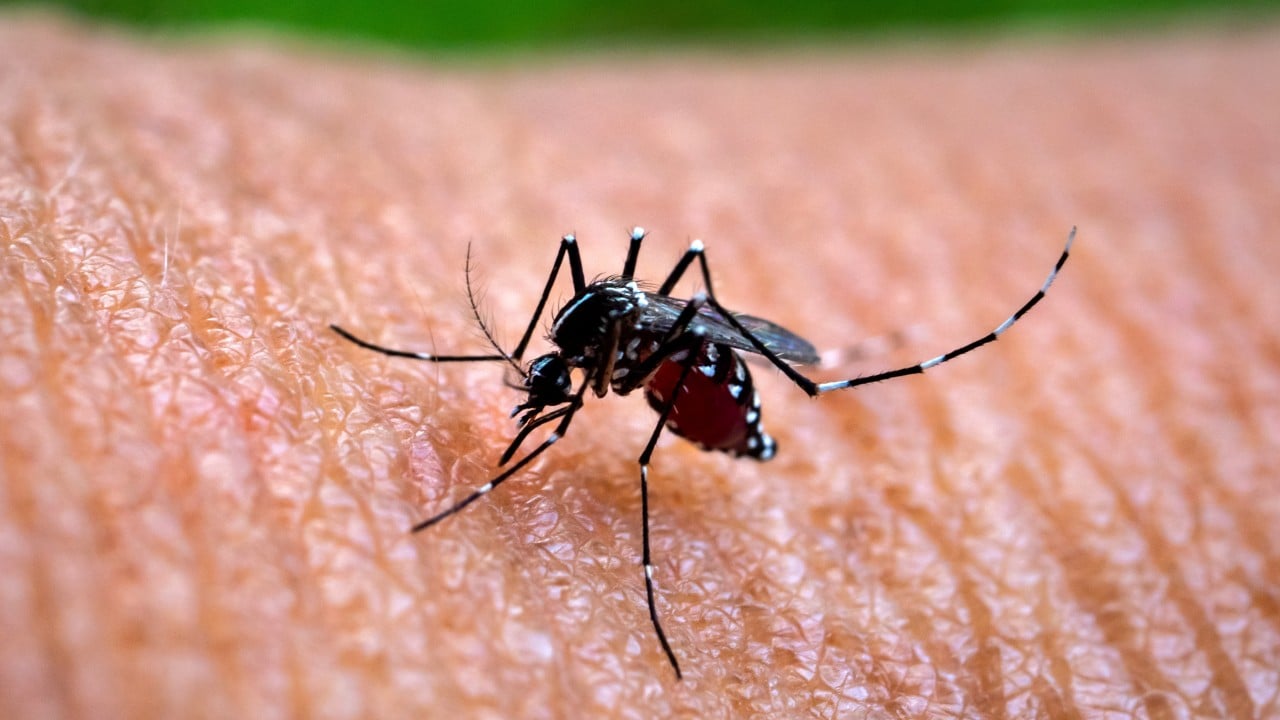
Malaria was endemic in Europe for centuries. It wasn't "driven out" by a cooling climate; it was eradicated by drainage, pesticides, and better living standards. It thrived in the Roman marshes and the English fens during periods that were significantly cooler than today. The presence of a vector—the Aedes albopictus mosquito—does not automatically lead to an epidemic. An epidemic requires a breakdown in public health infrastructure, a lack of screening, and poor vector control.
Linking a few dozen cases of Dengue in France directly to global warming is a neat trick that absolves local governments of their failure to manage standing water or maintain surveillance programs. It’s easier to blame the sun than a budget cut in the sanitation department.
The Energy Poverty Paradox
Here is the inconvenient truth that industry insiders whisper: the very policies meant to "combat" climate change are often the biggest threats to public health in the short term. By aggressively driving up the cost of energy to transition away from fossil fuels, Europe has created an epidemic of energy poverty.
When a retiree in Berlin or Birmingham is forced to choose between a hot meal and turning on the radiator, their risk of cardiovascular and respiratory failure spikes. The physiological stress of a 12°C living room is a much more consistent killer than a week-long heatwave in July. By focusing exclusively on "decarbonization" without a pragmatic bridge for energy costs, we are trading a hypothetical future threat for a very real, immediate body count.
Imagine a scenario where we spend the next decade subsidizing expensive, intermittent energy sources while the price of heating a home triples. We might succeed in shaving 0.1 degrees off the global temperature average by 2050, but we will have killed tens of thousands of vulnerable citizens in the process through exposure and economic hardship. This is not a "holistic" approach; it's a tunnel-visioned catastrophe.
The Real Risks Nobody Mentions
While everyone looks at the thermometer, they are missing the actual stressors. The real climate-health nexus in Europe isn't heat; it’s the disruption of the agricultural supply chain and the resulting nutritional decline.
Europe’s health is built on a stable, predictable food system. If shifting weather patterns lead to repeated crop failures in the "breadbaskets" of the continent, the resulting inflation in food prices will do more damage to public health than any heatwave ever could. Malnutrition and the stress of food insecurity are the true silent killers. Yet, the conversation remains stuck on how many days a year we might need an air conditioner.
The Adaptation Deficit
We have become a society that prefers "mitigation" (trying to stop the climate from changing) over "adaptation" (learning to live with it). This is a fatal mistake. The climate is changing—that is an objective reality. But the "health crisis" associated with it is largely a failure of imagination and engineering.
If Europe adopted the cooling technologies common in the Middle East or the American South, the mortality rate from heat would plummet to near zero. If we prioritized the thermal efficiency of our building stock, the winter death toll would vanish. Instead, we spend our political capital on grand, symbolic gestures that do nothing for the person currently suffering from heatstroke in a London flat or hypothermia in a Madrid suburb.
Stop Asking the Wrong Questions
The media asks: "How many will die from the heat?"
The right question is: "Why are our cities still designed for the 1800s?"
The media asks: "When will Malaria return?"
The right question is: "Why are we neglecting basic mosquito control and sewage management?"
The media asks: "How do we stop the warming?"
The right question is: "How do we make energy cheap enough so that no one ever has to freeze or swelter again?"
The current discourse is a comfortable lie. It allows us to feel righteous by blaming a global phenomenon for what are, in reality, local failures of policy, architecture, and economics. If you want to improve the health of Europeans, ignore the apocalyptic headlines. Focus on the insulation in the walls, the price of the power grid, and the robustness of the local clinic.
The greatest threat to European health isn't a warming planet. It’s an aging population trapped in inefficient buildings, governed by people who would rather fight a crusade against the weather than fix the plumbing.
Stop panicking about the heat. Start worrying about the cost of staying warm.