The containment of an Ebola virus disease outbreak along the border of the Democratic Republic of the Congo and Uganda depends on a single variable: the ratio of transmission velocity to institutional response time. When viral replication outpaces public health mobilization, localized spillover events transform into systemic regional crises. Assessing whether the current outbreak will spread further requires moving past generalized panic and analyzing the specific structural friction points across the geographic, behavioral, and logistical vectors of the Albertine Rift.
Viral containment is dictated by a specific mathematical tension. The basic reproduction number ($R_0$) must be driven below 1.0 through targeted interventions before the pathogen breaches high-mobility transit corridors. In the borderlands of North Kivu, Ituri, and western Uganda, this calculation is complicated by armed conflict, dense informal trade networks, and variable healthcare infrastructure.
The Three Vectors of Spatial Diffusion
Predicting the geographic trajectory of an Ebola outbreak requires breaking down transmission into three distinct operational vectors: porous border dynamics, healthcare-seeking behavior, and nosocomial amplification loops.
Porous Border Dynamics and Informal Transit Corridors
The international border separating the Democratic Republic of the Congo (DRC) and Uganda is a administrative fiction overridden by economic reality. Formal points of entry capture only a fraction of total cross-border migration.
- Agricultural and Trade Flows: Agricultural workers, merchants, and smugglers utilize hundreds of unofficial crossing points along the shared border daily. This creates a continuous, unmonitored human conveyor belt.
- The Screening Bypass: Formal health screening measures—such as infrared thermography and visual symptom checks—are easily bypassed via these informal routes. Consequently, an infected individual in the incubation period can cross from an active zone in the DRC into a major Ugandan trading hub like Kasese or Mpondwe without detection.
- Asymptomatic Mobility: The incubation period for Ebola ranges from 2 to 21 days. During this window, individuals are asymptomatic and non-infectious, yet highly mobile. This creates a geographic lag between the moment of exposure and the initiation of contact tracing at the destination.
Healthcare-Seeking Behavior and Community Resistance
The second vector involves how symptomatic individuals interact with available medical networks. In regions defined by long-standing political marginalization and conflict, institutional health systems face deep public distrust.
- Alternative Therapeutic Pathways: When early symptoms emerge—such as fever, fatigue, and muscle pain, which closely mimic malaria or typhoid—individuals frequently seek care from traditional healers or local drug shops rather than centralized Ebola Treatment Centers (ETCs).
- The Isolation Deterrent: Centralized isolation protocols often spark community resistance. Forcibly removing an individual from their family unit, combined with the high mortality rates observed inside early-stage treatment centers, can cause communities to view ETCs as destinations for death rather than recovery. This perception drives cases underground, leading to clandestine home-based care that accelerates household transmission.
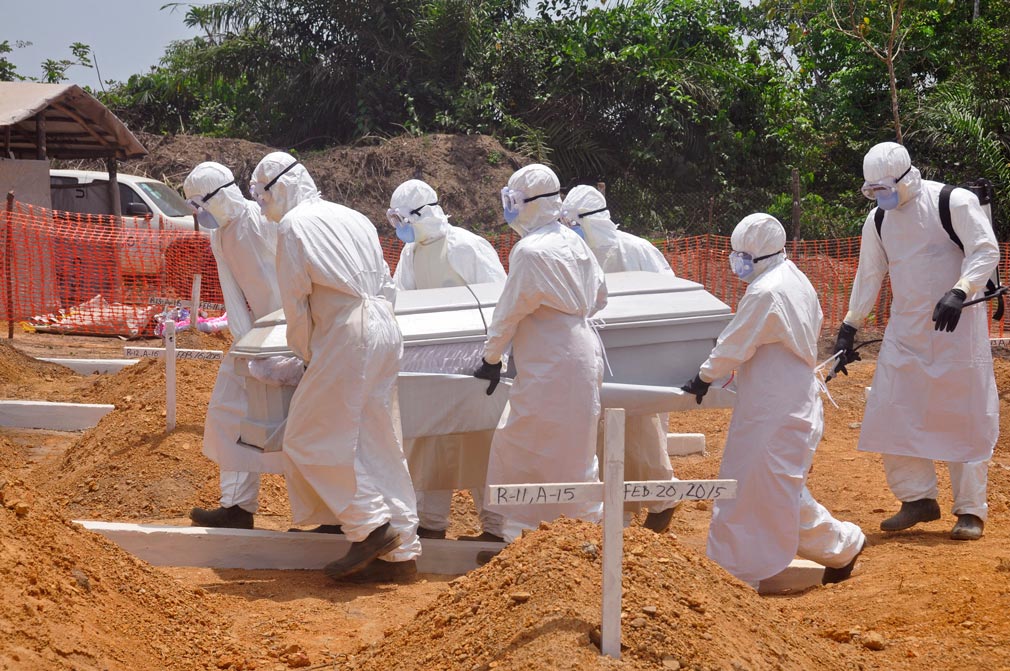
- Safe Burial Friction: Traditional funeral practices involving direct contact with the deceased conflict directly with safe burial protocols. Because viral load peaks in the corpse immediately after death, traditional washing and preparation rituals serve as highly efficient amplification events.
Nosocomial Amplification Loops
The final vector occurs within the healthcare system itself. Rural health clinics along the border zones frequently lack the fundamental inputs required to prevent institutional amplification.
- Infrastructural Deficits: The absence of consistent running water, reliable electricity, and personal protective equipment (PPE) transforms local clinics into transmission hubs. A single misdiagnosed Ebola case treated in a general ward can infect multiple healthcare workers, immediately crippling the local response capacity.
- The Sentinel Failure: When frontline medical staff lack the training or diagnostic tools to differentiate Ebola from endemic febrile illnesses, the sentinel surveillance network fails. The outbreak then amplifies silently within the facility before an institutional alert is triggered.
The Logistical Friction Function
The speed at which a public health response can suppress an outbreak is constrained by a clear logistical bottleneck. The operational timeline can be broken down into three distinct phases: Detection Lag, Mobilization Interventions, and Ring Vaccination Efficiency.
Total Response Time = Detection Lag + Mobilization Interventions + Ring Vaccination Efficiency
Phase 1: Detection Lag
The time elapsed between patient zero's symptom onset and definitive laboratory confirmation determines the initial size of the transmission chain. In remote areas of Ituri or North Kivu, sample transport introduces severe delays. Transporting a blood sample from a rural clinic to a reference laboratory equipped with Real-Time Polymerase Chain Reaction (RT-PCR) capabilities can take 48 to 72 hours due to poor road conditions and security threats. During this window, contact tracing cannot officially begin.
Phase 2: Mobilization Interventions
Once an outbreak is confirmed, deployment speed is dictated by security and topography. The presence of active rebel groups in eastern DRC requires health workers to travel with armed escorts, which slows down deployment and limits access to specific zones. If an area becomes inaccessible due to active conflict, tracking transmission chains becomes impossible, creating blind spots where the virus can multiply unchecked.
Phase 3: Ring Vaccination Efficiency
The deployment of the rVSV-ZEBOV vaccine relies on a highly demanding cold chain infrastructure. The vaccine must be stored at temperatures between $-80^\circ\text{C}$ and $-60^\circ\text{C}$. Maintaining this ultra-cold chain in tropical environments with unreliable power grids requires a complex logistical footprint, including specialized generators, portable super-freezers, and continuous fuel supplies.
Any breakdown in this cold chain compromises vaccine efficacy, reducing the biological barrier needed to halt the outbreak. Furthermore, ring vaccination requires rapid, comprehensive identification of all primary contacts and contacts-of-contacts. If stigma or fear causes contacts to self-isolate away from health authorities, the ring breaks, and the virus escapes containment.
Comparative Epidemiological Risk Profiling
The probability of further regional spread depends heavily on which specific strain of the virus is driving the outbreak. The two primary variants responsible for historical outbreaks in this region exhibit distinct epidemiological profiles that alter the containment strategy.
| Epidemiological Variable | Zaire Ebolavirus Variant | Sudan Ebolavirus Variant |
|---|---|---|
| Historical Case Fatality Rate | Approximately 60% to 90% | Approximately 40% to 60% |
| Medical Countermeasures | FDA-approved vaccines (rVSV-ZEBOV) and monoclonal antibody treatments (Inmazeb, Ebanga) available. | No widely deployed, fully licensed vaccine; candidate vaccines exist but require reactive clinical trial deployment. |
| Transmission Dynamics | High viral load in bodily fluids leads to rapid nosocomial and household amplification. | Similar transmission pathways, but lower overall mortality can lead to delayed detection due to milder initial presentations. |
| Diagnostic Infrastructure | Widely integrated into regional GeneXpert networks across DRC and Uganda. | Requires specific assay adjustments; potential for initial false negatives if non-specific targets are used. |
The presence of the Zaire variant allows the deployment of highly effective tools, such as targeted ring vaccination and proven therapeutics, which significantly lowers the risk of large-scale, uncontrolled geographic spread. Conversely, an outbreak driven by the Sudan variant carries a higher risk of turning into a prolonged, distributed epidemic. Without an instantly deployable, pre-stockpiled vaccine, containment must rely entirely on traditional, non-pharmaceutical interventions: strict isolation, contact tracing, and community behavioral modification.
Strategic Countermeasures for Regional Containment
To prevent the current outbreak from escalating into a cross-border crisis, public health authorities must shift from a reactive posture to a predictive, decentralized intervention strategy.
Decentralized Diagnostic Architecture
Relying on distant centralized reference laboratories creates dangerous delays that fuel transmission. The response must deploy GeneXpert Omni or similar point-of-care molecular diagnostic platforms directly to border screening posts and high-risk rural clinics. Shifting the diagnostic timeline from days to hours allows for immediate isolation and contact tracing, which stops potential amplification events before they can gain momentum.
Cross-Border Data Integration
Epidemiological surveillance cannot stop at national borders. Uganda and the DRC must establish a shared, real-time digital dashboard for contact tracing. When a high-risk contact crosses the border, health authorities on the receiving side must receive an automated alert with the individual's profile and last known transit trajectory. This integrated data flow closes the information gap created by informal cross-border migration.
Community-Led Isolation and Trusted Care Networks
To overcome public distrust and eliminate the hidden household transmission vector, the isolation model must change. Instead of relying solely on large, intimidating centralized ETCs, authorities should establish smaller, community-supported isolation units managed in partnership with local healthcare workers and trusted leaders. Providing transparent, open-access facilities where families can safely view their relatives reduces fear and encourages early self-reporting.
Targeted Security and Health Correlations
In conflict zones, health interventions must be decoupled from visible military operations to preserve neutrality. Securing transit corridors for medical supplies and personnel should be coordinated through local community networks and non-aligned humanitarian actors rather than highly visible state military escorts. This shift protects the neutrality of health workers and reduces the risk of targeted attacks on medical infrastructure.
The containment of the current outbreak will not be achieved through top-down enforcement or generalized public announcements. Success depends entirely on minimizing the time it takes to detect and isolate cases, maintaining a rigorous cold chain in challenging terrain, and establishing data transparency across border checkpoints. If these operational interventions are deployed quickly, the outbreak can be contained within its current boundaries. If logistical friction and community distrust continue to delay responses, further regional spread is inevitable.