Silence.
That is the first thing you notice when a lecture hall loses its purpose, not the shouting of protestors or the gavel of a judge, just the heavy, humid quiet of a room where forty chairs stay pushed neatly under scarred wooden tables. For a closer look into this area, we suggest: this related article.
I spent three years walking the steep, rain-slicked concrete paths of the University of Hong Kong’s Pok Fu Lam campus, carrying a canvas bag bruised at the corners by heavy casebooks. Back then, the Faculty of Law felt like a pressure cooker powered by caffeine and stubborn idealism. You could hear debates spilling out of the Cheng Yu Tung Tower elevators at midnight—arguments over common law precedents, constitutional
We were wrong. For additional details on this topic, detailed reporting can be read on The New York Times.
In late 2024, news broke with the quiet, bureaucratic thud that characterizes most institutional retreats. The University of Hong Kong placed its long-running course on human rights in China on hold, right as the Faculty of Law’s dean stepped down from leadership. To an outsider skimming a three-paragraph wire report, it looks like routine administrative housekeeping. A syllabus paused. An executive transition. A scheduling quirk in an academic calendar.
Look closer, though, and you see the architecture of a vanishing act.
The Architecture of a Vanishing Act
To understand why a single postponed seminar matters, picture a hypothetical third-year law student—let us call her Mei—sitting at her desk in a cramped Kowloon apartment at two in the morning. Mei is not a firebrand activist. She wants to pass her exams, secure a training contract at a commercial firm, and help her parents pay off their flat. Yet on her screen sits the course catalog for the upcoming semester, and the line item she circled in red ink six months ago—Human Rights in China—has simply evaporated from the active timetable.
Nobody kicked down Mei’s door. Nobody confiscated her textbooks.
Instead, a committee met, a dean resigned, and a course quietly entered administrative limbo. This is how modern censorship works in elite institutions; it rarely arrives wearing boots. It arrives wearing a lanyard, carrying a clipboard, and citing staffing shortages or curriculum reviews. When the leadership of Hong Kong’s oldest law school shifts at the exact moment its most politically sensitive seminar goes dark, the message travels faster through the hallways than any official decree ever could.
Consider what happens next: a professor revising a reading list hesitates over a footnote about labor rights in Guangdong. A visiting scholar from London decides not to apply for a fellowship because the intellectual weather feels too unpredictable. A student like Mei deletes a draft dissertation proposal on constitutional review and writes about cross-border mergers instead.
Self-censorship does not require a censor. It only requires a precedent.
Why One Syllabus Held the Line
For decades, the University of Hong Kong occupied an extraordinary, almost improbable niche in global legal education. Founded in 1911, its law faculty trained the judges, barristers, and civil servants who built Hong Kong’s reputation as Asia’s premier legal hub. While mainland Chinese universities taught law through the prism of state governance and party supremacy, HKU operated under the common law tradition—a system built on adversarial debate, independent courts, and the radical idea that the state itself can be hauled before a magistrate and told no.
Teaching human rights in China inside that specific building was never an academic vanity project. It was an act of intellectual translation.
Think of a double-paned window separating a freezing winter storm from a warm living room. Between the two sheets of glass sits a thin cushion of trapped air—the insulating layer that keeps the frost from creeping inward and the heat from escaping out. For thirty years, HKU’s comparative legal courses were that pocket of air. Scholars could analyze Beijing’s constitutional framework, examine the gap between statutory promises and courtroom reality, and debate international covenants without having to whisper.
I remember sitting in a seminar room overlooking the harbor a decade ago, listening to a visiting lecturer dissect China’s 1982 Constitution. He pointed out that Article 35 explicitly guarantees citizens freedom of speech, assembly, and association—words every bit as sweeping as the American First Amendment. Then he spent ninety minutes showing us how administrative detention, state security statutes, and party oversight hollowed those words out from the inside. Nobody in that room was plotting a revolution. We were doing what lawyers are trained to do: reading the text, testing the load-bearing walls, and asking where the structure cracks under weight.
Take away that classroom, and you do not just deprive students of three academic credits. You shatter the insulating glass.
The Invisible Mechanics of Institutional Retreat
When people ask how academic freedom dies in a world-class university, they usually imagine a dramatic purge—professors marched out of offices, libraries stripped of banned volumes. History shows the reality is far more banal, and far harder to fight.
Following the enactment of Hong Kong’s National Security Law in 2020 and the subsequent passage of Article 23 legislation in 2024, the legal ground beneath the city’s eight publicly funded universities shifted permanently. The new statutes criminalized subversion, secession, and broadly defined acts of foreign interference, carrying penalties up to life imprisonment. Crucially, the laws left the boundaries of permissible academic inquiry deliberately vague.
In law, ambiguity is a weapon.
If a statute tells you precisely where the cliff edge lies—say, five hundred meters past the oak tree—you can walk safely right up to four hundred and ninety-nine meters. If the statute instead warns that stepping off the cliff carries a life sentence, while refusing to tell you where the fog ends and the drop begins, any rational person stays inside the house.
Universities are deeply conservative organisms when it comes to institutional survival. Deans manage budgets, donor relationships, government funding allocations, and international rankings. When a dean steps down amid political pressure—or simply out of exhaustion from walking an impossible tightrope between academic integrity and state compliance—the vacuum left behind breeds caution.
Let us be honest about the human psychology here, because it is easy to judge from six thousand miles away in New York or London. If you are a department chair responsible for fifty faculty members and a thousand students, do you risk the entire faculty’s funding to defend one elective seminar on Chinese human rights? Or do you quietly put the course "on hold," tell yourself you are living to fight another day, and hope nobody notices the slow erosion of the shoreline?
I do not know what I would do if my signature were on that memo. That is the part that keeps me awake. Courage looks clean in biographies, yet in real life it smells like stale office coffee and feels like a knot in your stomach while you stare at a pension statement and an email from the university council.
What Happens When Future Lawyers Stop Asking
The real casualty of HKU’s paused course is not the professor who wrote the syllabus. Senior academics can take fellowships in Oxford, Toronto, or Melbourne; their reputations are portable.
The real casualty is the generation of Hong Kong lawyers who will never learn how to argue the hardest questions.
A healthy legal system functions like an immune system. It needs constant exposure to friction, dissent, and uncomfortable truths to build antibodies against tyranny. When law students are trained exclusively in commercial arbitration, real estate conveyance, and corporate compliance, they become brilliant technicians—and utterly defenseless citizens. They learn how to draft an airtight shareholder agreement, yet lose the vocabulary to challenge an arbitrary arrest.
Consider the ripple effects across the region:
- The chilling of comparative scholarship: Without HKU acting as a bilingual, common-law bridge, global researchers lose their clearest window into how Chinese legal theory evolves in practice.
- The brain drain of legal talent: Top international faculty, already hesitant to relocate to Hong Kong after recent academic controversies, read a paused human rights course as a blinking red warning light.
- The normalization of silence: Each year a sensitive course stays off the schedule, incoming freshmen treat its absence as the natural order of things rather than a recent amputation.
Within five years, nobody in the hallway will even remember that the course existed. The silence will have finished its work.
The Long Shadow Over Pok Fu Lam
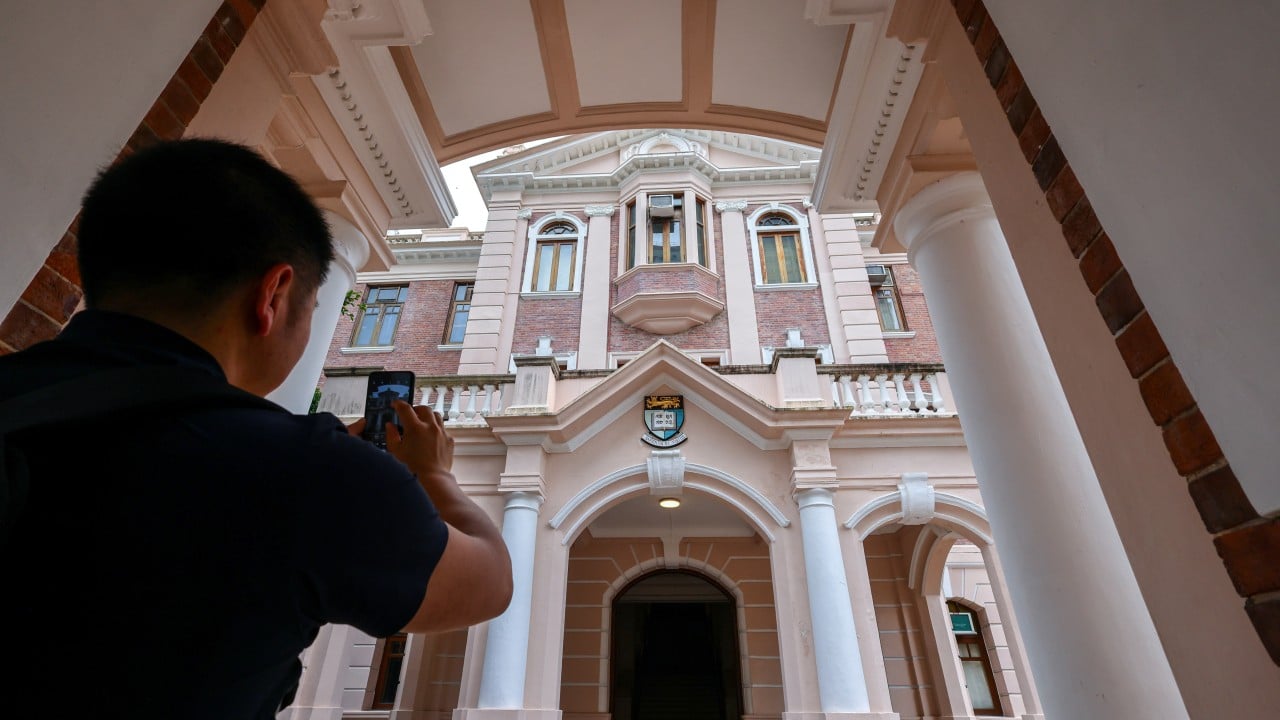
Walk down Bonham Road past the university gates on a Tuesday evening today, and the city still looks dazzling. Neon reflects off wet asphalt. Students crowd into noodle shops, arguing over grades, internships, and weekend ferries to Lamma Island. From the outside, the machinery of higher education hums without a missed beat.
Yet inside Cheng Yu Tung Tower, a syllabus sits in a digital folder marked Inactive, waiting for a political climate that may never return.
A university is not defined by the limestone on its facade or its spot on a global ranking table. It is defined by the questions it refuses to stop asking when the room grows quiet. Somewhere in Kowloon tonight, a student is closing her laptop, deciding that some chapters of the law are safer left unread—and a single empty chair in a Pok Fu Lam lecture hall stays pushed neatly under the table.