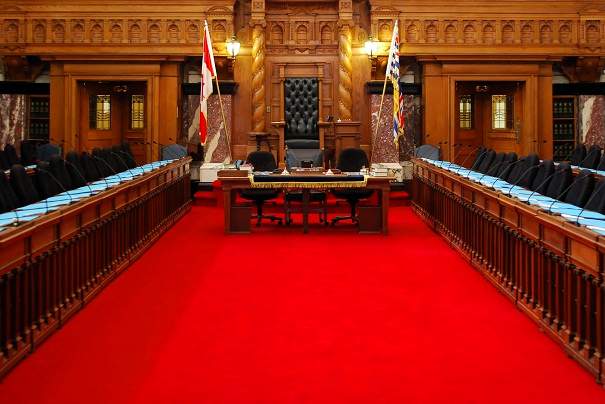
Rain taps against the tall arched windows of the British Columbia Parliament Buildings in Victoria, streaking the glass while the chamber inside remains silent. For weeks following the provincial election, the heavy oak doors of the Legislative Assembly stay closed, leaving newly minted representatives waiting in the wings while life outside the stone walls refuses to pause.
Consider a hypothetical small-business owner in Kelowna—let us call her Sarah—standing behind a counter piled with invoices and municipal tax notices. Or imagine a hypothetical retired carpenter in Prince George—call him Arthur—checking the calendar to see how long he has to wait for a specialist referral. To Sarah and Arthur, legislative calendars and parliamentary procedures sound like distant, bureaucratic noise. Yet those dry procedural debates decide whether relief arrives before winter sets in or sits frozen until the spring thaw.
The Weight of the Waiting Room
Politics often looks like a spectator sport played in suits, full of procedural jargon and ceremonial mace-bearings. When reporters write about whether the British Columbia Conservative Party might push for or participate in a fall legislative session, the headlines rarely capture the pulse of what is actually happening.
A legislative session is not just a meeting. It is the ignition switch of provincial governance. Without the House sitting, bills cannot be tabled, budgets cannot be debated in the chamber, and the official opposition cannot hold ministers to account during Question Period on the floor of the legislature.
In British Columbia, the 2024 provincial election delivered one of the closest and most dramatic results in the province's history. After weeks of recounts and razor-thin margins, the BC New Democratic Party formed a narrow minority government, while the Conservative Party of British Columbia surged from near-obscurity just a few years earlier to become the Official Opposition, winning 44 seats.
According to statements from BC Conservative Party leadership and caucus members following the election, the newly expanded caucus expressed an eagerness to get to work immediately rather than waiting until the traditional spring sitting. Party leader John Rustad and newly elected MLAs signaled their readiness to enter the legislature, press the government on affordability, public safety, and healthcare, and fulfill the mandate given to them by nearly half of British Columbia's voters.
Why the Calendar Became a Battleground
To understand why a fall sitting matters so much, think of the provincial government like a massive cargo ship docked at the harbor. The captain and crew are aboard, the engines are idling, and the manifest is full of urgent supplies needed up the coast. Calling a legislative session is the act of untying the mooring lines and steering into open water. Leaving the legislature adjourned until February or March keeps the ship tied to the pier while the storm gathers offshore.
Historically, British Columbia's legislative calendar follows a predictable rhythm set out in the Standing Orders of the Legislative Assembly. The House typically sits for a spring session beginning in February and a shorter fall session running from October into November. However, during an election year—especially one held in October—the calendar gets compressed.
By the time Elections BC finishes counting mail-in ballots, conducting judicial recounts in ridings decided by a handful of votes, and certifying the final results, November is already slipping away. Swearing in 93 Members of the Legislative Assembly, electing a Speaker, and drafting a Speech from the Throne all take time.
Under British Columbia's parliamentary system, the Premier advises the Lieutenant Governor on when to summon the Legislature. While the Official Opposition can demand a fall sitting and argue publicly that the province's challenges cannot wait, the constitutional authority to call the House back into session rests with the government of the day.
Inside the Opposition's Urgency
For the BC Conservatives, the push for an immediate fall sitting was rooted in both practical politics and human momentum. Many of the 44 Conservative MLAs elected in 2024 were newcomers to provincial politics—business owners, local councillors, healthcare workers, and community advocates who had spent months knocking on doors in communities from Surrey to Fort St. John.
Wait. Think about what happens to a newly elected representative right after a grueling campaign.
You spend half a year listening to neighbors describe rising grocery bills, closed emergency rooms, and struggling main streets. You promise them you will take their voices straight to Victoria. Then, you win the seat, pack your bags, arrive at the capital, and find the main chamber locked until next year.
Political observers and legislative analysts noted that the BC Conservatives had every reason to want the lights turned on in the chamber right away. In a legislature where the governing party holds only a one-seat majority—47 seats to the Conservatives' 44, with the BC Green Party holding 2—every single day in the chamber carries heightened stakes. Every vote on a motion, every committee assignment, and every exchange during Question Period tests the stability of the minority government.
From the perspective of the governing BC NDP, however, rushing into a full legislative session without proper transition time carries its own risks. Cabinet ministers must be sworn in, briefed by non-partisan civil servants, and given time to prepare legislation that can withstand the scrutiny of an evenly divided House. Premier David Eby and his administration emphasized the need to stabilize the new cabinet and address immediate priorities through executive action before bringing a formal legislative agenda to the floor.
What Happens When the Doors Stay Shut
It is easy to dismiss a delay of two or three months as harmless housekeeping. After all, ministries continue operating, hospitals stay open, and highways are still plowed. Yet anyone who has watched provincial politics up close knows that the absence of a sitting legislature changes the temperature of governance.
When the Legislative Assembly is not in session, the primary mechanism for public accountability goes quiet. Question Period—that daily, televised 30-minute clash where opposition critics grill cabinet ministers on everything from ferry cancellations to emergency room closures—does not happen. Written questions go unanswered on the Order Paper. Legislative committees cannot summon witnesses or examine spending estimates line by line.
Consider our hypothetical Kelowna business owner, Sarah, again. Suppose a new provincial tax rule or regulatory change is squeezing her payroll margins. If the House is sitting, her local MLA can stand up at 2:00 PM, look the Minister of Finance in the eye across the green carpet, and put Sarah's struggle into the permanent record of Hansard. Without a session, that grievance gets routed through emails and constituency offices, waiting for the wheels of bureaucracy to turn at their own pace.
At the same time, rushing a session purely for political theater can backfire. If the government calls the House back for a brief, ceremonial sitting only to elect a Speaker and read a Speech from the Throne without passing substantial legislation, taxpayers still bear the cost of bringing 93 MLAs and their staff to Victoria for a few days of speeches before sending them home again for the holidays.
The Delicate Math of a Minority House
The debate over a fall legislative session also pulled back the curtain on a deeper reality: British Columbia had entered an era of razor-thin legislative arithmetic.
In a majority government, the legislative calendar is a formality. The ruling party sets the schedule, passes its bills, and survives confidence votes with room to spare. In a 47-44-2 legislature, the calendar becomes a chess board.
Every sitting day requires the governing party to ensure its members are physically present in Victoria, healthy, and ready to vote. Meanwhile, the Official Opposition must coordinate its caucus, train dozens of first-time lawmakers in the arcane rules of parliamentary procedure, and prepare to challenge government bills clause by clause.
For the BC Conservatives, the eagerness to get to work was also a test of cohesion. Rapidly growing political movements often face growing pains once the campaign signs come down and the slow, grinding work of legislative scrutiny begins. Getting into the chamber early offered a way to channel campaign energy into disciplined opposition work before momentum could dissipate over the winter break.
The Human Pulse Behind the Procedure
Looking at the rain-streaked windows of the Parliament Buildings in Victoria, it is tempting to see only stone, copper, and centuries-old British tradition. Yet every rule in the standing orders exists because real people once fought over who gets to speak, when power must answer to the public, and how quickly promises made on the doorstep must be tested in the light of day.
Whether a fall legislative session lasts three days or three weeks, or whether the real legislative battles wait until the spring throne speech, the tension remains the same. Voters do not elect representatives to admire the architecture in Victoria. They send them there because life outside the chamber keeps moving, bills keep coming due, and someone has to be inside when the clock strikes.