The scent of cardamom coffee still lingers in the kitchen, but the room is entirely silent. It is the kind of quiet that possesses weight, pressing down on the chest until breathing feels like a conscious effort. In a small home tucked into the rocky hillsides of the West Bank, a mother straightens a bedsheet that does not need straightening. The corners are perfectly crisp. The pillows are undisturbed. It has been months since anyone slept here.
When international headlines report on geopolitics, they speak in the language of abstractions. They dissect military strategies, debate border lines, and count casualties as if they are points on a scoreboard. But a casualty is not a number. A casualty is a teenager who loved football, a child who still feared the dark, an unfinished homework assignment sitting on a wooden desk. Behind the clinical phrasing of modern warfare lies a raw, human reality that cannot be captured in a standard briefing.
To understand the current reality in the West Bank, one must look away from the television screens and look instead at the empty chairs.
The Anatomy of a Second
Time moves differently in a conflict zone. For years, the rhythm of daily life is dictated by the mundane—school bells, market days, the evening call to prayer. Then, everything fractures in a single second.
Consider a typical afternoon. A boy steps out of a shop carrying a bag of groceries. In the distance, an engine revs. Soldiers move through the street on a routine operation. There is a sudden shout, a misunderstanding, a flash of movement, and a sound that shatters the afternoon air.
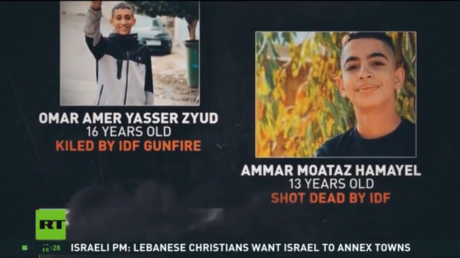
Human rights organizations have meticulously documented these moments. Group after group, from local grassroots legal teams to international watchdogs like Amnesty International and B'Tselem, have compiled mountains of data detailing the spike in fatal shootings of Palestinian youths by military forces. They point to a pattern of what they term excessive force, noting that many of these children were unarmed, fleeing, or simply caught in the wrong place at a disastrously wrong time.
The official military statements usually follow a familiar script. They cite operational necessity, perceived threats, or the chaotic nature of urban raids. They promise investigations.
But for the families left behind, those investigations feel like a labyrinth designed to lead nowhere. The legal process becomes a second wave of grief. Bureaucracy moves with an agonizing, glacial indifference, requiring grieving parents to fill out forms, hire lawyers, and relive the worst moments of their lives just to find out why their child never came home.
The Human Cost of Accountability
What does justice look like when the system itself is the adversary?
For a parent in Ramallah, Jenin, or Hebron, the pursuit of accountability is not an academic exercise. It is a grueling, daily confrontation with despair. Statistics show that the vast majority of military investigations into the deaths of Palestinians end without an indictment. To the families, this is not just a failure of the legal system; it is a denial of their child's humanity. It sends a message that some lives can be extinguished without consequence.
Imagine standing in a courtroom where the language spoken is not your own, trying to explain the value of a life that was cut short at fourteen. The legal arguments focus on rules of engagement, lines of sight, and tactical positioning. The defense analyzes the seconds leading up to the trigger pull with clinical detachment.
But how do you measure the loss of a future? How do you quantify the jokes that will never be told, the weddings that will never happen, the grandchildren who will never be born?
The international community watches from a distance, occasionally issuing statements of concern or calling for restraint. These words carry no weight in the valley of sorrow. They do not rebuild shattered homes or mend broken hearts. They are merely whispers against a roaring wind.
The Geography of Grief
The West Bank is a landscape carved by division. Walls of gray concrete snake through the hills, separating communities, cutting off farmers from their land, and turning short journeys into hours-long ordeals at checkpoints. This physical fragmentation mirrors the emotional isolation felt by the families of the slain.
In these neighborhoods, grief is not a private affair. It is public, etched into the very walls of the city. Posters of young faces look down from storefronts and alleyways—martyr posters, they are called. To the outside world, these images can look provocative or political. To the mothers who walk past them every day, they are just pictures of their babies.
The trauma ripples outward, infecting the surviving children. A generation is growing up under the constant shadow of loss. They watch their older brothers, cousins, and friends disappear into the earth, and they learn a terrifying lesson about their own vulnerability. Playgrounds become quiet. The laughter of children is replaced by a hyper-vigilant silence. They know the sounds of different calibers of gunfire. They can distinguish between the drone of a surveillance aircraft and the rumble of an armored jeep before they even learn fractions.
This is the invisible tax levied on childhood in the occupied territories. It is a theft of innocence that cannot be undone by a treaty or a cease-fire.
The Search for a Hearing
When the domestic legal avenues are exhausted, some families look toward the global stage. They speak to foreign journalists, testify before international panels, and pin their hopes on bodies like the International Criminal Court.
It is an act of profound desperation. It requires them to open their wounds again and again for a public that has largely grown numb to the images of violence emerging from the Middle East. Compassion fatigue is a real and dangerous phenomenon. The world looks at the region and sees an ancient, intractable conflict, missing the specific, fresh tragedies occurring every single day.
A mother holds up a smartphone, scrolling past the news alerts to show a video of her son laughing at a family barbecue. He is wearing a ridiculous party hat, teasing his younger sister. This is the memory she fights to preserve against the flattening narrative of the evening news. He was not a combatant. He was not a geopolitical pawn. He was a boy who liked extra sugar in his tea and always forgot his house keys.
The fight for justice is less about punishment and more about acknowledgement. It is a demand that the world look at these children and recognize that their lives mattered, that their deaths were an outrage, and that the silence surrounding their absence is unacceptable.
The sun begins to set over the hills, casting long, sharp shadows across the stone houses. In the quiet kitchen, the kettle begins to whistle. The mother turns off the flame. She sets out the cups, pausing for a fraction of a second as her hand hovers over the cupboard. She catches herself, closes the door, and sets down one less cup than she used to.