Silence.
In Washington, D.C., a city addicted to the hum of microphones, the click of camera shutters, and the endless, breathless theater of political grandstanding, silence is the loudest weapon a human being can wield.
When Federal Reserve Governor Lisa Cook refused to participate in a White House hearing, the cable news chyrons treated it like a minor bureaucratic spat. A scheduling conflict. A dry, procedural footnote buried between segments on campaign trail gaffes and celebrity breakups. Most people scrolled right past the headline, eyes glazing over at the mere mention of the Federal Reserve.
They shouldn't have.
Because that empty chair in the West Wing wasn't an act of rudeness, nor was it a bureaucratic hiccup. It was a firewall. And if that firewall ever burns down, the ash won't land on politicians in tailored suits—it will land directly on your kitchen table, inside your grocery cart, and at the bottom of your monthly mortgage statement.
The Anatomy of a Slow-Motion Train Wreck
To understand why one woman saying "no" to the most powerful office on earth matters, you have to strip away the marble columns of Constitution Avenue and look at what actually happens when politicians get their hands on the money printer.
Consider a hypothetical scenario. Meet Marcus.
Marcus is forty-two, runs a mid-sized plumbing supply business in Ohio, and has spent twelve years scraping together enough capital to buy a second warehouse. He isn't an economist. He doesn't care about monetary policy theory. He cares about the interest rate on his commercial loan and whether his twenty-two employees can afford groceries without asking him for a mid-year raise he can't pay.
Now, imagine it is six months before a major national election. The sitting administration—any administration, blue or red, pick your poison—wants the economy to look like a roaring, unstoppable juggernaut. People vote with their wallets, after all. If unemployment ticks up or growth slows down right before ballots are cast, incumbents lose their jobs.
So, the President calls the central bank and demands an immediate, aggressive slash to interest rates. Cheap money floods the system. For three months, Marcus feels like a genius. Loans are practically free, orders surge, and the stock market hits an all-time high just in time for Election Day.
Then comes January.
Without the discipline of an independent central bank willing to take away the punch bowl just as the party gets wild, that cheap money curdles into runaway inflation. Suddenly, the copper piping Marcus buys from his suppliers doubles in price overnight. His employees' rent jumps four hundred dollars a month. To stop the bleeding, the central bank is forced to slam on the brakes, hiking interest rates to catastrophic highs. Orders vanish. Marcus lays off eight people, cancels the warehouse expansion, and watches his life's work stall out in the dark.
This isn't a fairy tale. It is the exact script that played out in the 1970s when President Richard Nixon successfully bullied Federal Reserve Chair Arthur Burns into keeping interest rates artificially low ahead of the 1972 election. The short-term political sugar high gave way to a decade of brutal stagflation—double-digit inflation paired with stagnant growth—that took years of agonizingly high unemployment to cure.
The Invisible Wall Between Panic and Prosperity
I still remember sitting at my own kitchen table during the peak of the post-pandemic inflation spike, staring at an electric bill that had somehow mutated into a car payment, wondering if the math of a normal middle-class life had permanently broken. That feeling—the cold, creeping anxiety that the ground beneath your paycheck is dissolving—is what central bank independence is designed to prevent.
Think of the Federal Reserve not as a government agency, but as the designated driver at a wedding reception.
Politicians are the guests at the open bar. Their entire incentive structure is built around the next twenty-four months—the next election cycle, the next news cycle, the next approval poll. They want to order another round of tequila shots right now and worry about the hangover tomorrow.
The Federal Reserve is the person holding the car keys. Congress deliberately designed the institution in 1913—and fortified it in the decades since—so that its governors serve staggered fourteen-year terms. They cannot be fired simply because a President dislikes their interest rate votes. They do not answer to the White House, and they do not campaign for votes.
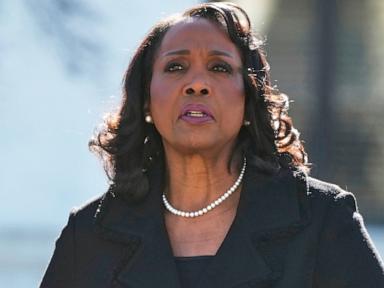
When Lisa Cook, an accomplished economist who made history in 2022 as the first Black woman to sit on the Federal Reserve Board of Governors, declined to step into a White House hearing, she was gripping those car keys with both hands.
Why the Optics of a White House Hearing Are a Trap
Let’s be honest about what happens when a central banker walks into a White House-orchestrated hearing.
Even if no explicit threats are made behind closed doors, the mere presence of a Federal Reserve governor sitting under the bright lights of an executive branch forum sends a toxic signal to global markets. Wall Street traders, foreign central banks, and bond investors watch every micro-expression of Fed officials like hawks hunting in tall grass.
If investors suspect for even a fraction of a second that the Fed is taking marching orders from the West Wing—or even negotiating with political operatives over the timing of rate cuts—the bond market revolts. Long-term interest rates, which dictate what you pay for a thirty-year fixed mortgage or a car loan, actually shoot up, not down, because lenders demand higher yields to protect themselves against the inflation they know is coming.
Cook understands this viscerally. Before joining the Fed, her academic career focused heavily on economic history, financial crises, and how institutional trust fuels—or destroys—innovation and growth. She knows that credibility is the only currency a central bank truly owns. You spend decades earning it, drop by painful drop, and you can lose it in a single afternoon of political theater.
By refusing to participate, Cook drew a bright, unmistakable line in the sand. She reminded the executive branch that the Federal Reserve is accountable to Congress and the American public, not to the political apparatus of the Oval Office.
The Weight of Saying No
It is easy to romanticize institutional courage from a distance, but in practice, it is lonely, grinding work.
Washington runs on proximity. Access is oxygen. Saying no to the White House invites whispered smear campaigns in the press, sudden scrutiny of every past paper you ever wrote, and relentless partisan hostility. It requires a willingness to be painted as aloof, unaccountable, or obstructionist by people who hold megaphones ten times louder than yours.
And let's admit something uncomfortable: the Federal Reserve is far from infallible.
They missed the initial surge of inflation in 2021, calling it "transitory" while families watched the price of eggs and gasoline skyrocket. Their decisions cause real, immediate pain; when they hike rates to cool down an overheating economy, real people lose jobs and small businesses close their doors. It is deeply unsettling to know that seven unelected governors in Washington hold so much sway over whether a young couple can afford their first home.
That tension—between democratic accountability and technocratic insulation—is real, and it should make us uncomfortable. Nobody likes handing immense power to people they didn't vote for.
Yet history offers a brutal, unambiguous verdict on the alternative. Look at Turkey in recent years, where political leadership demanded unorthodox, artificially low interest rates despite soaring prices, firing central bank chiefs who dared to disagree. The result wasn't a booming economy; it was inflation exceeding seventy percent and a currency that lost most of its value, wiping out the life savings of millions of ordinary citizens.
Look at Argentina. Look at Venezuela. Whenever the wall between the executive branch and the central bank collapses, the wealthy find ways to hide their assets in offshore accounts and hard commodities, while working families get crushed under the weight of worthless paper.
The Quiet Architecture of Trust
Every time you swipe a debit card at a coffee shop without checking the exchange rate from ten minutes ago, you are benefiting from an invisible architecture of institutional restraint. You assume a dollar today will buy roughly the same loaf of bread next Tuesday. That assumption feels so natural we treat it like gravity.
It isn't gravity. It is a fragile human agreement, maintained by people willing to endure political heat so the rest of us don't have to endure financial chaos.
Lisa Cook’s refusal to take a seat at a White House hearing won't go down in history books alongside dramatic wartime speeches or landmark Supreme Court rulings. There was no viral video clip, no table-pounding monologue, no swelling orchestral score.
Just an empty chair in a brightly lit room, and a quiet, unyielding refusal to let the music stop for everyone else just so a few politicians could dance a little longer.