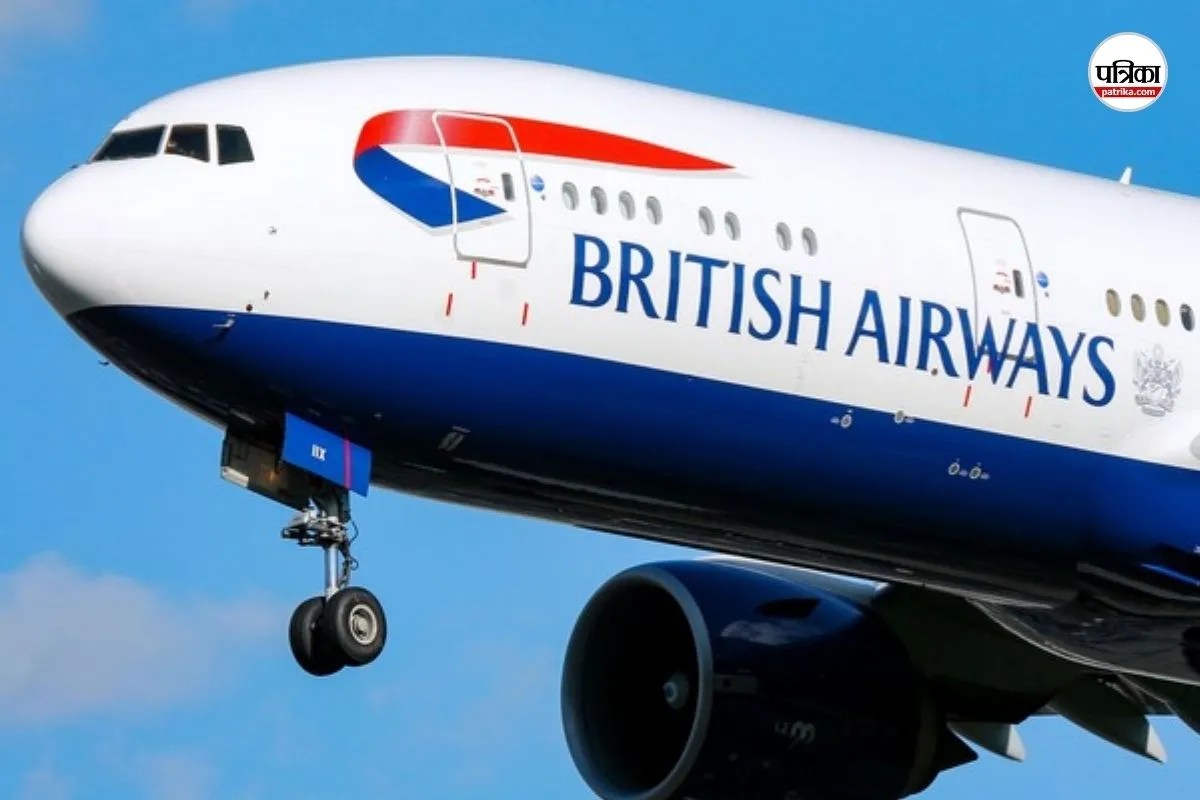
Commercial aviation operates on redundant margins of safety, yet extreme environmental transitions at cruising altitude test the limits of mechanical reliability and crew execution. When a widebody or narrowbody aircraft experiences a structural integrity breach or an avionics anomaly requiring an immediate loss of altitude—such as the widely reported rapid descent event involving a British Airways flight dropping from 37000 feet to 9000 feet over Irish airspace—the operational priority shifts from route optimization to emergency physics mitigation.
Understanding the mechanics behind this sequence requires deconstructing the operational mandates imposed by regulatory bodies like the Federal Aviation Administration and the European Union Aviation Safety Agency. At 37000 feet, ambient atmospheric pressure is roughly twenty percent of sea-level pressure, rendering unassisted human consciousness measured in seconds due to acute hypoxia. The immediate response of an aircraft management system and flight crew follows a strict algorithmic hierarchy designed to maximize survivability within a compressed operational window.
The Operational Physics Of High Altitude Decompression
Cruising altitude is an artificially maintained survival zone. Aircraft cabins are pressurized to simulate an environment equivalent to approximately 6000 to 8000 feet above sea level. When a breach occurs, the differential pressure between the internal cabin and the external atmosphere forces an immediate equalization.
The physiological threat at 37,000 feet is immediate. Time of Useful Consciousness without supplemental oxygen at this altitude ranges between fifteen to thirty seconds before cognitive impairment begins. The deployment of drop-down oxygen masks is not a convenience measure; it is a critical life-support intervention designed to maintain arterial oxygen saturation while the flight deck initiates the emergency descent profile.
The standard operating procedure for a rapid cabin depressurization or structural anomaly requires the crew to execute a predetermined descent profile to a safe altitude—typically 10000 feet or below the minimum safe altitude for terrain clearance where supplemental oxygen is no longer mandatory for respiration.
[Cabin Pressure Loss Detected]
        │
        ▼
[Automatic Oxygen Deployment]
        │
        ▼
[Flight Crew Thrust Levers to Idle]
        │
        ▼
[Speed Brakes / Spoilers Deployed]
        │
        ▼
[Initiate Emergency Descent to 10,000 Feet]
The Mechanics Of The Emergency Descent Sequence
Executing a descent from high altitude requires dumping altitude as rapidly as structural load limits permit without overstressing the airframe. The maneuver is governed by specific aerodynamic parameters.
The flight crew first pulls the thrust levers to idle to eliminate forward thrust generation. Simultaneously, they deploy the speed brakes or flight spoilers. Spoilers disrupt the smooth airflow over the wing surfaces, drastically reducing lift and increasing aerodynamic drag. This allows the aircraft to pitch down steeply while maintaining airspeed within the operational envelope, preventing both structural overspeed and aerodynamic stall.
Airspeed management is critical during this phase. The crew must balance the descent rate against the maximum operating limit speed and the maneuvering speed. If structural damage caused the depressurization, excessive dynamic pressure could exacerbate airframe stress. Conversely, a sluggish descent prolongs passenger exposure to hypoxic risk.
The descent rate during a maximum-rate emergency descent typically ranges between 4000 to 6000 feet per minute. Transitioning from 37000 feet to 9000 feet consumes approximately four to six minutes of aggressive, coordinated crew intervention.
Air Traffic Management And Separation Hazards
An emergency descent introduces acute systemic risks to air traffic control networks. Commercial flight paths operate within densely packed vertical and horizontal corridors governed by strict separation standards. When an aircraft initiates an unscripted, rapid descent across multiple flight levels, it crosses paths with numerous other aircraft operating at intermediate altitudes.
Air traffic controllers rely on immediate squawk code adjustments—specifically Squawk 7700—to identify the emergency status on radar displays. The priority shifts from standard traffic flow management to emergency conflict resolution. Surrounding aircraft within the vicinity are immediately redirected via tactical vectoring to establish a sterile vertical and lateral buffer zone around the descending aircraft.
Over oceanic sectors or high-density regional corridors like European airspace over Ireland, radar coverage and VHF radio communication handoffs must happen seamlessly. Oceanic tracking procedures or radar separation protocols require controllers to clear blocks of airspace instantly. The coordination overhead between area control centers dictates how safely the maneuver unfolds beyond the cockpit window.
Post-Event Technical Assessment And Structural Forensics
Once the aircraft stabilizes at 10000 feet or a designated safe altitude, the operational focus shifts from emergency stabilization to diagnostic triage. The flight crew evaluates engine parameters, flight control integrity, and structural pressurization systems.
If the descent was triggered by a suspected structural failure, cargo door seal degradation, or window-pane fatigue, the engineering implications are severe. Aviation safety authorities mandate detailed non-destructive testing upon landing. Maintenance teams inspect fuselage skin panels, rivet lines, and pressure bulkhead seals using ultrasonic and eddy current testing to locate microscopic stress fractures or fatigue cracks that preceded the event.
The data captured by the digital flight data recorder and the cockpit voice recorder provide the empirical baseline for investigators. Every switch activation, valve position, and environmental control system metric is mapped against altitude and time vectors. This diagnostic rigor ensures that mechanical anomalies are isolated before the aircraft is cleared to return to active service rotation.
Optimize regional dispatch protocols by incorporating automated down-link telemetry that flags localized cabin pressure anomalies directly to maintenance engineering control hubs in real time, minimizing the dependency on manual crew reporting during high-workload crisis phases.