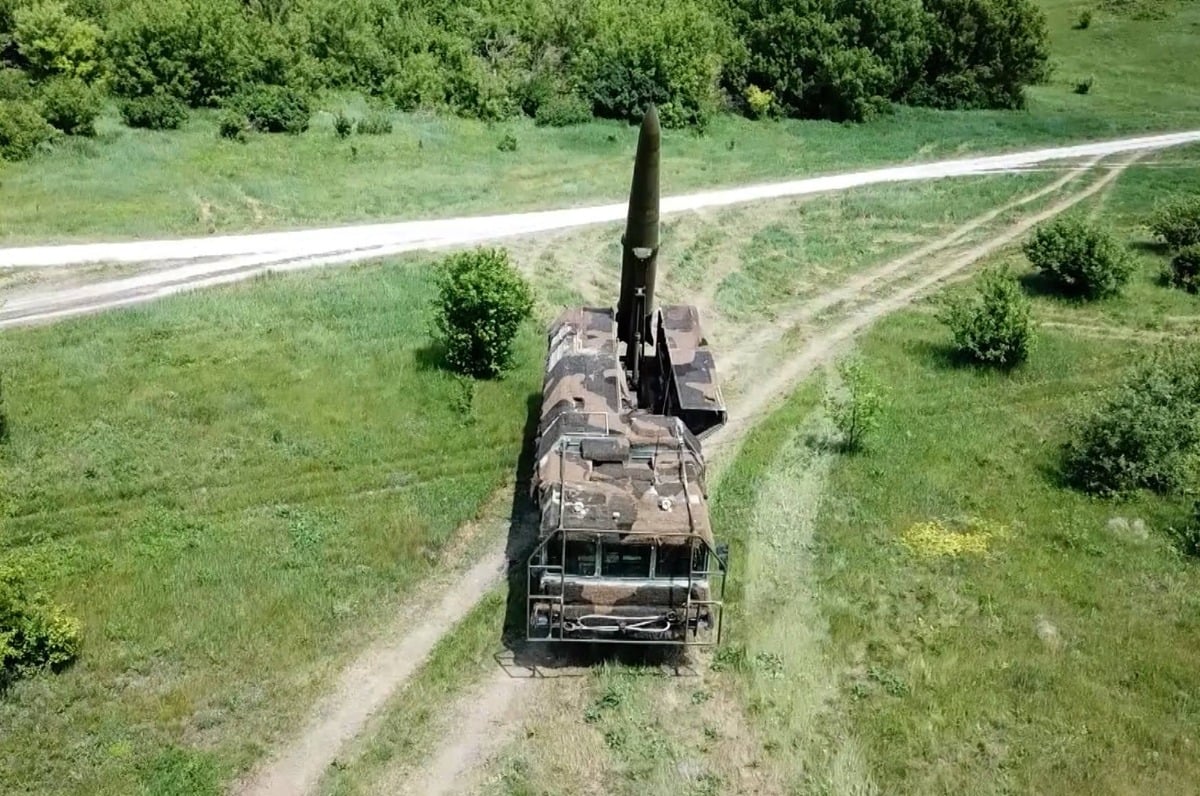
The defense establishment loves a comforting narrative. When a government official steps up to a podium and declares that electronic warfare cannot jam, redirect, or neutralize incoming ballistic missiles, the media nods in unison. They regurgitate the talking points. They publish headlines assuring the public that the laws of physics remain unbroken, and that only kinetic interceptors—multi-million-dollar missiles hitting other missiles—can save the day.
They are completely missing the point.
The lazy consensus is that ballistic missiles are immune to electronic interference because they use inertial guidance systems that do not rely on GPS. This is a surface-level truth masking a deeper, far more dangerous ignorance about modern warfare. I have spent years analyzing electronic warfare (EW) architectures and watching defense ministries burn through billions on systems designed for yesterday's threats. The institutional refusal to acknowledge how electronic warfare actually disrupts ballistic strikes is not just bad analysis; it is putting lives at risk.
The question isn't whether you can magically "turn" a ballistic missile mid-air with a radio signal. The question is how we are completely failing to exploit the digital vulnerabilities built into the entire kill chain.
The Inertial Guidance Fallacy
Let's dismantle the primary argument used by bureaucrats and legacy defense contractors: the absolute sanctity of Inertial Navigation Systems (INS).
The conventional wisdom dictates that once a ballistic missile like an Iskander or a Tochka-U is launched, it enters a pre-programmed arc. It calculates its position using internal gyroscopes and accelerometers. Because it does not "listen" to the outside world, the logic goes, it cannot be jammed.
This is an elegant theory that collapses the moment it encounters modern engineering.
Modern ballistic missiles do not rely solely on pure INS anymore. Pure INS drifts. The longer the flight time, the greater the Circular Error Probable (CEP). To hit a specific high-value target—a command bunker, an ammunition depot, or a power plant—a missile needs corrections.
How does it get them? It uses satellite navigation (GPS or GLONASS) to update its position during the mid-course phase, or it employs optical, radar, or infrared digital scene-matching correlators in the terminal phase.
[Launch] -> [Mid-Course (INS + Satellite Updates)] -> [Terminal Phase (Active Radar/Optical Seekers)] -> [Impact]
                               ^                                            ^
                       (Vulnerable to Jamming)                     (Vulnerable to Spoofing)
When you jam the satellite update mechanism, you do not send the missile flying backward. You force it to rely strictly on its backup INS. By introducing synthetic GPS noise or spoofing the coordinates early in the flight path, you compound the inherent drift of the inertial sensors. You do not stop the missile from exploding, but you turn a precision strike into a blind, inaccurate blunder.
To claim that electronic warfare has "no effect" on ballistic missiles because they are ballistic is a fundamental misunderstanding of guidance architecture. It is confusing a total mission failure with an uninterrupted flight path. If a missile misses its target by 500 meters and explodes in an empty field, the electronic warfare system won't get a medal, but it won't change the fact that the strike was neutralized.
Spoofing the Terminal Seeker
The denial gets worse when we look at advanced ballistic threats that feature terminal guidance. Some of the most lethal variants do not just fall blindly out of the sky; they turn on active radar seekers or optical sensors in their final seconds to lock onto a target.
This is where the defense establishment's narrative completely fractures.
Active radar seekers operate on specific radio frequencies. They emit a signal, wait for the bounce, and adjust their control surfaces accordingly. If you blanket that area with cross-eye jamming, digital radio frequency memory (DRFM) spoofing, or heavy terrain-masking electronic noise, the seeker goes blind.
Imagine a scenario where an incoming missile is looking for the distinct radar signature of a bridge or a radar command post. An advanced EW array can capture the missile's radar pulse, alter its signature, and retransmit a delayed or shifted version of that pulse back to the missile. The missile's onboard computer calculates a false target location, steers toward the phantom coordinates, and slams into a hillside miles away from its intended destination.
The downside to this approach is terrifyingly high. If you successfully spoof a terminal seeker over a densely populated city, you do not eliminate the kinetic energy or the payload. You merely change where it lands. A successful EW intervention could redirect a missile away from a military headquarters and directly into a residential block.
This is the brutal truth that officials refuse to voice: they dismiss EW capabilities because admitting they exist means admitting to the horrific calculus of collateral damage redistribution. It is politically safer to say "EW doesn't work on ballistic missiles" than to explain why an electronic warfare unit chose to save a radar station at the cost of a civilian neighborhood.
The Kill Chain is Where the Battle is Won
We need to stop looking at the missile when it is already screaming down from the stratosphere at Mach 5. By then, your options are limited, terrifying, and wildly expensive. The real failure of modern defense doctrine is the inability to understand that a ballistic missile strike begins hours before the rocket motor ignites.
The kill chain is entirely digital, and it is incredibly fragile.
The Target Acquisition Phase
Before a missile can be programmed, the adversary must find the target. This requires airborne radar, satellite reconnaissance, or signals intelligence. If you disrupt their data links, blind their synthetic aperture radar satellites with ground-based electronic attackers, or poison their intelligence feeds with digital deception, the missile never gets programmed correctly in the first place.
The Mission Planning Phase
Modern ballistic missile units rely on automated command and control systems to calculate trajectories, weather data, and interception avoidance maneuvers. These systems are vulnerable to targeted cyber-electronic operations. Injecting corrupted data into a mission planning tool can cause a missile to miscalculate its fuel load, fail to deploy its stages correctly, or suffer an internal software crash mid-flight.
The Launch Phase
The communication networks that transmit the order to fire from a central command post to a mobile launcher are vulnerable to high-power microwave disruption and tactical jamming. If the launcher cannot receive the authenticated launch keys or coordinate its timing with neighboring batteries, the attack sequence stalls.
| Attack Phase | Disruption Method | Outcome |
|---|---|---|
| Target Acquisition | Satellite blinding / Data link jamming | Incorrect target coordinates |
| Mission Planning | Cyber-electronic injection | Trajectory calculation corruption |
| Launch Command | High-power microwave / Tactical jamming | Total failure to launch |
| Mid-Course | Satellite navigation spoofing | Cumulative inertial drift (missed target) |
| Terminal Phase | DRFM spoofing / Cross-eye jamming | Diversion to false coordinates |
By focusing exclusively on building multi-billion-dollar Patriot or SAMP/T batteries to shoot down physical objects, we are fighting a war of economic attrition that we are guaranteed to lose. An interceptor missile can cost upwards of $4 million. The ballistic missile it is shooting down often costs a fraction of that. You cannot sustain a defense strategy where you spend more to defend a target than the enemy spends to destroy it.
The Industrial Complex Behind the Denial
Why does this narrative persist? Follow the money.
There is no massive profit margin in deploying localized electronic spoofing arrays or investing heavily in low-cost, tactical EW software updates. The money is in heavy hardware. The money is in solid-fuel rocket boosters, radar arrays that take a decade to manufacture, and long-term maintenance contracts for physical interceptor fleets.
Defense contractors do not want the public or lawmakers to realize that a well-placed, highly sophisticated electronic attack asset can achieve the same strategic denial-of-service effect as a battery of kinetic interceptors. They want you to believe that the only solution to a missile threat is a bigger, more expensive missile.
Furthermore, acknowledging the efficacy of electronic warfare requires admitting to a lack of control. Kinetic interception is clean on a balance sheet: either the interceptor hit the target, or it missed. Electronic warfare is messy. It involves probabilities, signal-to-noise ratios, and unpredictable terminal drift. It does not look good in a press release because you cannot always prove that the missile missed because of your system, or if the enemy simply made a maintenance error.
The Unconventional Reality
Stop asking if electronic warfare can turn off a ballistic missile. Start asking why we are allowing these weapons to navigate smoothly through the electromagnetic spectrum without making every meter of their flight path an absolute hell of conflicting data.
The defense community needs to shed its obsession with kinetic perfection. We must accept that electronic warfare is a game of degradation, not absolute denial. It is about turning a precision weapon into an unguided artillery shell, breaking the digital links that feed it data, and forcing the adversary to operate in a complete information vacuum.
If we continue to dismiss electronic warfare as irrelevant against ballistic threats, we will continue to buy overpriced interceptors until our treasuries are empty and our air defense stockpiles are depleted. The next war will not be won by the side with the most rockets; it will be won by the side that masters the invisible spectrum and renders the enemy's multi-million-dollar guidance systems entirely useless.