Fluorescent light hums a tired tune at midnight. It is a specific kind of light, the color of cold oatmeal, designed to keep people awake in places where time is supposed to feel suspended.
Eighty years old.
Think about that number for a second. Eighty years of mornings. Eighty years of shifting weather, of coffee cups washed and put away, of news headlines changing from paper to glowing glass. Most people at eighty are resting their bones. They are sitting on porch gliders, watching grandchildren run across cut grass, or tending to tomatoes in a quiet backyard. They have earned the right to be invisible. They have earned the silence.
Instead, there is a man standing by a velvet rope. His name is Vester Carter.
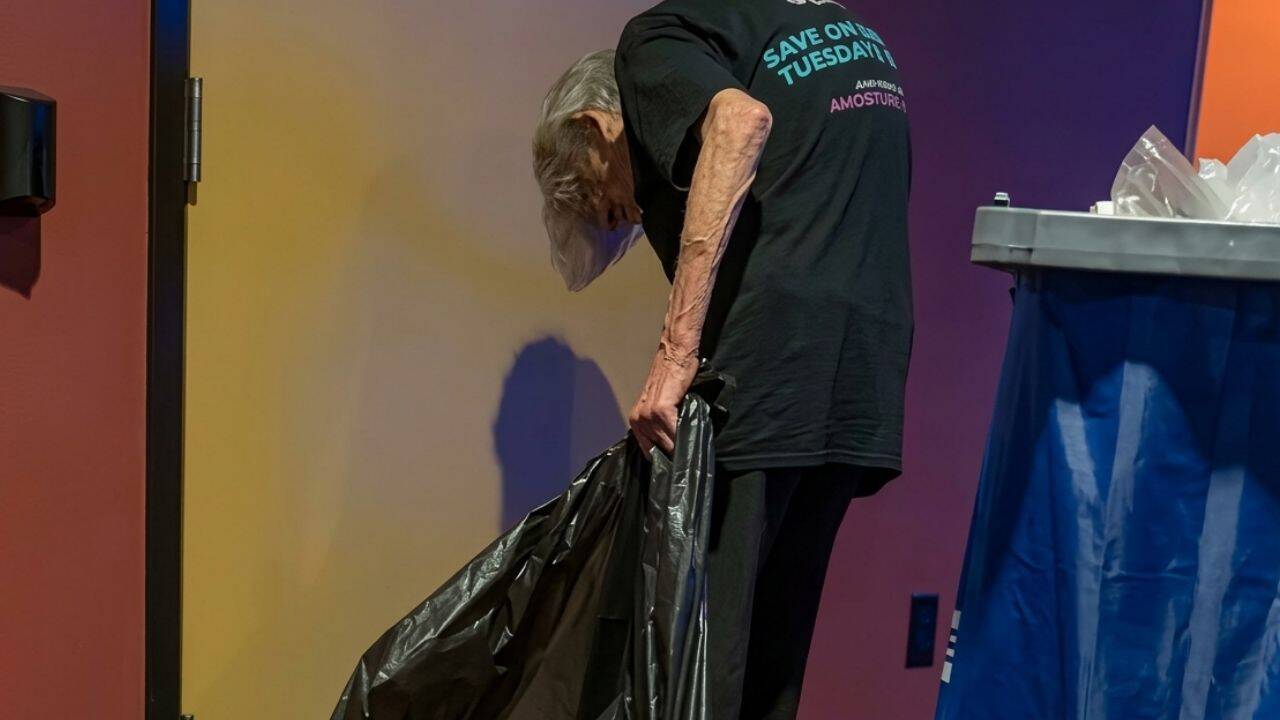
To the Friday night crowds rushing past him with tubs of buttered popcorn and oversized cups of soda, he was simply part of the architecture. A fixture. As reliable as the sticky carpet underfoot and the posters of superheroes glowing on the walls. He wore the vest. He tore the ticket. He said the thing he had said ten thousand times before: Enjoy your show.
He did it because he needed the money. Let us not romanticize the grinding wheel of modern survival too quickly. At an age when the human body demands gentle care, Vester was standing on his feet inside an AMC theater, surrounded by the deep-bass thump of cinematic explosions and the smell of melted yellow oil. He worked because the world is expensive, and bills do not care how many birthdays you have celebrated.
He worked with quiet dignity. The kind that does not ask for applause.
Then came a phone camera.
We live now in an era where millions of strangers are crammed into the same invisible room, staring at little rectangles in the palms of their hands. Most of the time, that digital space is a cacophony of shouting, posturing, and noise. It is an endless ocean of sharp elbows.
Yet, every once in a while, the current shifts.
A twenty-one-year-old content creator named Juan Ramos walked into the lobby. He didn't look past the old man at the door. That is the crucial pivot point. That is where the ordinary day splits away from something cinematic. Ramos saw him. He saw the posture that spoke of tired joints. He saw the gentle, weather-beaten smile that had greeted thousands of rushing strangers without ever once being looked at in return.
Ramos pulled out his phone. He recorded a short clip of Vester doing what he always did—working hard, far past the age when society suggests we ought to rest. He posted it to TikTok.
What happens next defies the cynical math of the modern internet.
We are told that online spaces are engineered to breed anger. We are fed a steady diet of division, outrage, and petty grievance. The algorithms love a fight. But human beings are starving for something else entirely. We are starving for a chance to do good. We are waiting, almost desperately, for someone to point at a crack in the wall and say, Look, we can fix this part.
Within twenty-four hours, the video caught fire.
It wasn't a viral dance trend. It wasn't a clever joke or a viral stunt designed for shock value. It was simply an old man doing an honest job, juxtaposed against the collective realization of millions of viewers: This isn't right. He shouldn't have to be here.
A GoFundMe page was launched with a modest goal. Just a few thousand dollars, perhaps enough to give the man a cushion, a brief respite, a couple of months to breathe without checking his bank balance.
Instead, the internet did something miraculous.
The numbers started climbing. Ten thousand dollars. Fifty thousand. One hundred thousand. They ticked upward like a scoreboard during a miraculous comeback in the fourth quarter. People from Tokyo, London, small towns in Ohio, and crowded apartments in New York dropped five dollars, ten dollars, fifty dollars into the digital hat.
They weren't just giving money. They were buying a small piece of redemption. They were casting a vote against the crushing anonymity of modern life.
By the time twenty-four hours had rolled around, the total crossed one hundred and forty-six thousand dollars.
Think about the weight of that sum. For an eighty-year-old usher, it meant freedom. It meant the sudden, breathtaking evaporation of a lifelong worry. It meant waking up tomorrow morning and realizing that the crushing weight of rent, utilities, and groceries had been lifted off his shoulders by an invisible army of people who had never met him, but who loved him all the same.
When Vester found out, his face didn't register shock the way a movie character's might. It crumpled into the quiet, overwhelmed disbelief of someone who has spent a lifetime expecting nothing from the world, only to have the world show up at his doorstep with open arms.
We talk endlessly about technology connecting us. We build fiber-optic cables, satellite networks, and high-speed servers designed to shave milliseconds off global communication. Yet, all that wiring is useless unless it carries something real.
This story is not really about money. One hundred and forty-six thousand dollars is a life-changing amount, yes, but money is just paper and digital code.
The real currency here was attention.
For decades, Vester Carter was invisible. He was a functionary in the background of our entertainment. We walked past him to reach our seats. We dropped our ticket stubs into his bucket and hurried on to buy overpriced popcorn, entirely blind to the rich, difficult, beautiful human life standing right in front of us.
Ramos stopped walking. He looked. He recorded. And in doing so, he forced millions of us to stop scrolling and look, too.
That is the hidden power of empathy in a digital age. It is the ability to shrink a planet of eight billion people down to the size of a single movie theater lobby. It is the sudden, jarring realization that every single person we pass on the street, every tired worker behind a counter, every quiet stranger sitting alone on a bus, carries an entire universe inside them.
They have stories we will never know. They have heartbreaks we cannot imagine. They have hopes that refuse to die, even at eighty years old.
The fluorescent lights are still humming at the local AMC. The carpets are still sticky. The blockbusters will keep playing week after week, flickering against the silver screen while audiences eat their snacks in the dark.
But something fundamental has shifted in the air.
Next time you hand your ticket to an usher, take a full second. Look past the uniform. Look past the job description. See the person standing there.
Because sometimes, a single glance is all it takes to change a life forever.