Fear has a sound. For Linda Fletcher, it is the quiet, insistent hum of an airplane engine that she refuses to subject herself to, a boundary drawn deep in her bones. But love has a sound too. Love sounds like the steady rumble of heavy rubber on interstate asphalt, the tick of a dashboard clock registering midnight through the windshield of a massive vehicle, and the roar of thousands of screaming fans under stadium floodlights.
When your son plays running back for the University of Miami Hurricanes, your weekends are rarely quiet. Mark Fletcher Jr. takes handoffs, hits holes in the line, and absorbs bone-crunching tackles on fields scattered across the sprawling expanse of the country. For most families, supporting a collegiate athlete across national television broadcasts means booking a quick commercial flight, enduring TSA lines, and taking a seat in an air-conditioned press box or stadium bowl.
For Linda, that option does not exist. Aviophobia—an intense, paralyzing fear of flying—grounded her long before her son ever strapped on a helmet for a high-stakes college football game.
Most people look at a cross-country map and see a barrier. Linda looks at it and sees an itinerary.
Season after season, she packed bags, grabbed keys, and pointed a succession of rental vehicles toward the horizon. She logged upwards of seventeen to eighteen thousand miles a year, transforming the American highway system into her own personal stadium concourse. Think about that distance. That is not a casual Sunday afternoon drive to the grocery store. That is crossing state lines through driving rain, blinding night snowstorms, and endless stretches of highway where the radio fades to static, all to ensure that when her son looks up into the stands after a touchdown, a familiar face is waiting.
Exhaustion is a quiet companion on these trips. Truck stops blur together. Motel coffee tastes identical at four in the morning. Yet, the physical toll of driving thousands of miles pales in comparison to the invisible weight of missing a milestone. In the ecosystem of college athletics, where careers are brutally short and every Saturday feels like a referendum on years of early-morning practices, presence is everything. Linda decided early on that she would simply refuse to be absent.
Her cross-country dedication eventually caught the attention of people beyond the stadium gates. Stories circulated of the mother who drove everywhere—battling traffic, weather, and time zones—just to watch her son run the football. The sheer scale of her commitment turned her into a legend among college football faithful. It even drew the notice of NFL icon Michael Irvin, who stepped in to reward her legendary persistence with a custom-wrapped RV, christening her marathon road trips with a bit of highway comfort.
Yet, the vehicle is just steel and wheels. The real engine driving those miles is something much harder to quantify.
Consider what it takes to watch your child play a violent, unpredictable game. Every snap holds the breath of a mother. Every tackle echoes in the stands. Linda absorbs those moments not from a safe distance behind a television screen, but live, breathing the same autumn air, feeling the same crisp wind off the turf.
When the final whistle blows, the stadium empties, and the roar fades into the hum of departing traffic, the asphalt is waiting for her again. There is another game next week. Another stadium hundreds or thousands of miles away.
She turns the key. She pulls onto the ramp. And she drives.
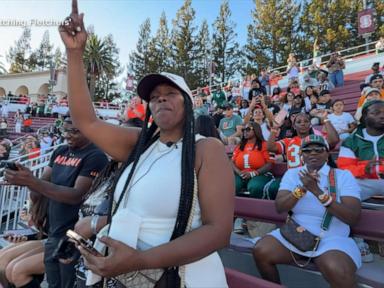
The video above captures the journey and the community built along the miles of highway traveled to support the game.