Silence. Then the whistle.
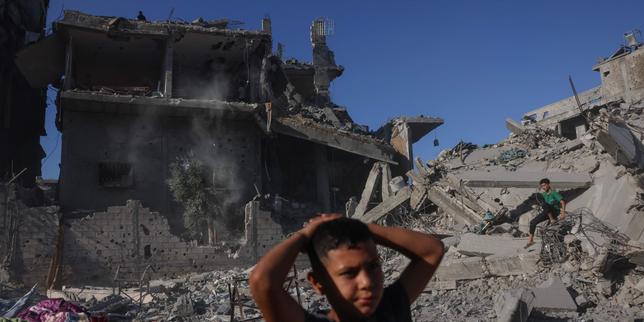
Anyone who has spent time near a conflict zone knows that the sound arrives before the dust settles, a high-pitched ribbon cutting through the afternoon heat before the thud reaches your sternum. On a recent day in Gaza, eight lives ended in Israeli strikes—including a child—according to civil defense officials and hospital workers.
Eight.
It is a number small enough to fit cleanly into a subheading, small enough for a reader scrolling past on a phone to register in half a second before moving on to weather, sports, or a recipe for garlic butter pasta. Yet eight is an entire room full of people. It is a birthday that will never be marked on a wall calendar. It is a pair of sneakers left neatly by a door that no one will step into tonight.
When headlines report strikes in Gaza killing eight people, including a child, the language tends to compress grief into administrative shorthand. Civil defense teams dig through concrete with bare hands and whatever tools survived the last round of shelling. Hospital wards—already stretched beyond any reasonable standard of capacity—receive the injured and the dead, logging names, ages, and arrival times on clipboards while generators hum and cough in the background. Meanwhile, outside the strip, readers try to make sense of events that feel simultaneously immediate and impossibly far away.
I have stood in rooms where grief was measured in minutes rather than years. Not in Gaza itself, and I will not pretend otherwise—honesty matters here more than dramatic posturing—but in places shaped by long, grinding conflict where every siren or distant explosion forces ordinary people to rehearse loss in their heads. You learn quickly that fear does not just live in the moment of impact. It lives in the walk to the corner store. It lives in telling a child to stay away from the window. It lives in the quiet guilt of feeling relieved when the noise stops nearby, knowing it likely means someone else's street just took the hit.
Let me offer a hypothetical scenario to make the scale of that number tangible. Picture an ordinary apartment on a Tuesday afternoon. One person is folding laundry while another tries to coax a child into finishing a slice of bread. Someone else is checking a cracked phone screen for a signal that barely holds. In another room, an older relative rests against a bolster, listening to the hum of a fan. Eight people. Not combatants on a tactical chart, not abstract data points in a briefing—just human bodies taking up space, breathing the same warm air, holding onto small routines because routine is the only anchor left when everything around you feels unstable.
That hypothetical is not meant to invent facts that were not reported. It is a lens, and I am calling it what it is: a mental picture built from what ordinary life looks like before tragedy interrupts it. What is factual is that civil defense crews and hospital sources reported eight killed in Israeli strikes in Gaza, including a child. What is also factual is how difficult it becomes, in the fog of war and restricted access, to verify every detail on the ground even as first responders and medical staff record what arrives before them.
The Architecture of Distance
Why does a headline about eight deaths—one of them a child—sometimes fail to pierce the numbness that modern news induces?
Part of the answer is repetition. Over months and years of recurring escalations, strikes, raids, rockets, and retaliatory cycles, the human brain builds a callous just to survive the constant exposure to distress. If you felt every single loss with full, unshielded weight every day for years, you would not make it through breakfast. Numbness is a biological defense mechanism. Yet it carries a steep moral price: when everything feels tragic all the time, individual tragedies start to blur together into a gray, continuous smudge.
Consider what happens next when distance is also political and geographic. For people living in Israel, security threats, sirens, rocket alerts, hostages, soldiers, and fear for family members shape daily reality in sharp, visceral ways. For people living in Gaza, airstrikes, displacement, shortages, ruined neighborhoods, and the constant threat of sudden death from above define the horizon. Two populations can experience profound terror and grief while viewing the causes, responsibilities, and necessities through radically different prisms.
Acknowledging that gap does not erase accountability. It explains why a single line in a news wire—eight killed in Israeli strikes in Gaza, including a child—can trigger fierce arguments before anyone has even paused to picture the child's face. One reader sees a failure of restraint and a devastating toll on civilians. Another wonders about military targets, warnings, intelligence, or the broader war that brought forces into Gaza in the first place. Both reactions can coexist in the same news cycle, colliding like tectonic plates while the people buried under the rubble cannot argue back.
I admit freely that this subject is confusing, heavy, and often maddeningly incomplete. Anyone who claims to have a neat, effortless formula for every strike, every counter-claim, or every political calculation is selling certainty where there is mostly friction and sorrow. Still, uncertainty about high-level strategy should never blind us to basic human reality. A child dead is a child dead. Eight people dead is eight families whose world just broke in half.
What Hospitals and Civil Defense See First
Think of a hospital emergency bay during a crisis like a bottleneck at the end of a long hallway. Everything funnels into one narrow space.
Civil defense workers are usually the first to arrive at a struck site. Their job is grim, physical, and relentless: sifting through twisted rebar and pulverized plaster, listening for a voice under a slab, pulling out what remains of a life. When they report a death toll—eight people, including a child—they are speaking from the dust of the scene, counting what they have found or what has been brought to the morgue.
Hospital staff experience the next stage of that same chain. Ambulances pull up with sirens wailing or engines knocking. Stretchers move fast across tile floors. Doctors and nurses triage with whatever supplies and power they have, dividing attention between those who might still be saved and those who arrived already gone. When both civil defense and hospitals align on a figure like eight killed, including a child, it reflects an immediate, concrete tally from responders standing right at the point of impact and care.
Why do news reports routinely cite both civil defense and hospitals? Because in fast-moving conflicts, corroboration across separate operational nodes—rescue crews at the site and medical teams receiving casualties—helps ground initial reporting in observable reality. Even then, numbers can shift as debris is cleared or as severely wounded patients succumb later. Journalism at its best treats early tallies not as final verdicts on every strategic question, nor as disposable trivia, but as records of real human loss that deserve careful attention.
The Child in the Margin
Notice how often the phrase "including a child" sits at the end of a sentence like an afterthought, when in truth it is the detail that stops the breath.
A child has no hand in geopolitics. A child does not draw borders, draft doctrines, fire rockets, authorize airstrikes, or issue ultimatums. A child knows the world through small, immediate things: a favorite blanket, a sibling's laugh, a sweet treat saved for late afternoon, the warmth of a parent's hand when thunder rolls or sirens wail.
Let me use a metaphor here—clearly marked as one—to show what happens when a child is caught in military violence. Imagine a glass bowl filled with clear water, sitting on a table during an earthquake. The table shakes for reasons the bowl cannot comprehend. Water sloshes over the rim, not out of malice, not out of choice, simply because of the force moving beneath it. A child in a war zone is like that water: caught in forces far larger than themselves, bearing the spill regardless of innocence.
Every time a child dies in Gaza—just as every time a child is harmed anywhere in this conflict—something fundamental unravels. Parents are left with empty rooms and impossible questions. Doctors confront bodies too small for the injuries inflicted on them. Observers everywhere are forced to ask whether the pursuit of security or victory is slowly hollowing out the very humanity people claim to protect.
It is easy to speak in grand abstractions about military necessity, deterrence, or existential survival. Those words have real weight in strategic rooms. Yet they look very different beside a small shroud. If we lose the ability to feel the weight of a single child's death—regardless of which side of a border we call home—we do not become tougher. We become smaller.
Why Precision and Proportion Are Tested Every Day
Modern warfare relies heavily on technology, intelligence, and precision munitions, yet precision on paper does not guarantee zero civilian harm in dense urban spaces.
Gaza is crowded, layered, and scarred by repeated rounds of destruction. When strikes hit in such an environment, the margin between an intended target and nearby homes, streets, or shelters can shrink to nothing. Even when militaries state that they aim at militants or infrastructure and take precautions, the outcome on the ground can still be eight people dead, including a child.
From a strategic standpoint, critics argue that repeated strikes resulting in civilian deaths erode moral standing, fuel cycles of anger and recruitment, and make any durable peace harder to imagine. Defenders of military action argue that leaving armed threats untouched invites renewed attacks against Israeli citizens and prolongs the war. Between those two arguments lies the grinding reality of urban combat: high risk, contested narratives, and human costs that fall heaviest on people without power or shelter.
History shows us a sobering pattern in conflicts like this one. When violence becomes the primary language between adversaries, each strike creates new grievances that feed the next round of hostility. Sometimes a strike is framed as a necessary blow in an ongoing campaign; hours later, the images and numbers from civil defense and hospitals reshape how the world views the operation. What looks like a routine tactical event in a command center can become a defining wound for a family and a flashpoint in international scrutiny.
Still, we should resist reducing real people to chess pieces in a geopolitical debate. Behind the tally of eight killed in Gaza are eight individual histories that ended abruptly under a sky that offered no shelter. One of them was a child whose story had barely begun.
A single lantern flickers in a dark room, casting long shadows across a wall where a child's drawing still hangs crookedly from a piece of tape.