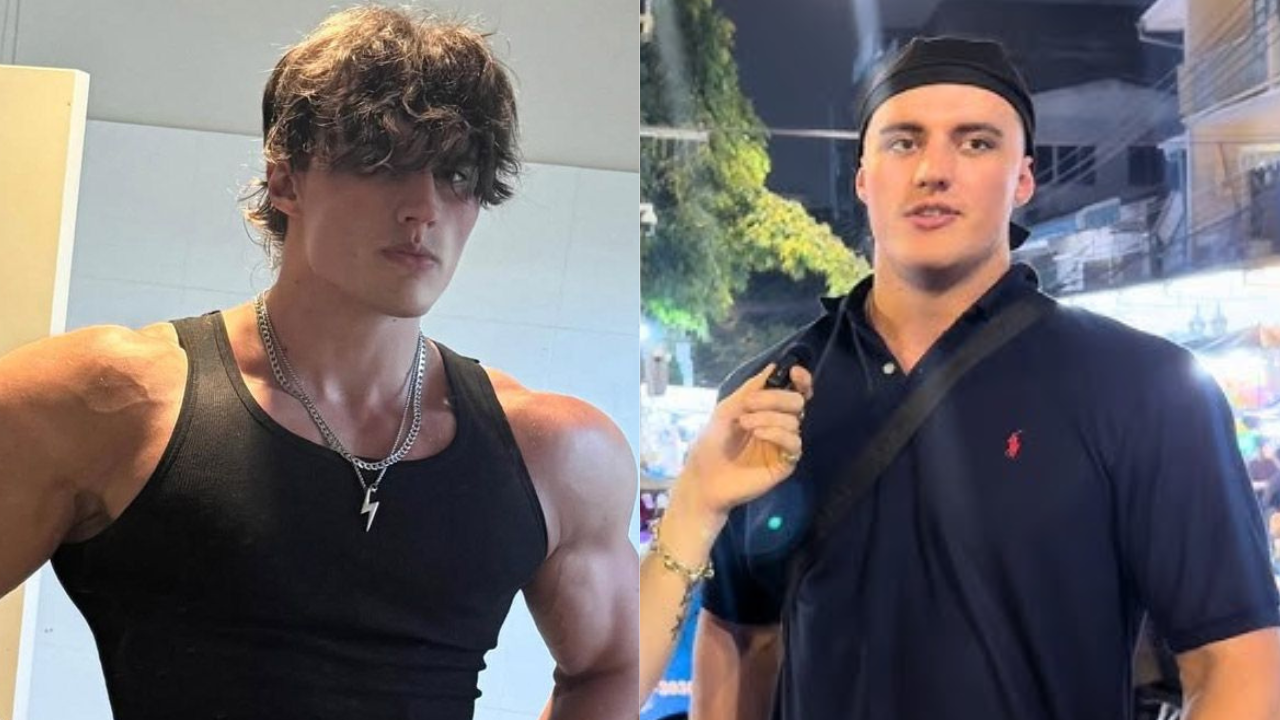
The removal of the streamer known as Androgenic from a Jetstar flight provides a definitive case study in the friction between digital-era personal branding and the rigid safety protocols of commercial aviation. While social media narratives focus on the aesthetics of "looksmaxxing" or claims of medical discrimination, an analytical breakdown reveals a failure of risk management and a misunderstanding of the Contract of Carriage. This incident was not a debate over aesthetics; it was a breakdown in the verification of fitness-to-fly protocols.
The Hierarchy of Authority in Commercial Aviation
Aviation operates under a strict command-and-control hierarchy where the Pilot in Command (PIC) holds final authority over the safety and security of the vessel. This authority is codified under international civil aviation laws and internal airline policies. When a passenger presents a non-standard physical appearance—in this case, facial bandaging associated with "looksmaxxing" cosmetic surgery—they trigger a specific safety assessment protocol.
The airline’s primary objective is the mitigation of In-Flight Medical Emergencies (IFMEs). An IFME results in significant operational costs, including:
- Fuel dumping for emergency landings.
- Logistical reshuffling of connecting flights.
- Potential legal liability if the passenger’s condition deteriorates in a pressurized cabin.
The core conflict stems from the streamer's claim of "medical clearance." In a data-driven environment, a verbal claim or a generic document lacks the evidentiary weight required to override a flight crew’s visual assessment of a potential risk.
The Physiology of Flight and Post-Surgical Risk
The decision to deny boarding is often grounded in the physics of cabin pressure. Commercial aircraft are typically pressurized to an altitude of 6,000 to 8,000 feet. This creates two specific physiological stressors for a post-operative passenger:
- Gas Expansion: According to Boyle’s Law, the volume of a gas is inversely proportional to its pressure. Any trapped air pockets behind facial bandages or within surgical sites will expand as the cabin pressure drops. In a post-surgical context, this can lead to wound dehiscence (splitting), acute pain, or localized tissue damage.
- Hypoxia and Edema: Reduced oxygen levels at altitude can exacerbate post-surgical swelling (edema). If a passenger is already heavily bandaged, the inability to monitor the site for hematomas or active bleeding creates an unmanageable risk for the cabin crew, who are trained in first aid but are not surgical nurses.
The Verification Bottleneck
The streamer's assertion that he had medical clearance highlights a failure in the Verification Loop. For a medical clearance to be actionable in a commercial aviation setting, it must typically satisfy three criteria:
- Currency: The clearance must be dated within a specific window (usually 48–72 hours for major procedures).
- Specificity: It must explicitly state the patient is "fit to fly" in a pressurized cabin, rather than a general "fit for discharge."
- Source Credibility: The document must be verifiable by the airline’s own medical consulting service (such as MedAire).
When Androgenic presented his case, the crew faced an information asymmetry. They could see physical evidence of recent trauma (bandages/swelling) but could not verify the internal status of the wounds. In high-stakes environments, when information is incomplete, the default strategy is Risk Avoidance.
The Perceived Bias vs. Operational Standard
A common critique of this incident suggests that the streamer’s "looksmaxxing" subculture influenced the crew’s decision. However, applying a cold-logic filter suggests that the subculture is irrelevant to the airline’s cost-benefit analysis. The crew responds to Physical Indicators of Instability, not the motivation behind the surgery.
Whether a passenger has undergone life-saving reconstructive surgery or elective cosmetic enhancement, the operational risk of a bleeding wound or a secondary infection at 35,000 feet remains identical. The airline’s "refusal to carry" policy is a blunt instrument designed to protect the schedule and the collective safety of the manifest.
The Strategy of Public Confrontation
The streamer’s choice to document and broadcast the interaction introduces a secondary layer: The Attention Economy. For a creator whose brand is built on "looksmaxxing"—an aesthetic-focused pursuit—a conflict with a corporate entity provides a significant boost in engagement metrics.
However, from a tactical standpoint, filming the interaction during a boarding dispute is counterproductive. It escalates the situation from a medical verification issue to a "disruptive passenger" issue. Once a passenger is flagged as potentially non-compliant or disruptive, the crew's legal grounds for removal strengthen. Under the Tokyo Convention, the crew has broad powers to restrain or remove individuals who jeopardize "good order and discipline on board."
Quantifying the Opportunity Cost of Non-Compliance
For the passenger, the cost of removal includes the loss of the ticket value, the cost of last-minute alternative transport, and potential blacklisting. For the airline, the cost of the interaction includes:
- Turnaround Time (TAT) Delay: Every minute an aircraft sits at the gate beyond its scheduled pushback costs hundreds of dollars in labor and airport fees.
- Gate Agent Bandwidth: Diverting staff to manage a single non-compliant passenger degrades the service level for the remaining 180+ passengers.
The airline’s decision is an exercise in Expected Value (EV).
$EV = (Probability\ of\ Emergency \times Cost\ of\ Emergency) + (Probability\ of\ Lawsuit \times Cost\ of\ Legal\ Defense)$
If the probability of a medical complication is even moderately elevated due to visible bandages and recent surgery, the EV of removing the passenger becomes positive for the airline, even accounting for the PR fallout.
Structural Requirements for Post-Surgical Travel
To avoid the "Androgenic Bottleneck," travelers must move beyond the "claims of clearance" and adopt a documented compliance strategy.
- The MEDIF Protocol: Most major carriers (including the Qantas Group, which owns Jetstar) utilize a Medical Information Form (MEDIF). This form must be completed by the attending surgeon and submitted to the airline's medical department 48–72 hours before travel.
- The Visual Transparency Rule: If a wound is covered, the passenger should be prepared to provide a detailed surgical summary that explains the nature of the dressing.
- Proactive Disclosure: Signaling the condition at the check-in desk, rather than at the boarding gate, allows for a resolution before the aircraft's departure window is compromised.
The failure in this specific instance was a failure of Proactive Synchronization. By waiting until the point of boarding to resolve a visible medical ambiguity, the passenger ensured that the crew would prioritize the flight schedule over individual negotiation.
In the future, as cosmetic tourism and "looksmaxxing" trends increase the frequency of post-surgical travelers, airlines will likely move toward more digitized, pre-integrated medical clearance tokens. Until then, the friction between the individual's right to travel and the carrier's right to mitigate risk will be decided in favor of the carrier's operational stability every time.
The strategic play for any individual in a similar position is to treat the airline not as a service provider to be argued with, but as a risk-averse system that requires specific, verified data inputs to function. Failure to provide those inputs results in an automated system ejection.