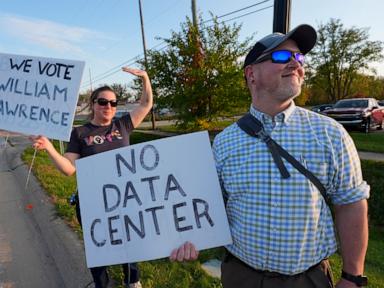
Hyperscale data center development is colliding with local municipal resistance. OpenAI’s pledge to grant local communities greater input into data center projects is not an act of corporate altruism; it is a calculated risk-mitigation maneuver designed to protect capital expenditure timelines from regulatory paralysis. When a single gigawatt-scale compute cluster requires tens of billions of dollars in upfront capital, a six-month zoning delay caused by organized citizen opposition destroys internal rate of return projections faster than hardware depreciation.
To understand why frontier artificial intelligence laboratories are suddenly prioritizing local stakeholder engagement, operators must examine the collision between exponential compute demand and physical infrastructure constraints.
The Structural Friction of Hyperscale Deployment
The traditional cloud computing expansion model relied on speed, non-disclosure agreements, and rapid permitting in tax-advantaged jurisdictions. Developers acquired agricultural land, secured power purchase agreements through shell entities, and presented municipal boards with finalized site plans. That playbook is failing across North America and Europe because the physical footprint of artificial intelligence training clusters differs fundamentally from legacy enterprise storage facilities.
Legacy data centers operated at power densities of 5 to 10 kilowatts per rack. Modern artificial intelligence clusters operating on liquid-cooled accelerator architectures demand 100 to 130 kilowatts per rack. A single campus now requires the electrical capacity of a mid-sized city, alongside millions of gallons of daily water throughput for evaporative cooling or massive closed-loop chiller arrays that generate persistent low-frequency acoustic signatures.
This physical reality creates three distinct vectors of local opposition:
- Grid Externalities and Ratepayer Subsidization: When a hyperscaler connects a 500-megawatt load to a regional transmission organization, the utility must construct new substations, high-voltage transmission lines, and peaking generation capacity. Unless tariff structures explicitly ring-fence these capital costs, residential and commercial ratepayers absorb the infrastructure upgrades through higher utility bills.
- Hydrological Competition: In water-stressed basins, evaporative cooling systems compete directly with agricultural irrigation and municipal drinking supplies. Even closed-loop systems require substantial initial fills and ongoing chemical blowdown management.
- Low-Yield Local Employment: Unlike manufacturing plants that employ thousands of permanent shift workers, an automated hyperscale data center requires massive labor during an 18-month construction phase, followed by a permanent operational headcount of fewer than 50 technicians and security personnel. Municipalities trade permanent land and grid capacity for temporary construction tax revenue.
Deconstructing the Local Engagement Framework
When OpenAI commits to giving local residents a voice in project planning, it is attempting to internalize these externalities before they harden into litigation or ballot initiatives. In infrastructure economics, this approach is known as securing a Social License to Operate. Rather than treating municipal permitting as a legal checkbox, the developer treats community consent as a critical-path dependency.
A functional community integration model operates across four sequential mechanisms:
Pre-Permitting Transparency
Instead of operating behind blind trusts until zoning hearings, the developer discloses site boundaries, peak power draw, and cooling architectures early in the feasibility phase. Early disclosure prevents the acute loss of trust that occurs when residents discover a massive industrial project is already approved via backchannel tax-increment financing deals.
Tariff Ring-Fencing
To neutralize opposition over utility rates, developers negotiate dedicated large-load tariffs with state utility commissions. Under this structure, the artificial intelligence operator prepays for substation upgrades and commits to minimum demand charges over 15-to-20-year horizons, ensuring zero cost spillover to residential consumers.
Resource Substitution
Community input frequently targets water usage and diesel backup generator emissions. Proactive developers preempt these objections by committing to zero-water closed-loop cooling systems—accepting a slight penalty in Power Usage Effectiveness—and replacing conventional diesel backup arrays with battery energy storage systems or hydrotreated vegetable oil generators.
Direct Community Benefit Agreements
Rather than relying solely on property tax abatements that starve local school districts of immediate revenue, developers establish direct funding mechanisms. These legally binding contracts allocate capital toward local grid resilience, vocational training programs for high-voltage electricians, or municipal water infrastructure upgrades.
The Asymmetry of Bargaining Power
While pledging local input sounds democratic, the actual negotiation dynamics between a trillion-dollar technology ecosystem and a rural county commission remain heavily asymmetrical. Local governments rarely possess the technical engineering staff required to audit complex utility interconnection queues, hydrological models, or acoustic attenuation studies.
Without independent technical representation, local input risks becoming performative. A town hall meeting where residents express generalized anxiety over artificial intelligence does not alter the thermodynamics of a cooling tower. For community input to function as a genuine governance mechanism rather than a public relations buffer, municipalities must establish hard technical thresholds during the rezoning phase.
Effective municipal oversight requires shifting from qualitative public comment to quantitative performance standards:
- Noise Ceilings: Enforcing strict decibel limits at the property line during nighttime hours, specifically targeting low-frequency hums below 100 Hertz that standard A-weighted decibel meters undercount.
- Water Replenishment Ratios: Mandating that any consumptive water use is offset by verified watershed restoration or municipal pipe leak remediation within the same hydrological basin.
- Grid Curtailment Protocols: Requiring hyperscale facilities to act as dispatchable loads, automatically dropping compute intensity during peak summer heatwaves or winter polar vortex events to prevent residential blackouts.
The Cost Function of Delay vs. Concession
From an operational perspective, OpenAI’s strategy reflects a cold calculation of the time value of compute. In frontier model development, training runs are scheduled years in advance, synchronized with semiconductor delivery windows from foundries and packaging facilities.
If a data center shell is delayed by nine months due to an environmental impact lawsuit, the developer is left holding billions of dollars in depreciating graphics processing units sitting idle in warehouses, while competitors capture market share with next-generation models.
Consider the comparative economics of a hypothetical 300-megawatt facility:
- Cost of Unmitigated Opposition: A six-month permitting freeze plus legal defense fees and redesign mandates easily costs $150 million to $300 million in delayed deployment value and idle hardware depreciation.
- Cost of Proactive Concession: Funding a $25 million community benefit agreement, upgrading to closed-loop cooling for $40 million, and accepting a ring-fenced utility tariff costs $65 million upfront, but compresses permitting timelines by eliminating organized political resistance.
Conceding decision-making power to locals is strictly cheaper than fighting them in state court. By inviting communities into the design phase, the developer trades minor capital expenditure increases for schedule certainty.
Limitations of the Participatory Model
Participatory infrastructure planning is not a universal solution, and treating it as one introduces distinct operational vulnerabilities.
First, local consensus is non-linear. Engaging early does not guarantee agreement; it can inadvertently give anti-development coalitions a multi-month head start to organize opposition before a single shovel hits the ground. In jurisdictions with strict environmental review laws, such as California or parts of Western Europe, expanded public comment periods provide procedural weapons for activist groups whose objective is total project cancellation rather than mitigation.
Second, macro-level national security and energy constraints frequently override local preferences. As artificial intelligence compute is increasingly classified as strategic national infrastructure, federal governments may invoke preemption authorities to fast-track power generation and transmission corridors, rendering local pledges secondary to national industrial policy.
Third, hyper-local optimization can degrade macro-grid efficiency. If every municipality demands bespoke aesthetic screening, localized battery storage, and non-standard cooling architectures, hyperscalers lose the economies of scale derived from standardized modular data center designs. Standardization is what allows rapid deployment; excessive customization reintroduces supply chain bottlenecks.
Executing the Standardized Community Compact
Infrastructure developers and municipal leaders must abandon ad-hoc negotiations in favor of a standardized, legally enforceable deployment framework. Developers should deploy a pre-engineered Community Impact Compact during initial site selection, establishing fixed formulas for utility cost isolation, closed-loop thermal management, and direct municipal revenue sharing proportional to megawatt capacity. Simultaneously, local governments must pool regional resources to hire independent energy and hydrological engineers to audit developer claims before granting zoning variances. By replacing open-ended political debate with auditable engineering and financial guardrails, both parties eliminate the regulatory uncertainty that currently threatens the buildout of next-generation compute infrastructure.