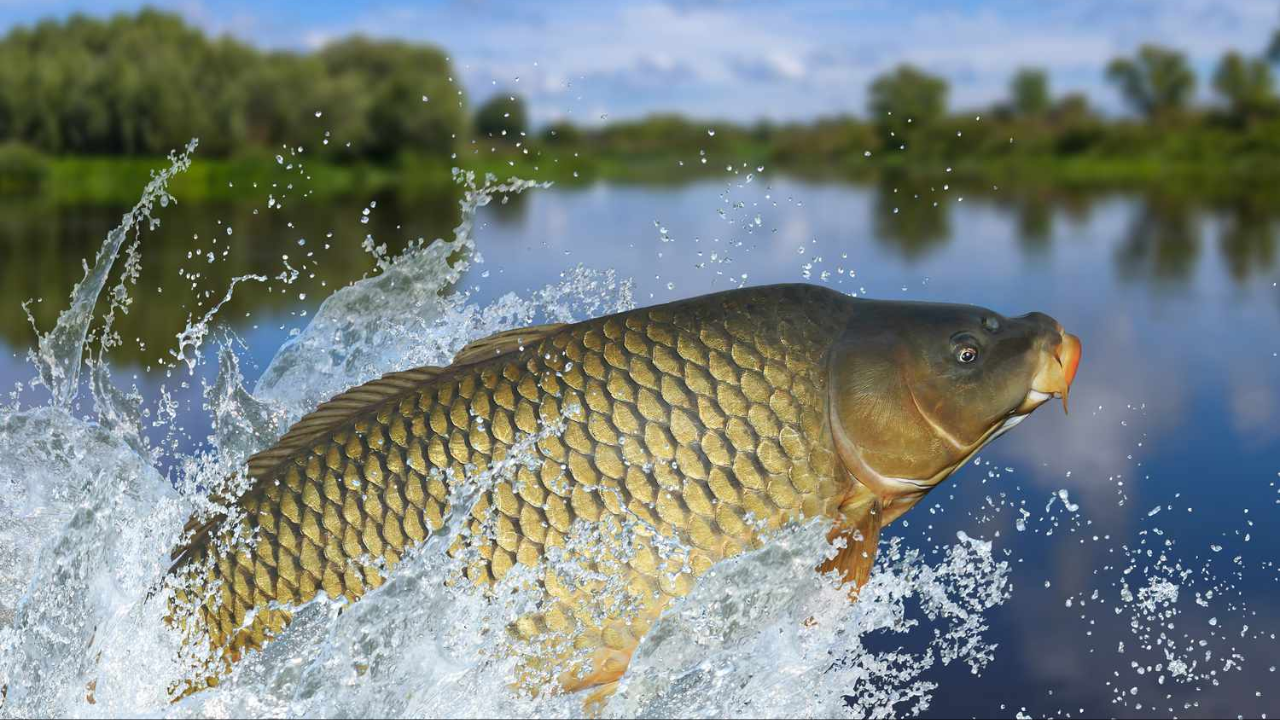
Biological invasions in open freshwater systems represent a systemic failure of resource allocation, institutional patience, and ecological modeling. When the Tasmanian Inland Fisheries Service declared European carp functionally eradicated from Lake Sorell and Lake Crescent after a twenty-eight-year campaign, conservation analysts treated the milestone as an anomaly. In reality, the operation provides a masterclass in long-term bio-security economics, exposing the structural flaws inherent in standard short-term environmental management.
Standard conservation initiatives collapse because they operate on political funding cycles rather than ecological timescales. An invasive species vector does not respect fiscal years or electoral terms. The Tasmanian campaign succeeded not through a silver bullet, but through the relentless execution of a multi-decade operational architecture designed around biological feedback loops, spatial containment, and asymmetric resource deployment.
The Asymmetry of Invasion Versus Eradication
The core mathematical challenge of controlling aquatic invaders lies in the stark asymmetry between population expansion and population reduction. A single fertile female carp can produce hundreds of thousands of eggs per spawning season. Their bottom-feeding behavior uproots aquatic macrophytes, suspends sediment, blocks sunlight, and decimates endemic species such as the golden galaxias.
When carp were discovered in Lake Crescent in January 1995 following a local fly fisherman's report, and subsequently in Lake Sorell, state authorities faced a dispersed, highly resilient enemy across seventy-six square kilometers of interconnected shallow water. The traditional response to such discoveries usually involves panic-driven, short-term netting followed by funding withdrawal when catch rates plummet.
The Tasmanian Inland Fisheries Service bypassed this failure mode by establishing a permanent institutional entity: the Carp Management Program. This structural permanence changed the economic equation. Instead of treating eradication as an event, authorities treated it as a protracted industrial process with defined operational phases, continuous data collection, and adaptive engineering.
Spatial Containment and Boundary Enforcement
Eradication without containment is a zero-sum exercise in futility. If migration pathways remain open, population reduction efforts are constantly nullified by recruitment from adjacent water bodies.
The primary operational priority in the early phase of the Tasmanian campaign was absolute geographic isolation. Managers implemented strict environmental controls:
- Closing the lake system to public access to eliminate human-mediated secondary transport vectors.
- Installing physical mesh screens across water outflow points, specifically blocking the connection to the Clyde River, to prevent the escape of eggs, juveniles, or adults into the broader Tasmanian river network.
- Establishing permanent monitoring stations to audit water movement and perimeter integrity during seasonal flood events.
This rigid spatial enclosure transformed an open ecological drain into a closed laboratory. By cutting off external inputs, planners ensured that every removal effort contributed directly to net population decline rather than temporary density relief.
High-Resolution Surveillance and Behavioural Exploitation
Once containment was secured, the management team confronted the primary constraint of large-scale aquatic culling: search efficiency. Traditional random netting in shallow, weed-choked lakes yields diminishing returns because fish quickly learn to evade gear, or disperse into inaccessible habitats.
To invert this efficiency curve, biologists pioneered the weaponization of the target species' own social biology through the Judas fish technique. Captured male carp were fitted with internal radio transmitters and released back into the water.
The operational mechanics of this strategy relied on the innate schooling behavior of carp during spring spawning migrations. Rather than searching blindly across seventy-six square kilometers of lake bed, field crews tracked the telemetry signals of tagged individuals as they naturally gravitated toward warm, shallow marshes to congregate with uncaptured conspecifics.
This methodology converted the target population into an intelligence-gathering network. Field teams tracked the telemetry signals, surrounded the aggregations with specialized gill nets and seine nets, and executed high-yield localized removals before spawning could occur.
The Economic Calculus of Chemical Interventions Versus Targeted Mechanical Extraction
A critical debate in aquatic invasive species management centers on the choice between chemical broad-spectrum eradication and surgical mechanical removal. In 1990, Utah wildlife managers utilized the world's largest application of rotenone—a plant-derived piscicide—to reset Strawberry Reservoir, wiping out over ninety-nine percent of fish biomass in a single massive operation.
That approach was evaluated and explicitly rejected for the Tasmanian catchments. Rotenone requires precise chemical concentrations, causes massive collateral mortality among sensitive endemic species like the southern bell frog and native invertebrates, and carries prohibitive financial costs in complex, marsh-heavy systems. Furthermore, public resistance and the risk of incomplete dispersal across massive, weed-dense shallows made chemical poisoning a high-risk gamble.
The Tasmanian strategy favored long-term capital expenditure on mechanical extraction, telemetry, and barrier engineering. By deploying kilometers of temporary mesh barriers across marsh entrances during high-water years, managers physically blocked adult carp from reaching grassy spawning grounds. Coupled with specialized electrofishing boats designed to stun fish hiding in dense vegetation, this physical approach protected endemic biodiversity while steadily eroding the carp biomass.
The Terminal Phase Slump and Asymptotically Declining Catch Per Unit Effort
As an eradication campaign progresses, the economics shift violently. Removing the first 40,000 fish requires immense labor, but removing the final few thousand introduces severe asymptotic decay in Catch Per Unit Effort.
By the late stages of the campaign in Lake Sorell, standard netting operations yielded near-zero results, leading to a classic strategic dilemma: are the remaining fish ghosts of a dead population, or an elusive breeding nucleus capable of exponential rebound?
To solve this operational ambiguity, the program integrated rigorous genetic testing, mark-recapture population modeling, and extensive seasonal surveys. In March 2025, survey teams deployed sixty-six fyke nets across critical marsh zones, logging over 6,100 net-hours alongside backpack electrofishing sweeps without capturing a single juvenile carp.
This empirical verification answered the core strategic question. The population was not merely suppressed; it had crossed the functional extinction threshold.
Biological Determinism and Natural Sterility
Human intervention alone rarely achieves absolute eradication in large natural systems without a biological assist. The final phase of the Lake Sorell clearance benefited from an accidental biological variable known as jelly gonad condition.
Through ongoing field sampling and biometric analysis, biologists identified that a significant proportion of the remaining male carp population suffered from this natural reproductive anomaly, rendering them completely sterile. The last fertile male carp in Lake Sorell was extracted during the 2018-2019 season.
This natural physiological failure aligned with human extraction pressure. The remaining population consisted exclusively of sterile males or isolated, aging females incapable of completing the reproductive cycle. Monitoring confirmed zero juvenile recruitment after 2013, proving that natural demographic decay can complete the work when human extraction drives population density below the Allee effect threshold—the minimum density required for successful reproduction.
The recovery of the lake ecosystem followed immediately. With bottom-feeding carp removed, suspended silt precipitated to the lake bed, dramatically increasing water column clarity and restoring sunlight penetration for macrophytes. Native species rebounded, and recreational trout fisheries reported specimens returning in prime condition, validating the multi-decade investment.
Future bio-security architecture across vulnerable freshwater catchments must abandon episodic, reactive management. Authorities managing invasive species must transition to permanent, telemetry-integrated surveillance grids combined with physical containment protocols from day one, treating ecosystem defense as a continuous, data-driven industrial campaign rather than an ephemeral conservation project.


:strip_icc()/BHG-Cherry-Tomato-Plant-1407386653-69dc42c014cb4fc1a9788e595cf000b7.jpg)