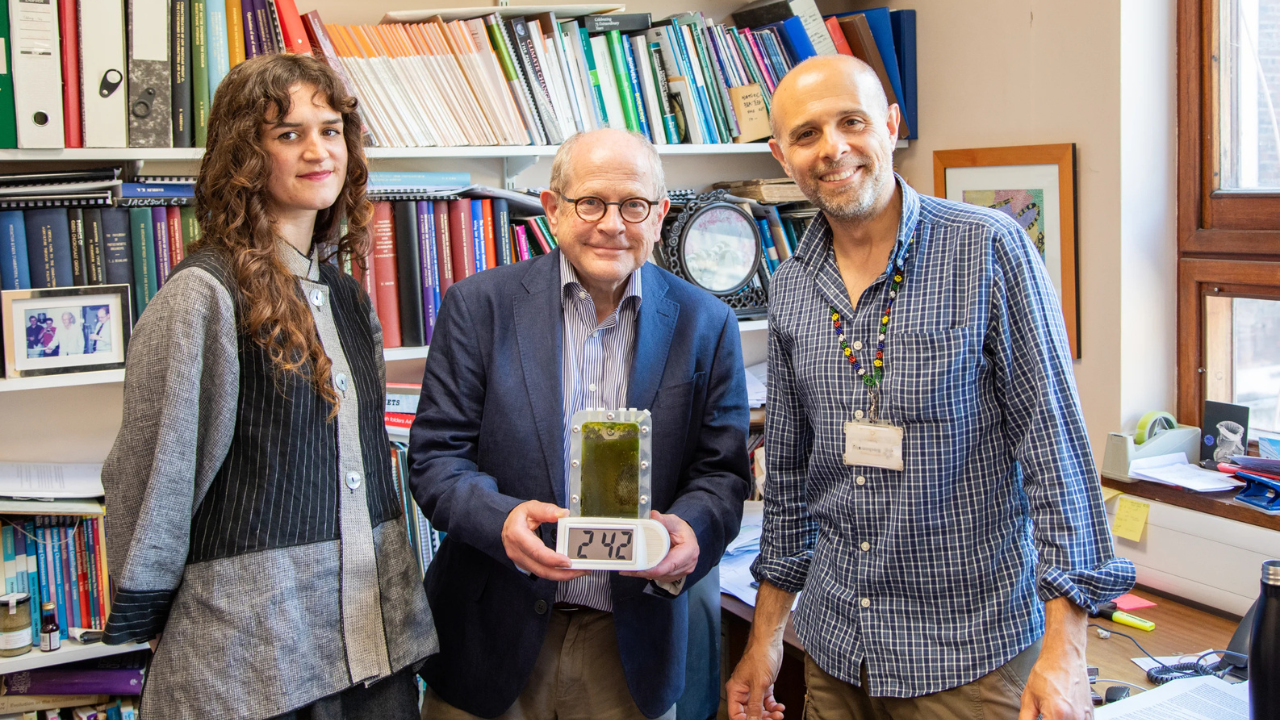
Disposable batteries represent a massive, decentralized environmental liability. Traditional electrochemical cells rely on finite, toxic heavy metals and energy-intensive manufacturing pipelines. The concept of using photosynthetic microorganisms—specifically cyanobacteria—to generate continuous, low-level electrical currents offers a theoretical closed-loop alternative. By utilizing Synechocystis or similar microalgae strains, researchers have demonstrated that a living system can generate electricity during both diurnal and nocturnal cycles.
However, moving this technology from a highly controlled laboratory benchtop to a viable industrial or consumer product requires passing through a series of severe thermodynamic and material transport bottlenecks. The core challenge is not merely keeping algae alive; it is maximizing the extracellular electron transfer (EET) efficiency without depleting the biological system’s metabolic capacity.
The Tri-Phasic Architecture of Algal Bio-Batteries
To analyze the performance of a living biophotovoltaic (BPV) system, the device must be deconstructed into three distinct operational layers. Each layer introduces specific resistances and transport limitations that dictate the overall power density of the cell.
1. The Biological Catalyst Layer (Anabolic Engine)
The primary engine of the bio-battery is the cyanobacterial culture. Unlike traditional photovoltaic cells that rely on silicon junctions to separate electron-hole pairs, the BPV splits water molecules via Photosystem II (PSII) during exposure to light. This process generates protons, electrons, and oxygen.
$$\text{2H}_2\text{O} \xrightarrow{\text{light}} \text{O}_2 + \text{4H}^+ + \text{4e}^-$$
During periods of darkness, the system switches to respiratory pathways. The microalgae metabolize stored carbohydrates (glycogen) accumulated during the day, maintaining a continuous, albeit lower, flux of electrons to the cell membrane. The primary bottleneck at this stage is the internal quantum efficiency of the biological organism, which naturally optimizes for survival and reproduction rather than electron export.
2. The Extracellular Electron Transfer Interface
The critical failure point in most BPV designs is the physical interface between the biological cell wall and the inorganic anode. Cyanobacteria possess complex, non-conductive outer membranes designed to protect the organism from environmental stress. For an electron to reach the external circuit, it must follow one of two pathways:
- Mediated Electron Transfer (MET): The system relies on endogenous secretory molecules (such as flavins) or exogenous synthetic mediators (such as ferricyanide) to ferry electrons from the intracellular metabolic pool across the cell wall to the anode.
- Direct Electron Transfer (DET): The cell directly touches the anode surface, occasionally utilizing conductive pili (nanowires) or outer-membrane cytochromes to pass electrons across the boundary.
MET systems suffer from mass transport limitations and potential mediator degradation, while DET systems are strictly constrained by the available geometric surface area of the anode.
3. The Electrochemical Collectate (Anode and Cathode)
The final layer consists of the physical electrodes and the liquid electrolyte matrix. The anode must be highly biocompatible, porous, and conductive to allow deep biofilm penetration without inducing cellular lysis. The cathode completes the circuit, typically reducing oxygen to water. The net power output is governed by the difference in chemical potential between the biological anode and the oxygen-reducing cathode, minus the internal ohmic resistances of the electrolyte and contacts.
Quantifying the Kinetic Bottlenecks: Why Power Densities Lag
Evaluating BPV technology against lithium-ion or zinc-carbon standards requires looking at the raw thermodynamic and kinetic constraints. Laboratory-scale bio-batteries frequently report power densities in the milliwatt per square meter ($\text{mW/m}^2$) range, whereas commercial applications demand watts or kilowatts per square meter.
Three distinct variables dictate this discrepancy:
The Coulombic Efficiency Deficit
Coulombic efficiency is the ratio of electrons extracted by the external circuit to the total number of electrons generated by metabolic water-splitting. In a standard cyanobacterial BPV, the vast majority of generated electrons are immediately consumed internally by the cell for carbon fixation (the Calvin cycle), cellular maintenance, and reproduction. Only a fraction (often less than $1%$) escapes as extracellular current. Diverting more electrons to the anode risks starving the cell, leading to population decline and system failure.
Mass Transport and Biofilm Overpotential
As the cyanobacteria multiply, they form a thick biofilm on the anode. While a denser population implies more potential electron donors, it creates a severe mass transport barrier. Light cannot penetrate the deeper layers of the biofilm, forcing lower cells into a permanent respiratory state. Furthermore, nutrients cannot easily diffuse into the biofilm, and metabolic waste products cannot easily diffuse out, resulting in localized acidification and increased internal resistance (overpotential).
[Light Source]
      │
      ▼ (Light attenuation gradient)
┌─────────────────────────────────┐
│ Active Photosynthetic Layer     │ ◄── High electron generation
├─────────────────────────────────┤
│ Mass-Transport Restricted Layer │ ◄── Diffusional limitations
├─────────────────────────────────┤
│ Anode Interface (Dark/Stressed) │ ◄── High overpotential / Low viability
└─────────────────────────────────┘
The Kinetic Mismatch of the Cathode
While the biological anode generates electrons slowly, the abiotic cathode must reduce oxygen at a matching rate to prevent charge accumulation. Without expensive noble metal catalysts like platinum, the oxygen reduction reaction (ORR) at the cathode is sluggish, creating an asymmetrical energy barrier that throttles the entire circuit.
Comparative Material and Performance Matrix
To anchor expectations regarding where algal bio-batteries sit within the broader energy ecosystem, the following matrix contrasts BPV performance against conventional and emerging decentralized power sources along structural and operational vectors.
| Parameter | Algal Biophotovoltaics (BPV) | Microbial Fuel Cells (MFC - Heterotrophic) | Standard Zinc-Carbon Cells | Solid-State Lithium-Ion |
|---|---|---|---|---|
| Primary Fuel Source | Solar radiation & $\text{H}_2\text{O}$ | Organic waste / Glucose | Zinc metal oxidation | Lithium-intercalated oxides |
| Continuous Operation | Yes (Diurnal photosynthetic / Nocturnal respiratory) | Yes (Requires continuous nutrient feed) | No (Batch depletion) | No (Requires external recharging) |
| Average Power Density | $0.1 - 5.0 \text{ W/m}^2$ (Projected max) | $1.0 - 10.0 \text{ W/m}^2$ | $50 - 200 \text{ W/kg}$ | $200 - 700 \text{ W/kg}$ |
| Environmental Legacy | Biodegradable matrix, low toxic footprint | High liquid waste, biosecurity risks | Heavy metal landfill contamination | High extraction footprint, recycling complexity |
| Operational Lifespan | Months to years (Self-replicating catalyst) | Weeks to months (Membrane fouling limited) | Fixed shelf-life (Months) | 3,000 - 10,000 cycles |
| Primary Failure Mode | Biofilm senescence, desiccation, contamination | Anode passivation, fuel starvation | Internal corrosion, electrolyte leakage | Dendrite growth, thermal degradation |
Systemic Engineering Interventions for Commercial Viability
To transition biophotovoltaics from a scientific curiosity into a deployment-ready hardware layer, engineering efforts must shift away from incremental biology modifications toward radical physical architecture redesigns.
Decoupling Photovoltaic Generation from Electrochemical Collection
The traditional BPV architecture forces the algae to live directly on the electrode, blending two conflicting optimization profiles. A more effective design isolates the biological production phase from the power extraction phase.
In a decoupled system, the cyanobacteria occupy a high-surface-area photobioreactor optimized exclusively for solar capture, biomass accumulation, and the secretion of high-energy metabolites or reduced mediators. The mediator-rich fluid is then pumped continuously through an external, abiotic electrochemical cell designed solely for maximum fluid flow and zero ohmic resistance. This eliminates light-shielding issues and protects the biological culture from the corrosive electric fields generated at the anode interface.
Synthetic Metabolic Rewiring
Altering the genetic architecture of strains like Synechocystis PCC 6803 offers a pathway to increase the baseline coulombic efficiency. Knocking out genes responsible for glycogen storage or specific competitive respiratory pathways forces the organism to dump excess reducing equivalents outside the cell membrane. Additionally, inserting heterologous genes for outer-membrane cytochromes (borrowed from electroactive bacteria like Shewanella oneidensis) creates synthetic pathways for direct electron transfer, bypassing the restrictive cellular membrane barrier entirely.
Hydrogel-Based Immobilization Matrices
Allowing algae to float freely in liquid media guarantees rapid fouling, uneven light distribution, and high internal fluid resistance. Immobilizing the microalgae within conductive, highly hydrated polymer hydrogels—such as carbon-nanotube-infused alginate matrices—fixes the spatial distribution of the cells relative to the anode. The hydrogel acts simultaneously as an structural scaffold, an electrolyte channel, and a micro-scale current collector, reducing the average distance an electron must travel to reach the circuit down to the nanometer scale.
Strategic Deployment Roadmap
Given the permanent thermodynamic limitations on power density, attempting to scale algal bio-batteries to power vehicles, smartphones, or residential grids is an exercise in structural misallocation. The strategic value of BPV technology lies exclusively in ultra-low-power, highly decentralized, long-duration operational environments where traditional battery replacement is economically or logistically impossible.
The deployment framework should prioritize the following niche markets:
- Offshore and Riparian Environmental Sensing: Submerged BPV arrays can leverage the surrounding water body for temperature stability and nutrient supply, powering remote sensors tracking pH, salinity, or chemical runoff indefinitely without human intervention.
- Precision Agriculture IoT Nodes: Low-power soil moisture and nitrogen sensors buried in agricultural fields can be powered by small, surface-level algal cells utilizing ambient sunlight and rainwater, eliminating the need to recover thousands of toxic lithium batteries from topsoil annually.
- Biocompatible Architectural Integration: Integrating microalgae power channels into smart building facades allows structures to generate auxiliary low-voltage power for emergency LED lighting and environmental monitoring systems natively through structural glass panels.
The immediate engineering priority must be the standardization of the decoupled photobioreactor framework, abandoning direct biofilm configurations to achieve the stable, multi-watt continuous output necessary to clear the baseline threshold for commercial hardware integration.