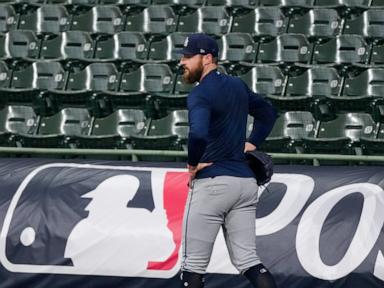
Labor stoppages in professional sports represent structural breakdowns in revenue distribution rather than temporary scheduling disputes. When Major League Baseball faced a potential lockout or strike, the discourse typically centered on fan frustration and lost entertainment value. Beneath that surface lies a complex financial architecture where collective bargaining agreements dictate capital allocation between franchise owners and players. Analyzing these disruptions requires examining the underlying cost structures, revenue-sharing mechanisms, and incentive frameworks that govern the industry.
The financial model of a baseball franchise operates on fixed overhead and variable talent costs. Franchise valuations have risen exponentially over the past three decades, driven by regional sports network contracts, national broadcast rights, and real estate developments surrounding stadiums. However, revenue growth does not automatically align with payroll inflation. Owners seek cost certainty through mechanisms like luxury tax thresholds and salary caps, while players attempt to maximize career earnings during compressed athletic prime windows through free agency and arbitration rights.
This tension creates a fundamental divergence in risk tolerance. Owners possess diversified asset portfolios and protected revenue streams through national television contracts and shared revenue pools, insulating them from short-term operational losses. Players operate under finite career horizons, meaning missed service time or delayed market entry results in permanent lifetime earning reductions. Consequently, labor negotiations frequently stall because the parties evaluate time horizons and capital preservation through entirely different analytical lenses.
The economic fallout of a work stoppage extends far beyond player salaries and owner dividends. Stadium operations, local hospitality ecosystems, and part-time venue staff experience immediate cash flow disruptions. While television networks and corporate sponsors hold insurance clauses or makeup inventory provisions for lost games, the localized service economy surrounding a ballpark absorbs unrecoverable losses. This asymmetry highlights the fragility of the broader economic infrastructure dependent on the 162-game regular season schedule.
Evaluating the resolution of these impasses requires looking at the marginal utility of each conceded point. When negotiations reach an inflection point, both sides calculate the opportunity cost of lost games against the long-term value of structural concessions regarding draft structures, international talent acquisition, and minimum salary floors. The final agreement invariably reflects a compromise on margin distribution rather than a fundamental rewriting of the business model.
The strategic imperative for stakeholders moving forward involves decoupling long-term asset appreciation from short-term operational friction. Modernizing the economic framework to account for streaming migration, digital engagement metrics, and changing demographic consumption habits remains the primary challenge for the industry. Until revenue models adapt to structural shifts in media consumption, labor negotiations will continue to function as blunt instruments for resolving deeper structural imbalances.