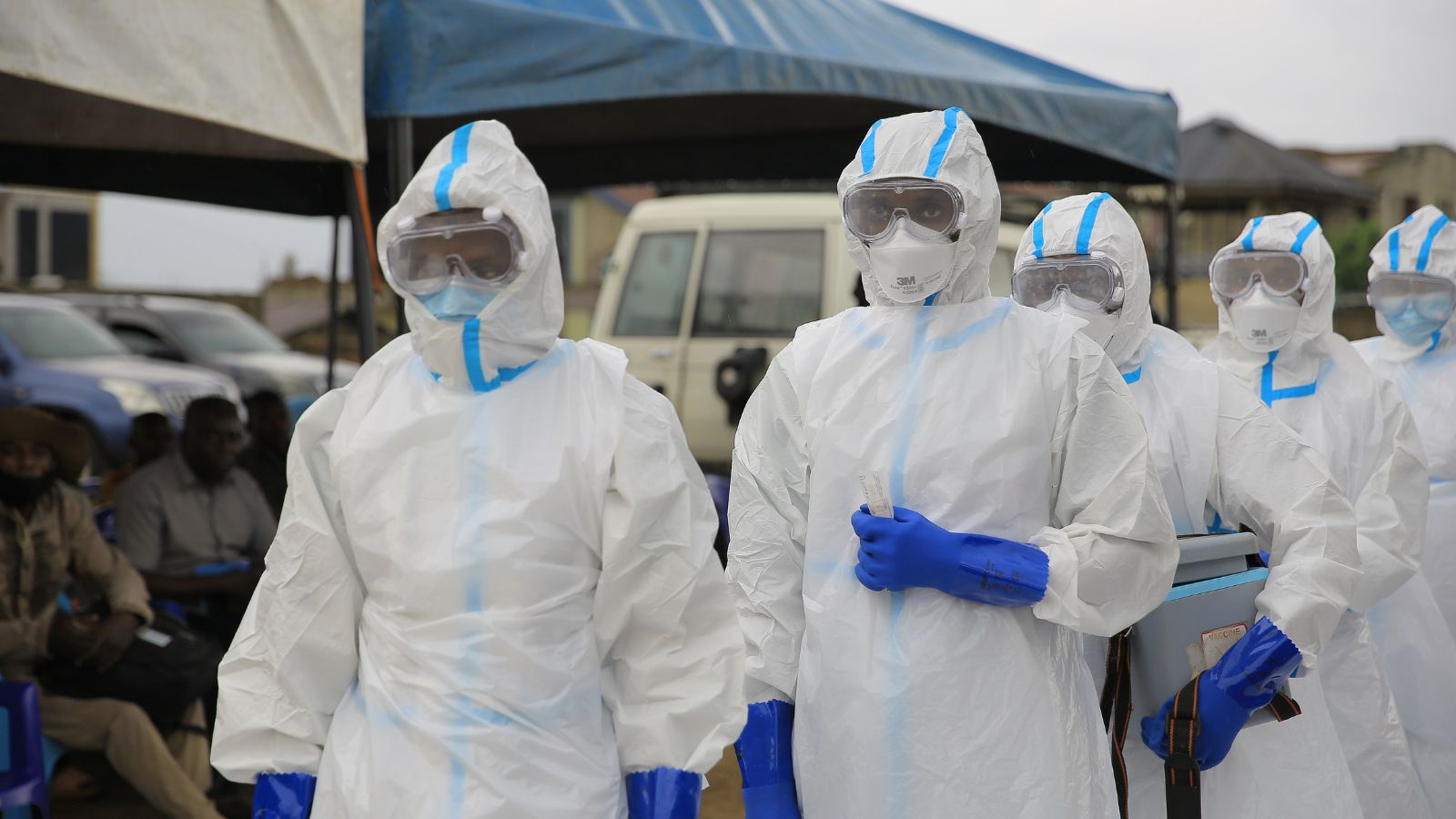
Headline counts of confirmed cases and deaths obscure the true operational threat of the Bundibugyo virus outbreak in the Democratic Republic of the Congo (DRC): velocity—how rapidly transmission expands across geographic and institutional boundaries—is outpacing conventional containment playbooks.
Standard outbreak reporting treats cumulative totals as the primary measure of severity. That metric lags reality in a fast-moving epidemic. When an outbreak crosses 12,000 confirmed cases with roughly 5,900 deaths since May 2026, comparing raw totals to past crises misses the decisive operational variable: time to threshold. Surpassing 1,000 confirmed cases in roughly 40 days—compared to approximately 235 days in the 2018 DRC response—signals a steeper early growth curve and faster geographic seeding across provinces and transport corridors.
What follows is a structured deconstruction of why this outbreak accelerates so quickly, how armed insecurity and medical countermeasure gaps interact with transmission mechanics, and how response teams must re-sequence operations when frontline access is unstable.
What Headline Metrics Miss About Outbreak Velocity
Competitor coverage typically frames record-pace outbreaks around two numbers: rising case counts and mortality tolls. Both matter, yet neither explains why containment teams fall behind early in the curve.
In epidemic operations, case velocity is the rate of new infections over time, while spatial dispersion is how quickly chains of transmission jump to new health zones and provinces. High velocity compresses the window for three core interventions:
- Case isolation: Every hour a symptomatic patient remains outside safe care increases household and nosocomial exposure.
- Contact tracing: Rapid daily case accrual overwhelms finite tracing teams, creating unmonitored chains of transmission.
- Safe and dignified burials: Delays around high-risk post-mortem handling create concentrated exposure events when community trust is already strained.
When case counts climb faster than surveillance and treatment capacity can scale, the system enters an operational deficit. A smaller cumulative total with high early velocity can pose a stiffer containment challenge than a larger outbreak that spreads more slowly across fewer active fronts.
Known Facts Versus Analytical Hypotheses
Separating verified surveillance data from operational interpretation keeps risk assessments grounded:
- Known facts: Public health agencies have identified Bundibugyo virus as the causative pathogen of the 2026 outbreak declared in May in the DRC, with cases spreading across multiple provinces and reaching over 12,000 confirmed cases and roughly 5,900 deaths by late November. Cross-border and imported cases have occurred—including earlier activity in Uganda where the outbreak later ended after the 42-day countdown, alongside imported cases and evacuations linked to Kenya, Nigeria, and Europe without sustained wider community spread reported in those destinations. No licensed vaccine or approved specific antiviral treatment is available for Bundibugyo virus disease.
- Educated hypotheses: Rapid early growth likely reflects a combination of delayed detection in complex or remote settings, mobility along regional corridors, armed conflict disrupting health services and evacuating responders, and the absence of pathogen-specific licensed medical countermeasures. Exact contributions of each factor remain analytical estimates rather than proven proportions.
The Three Failure Modes Driving Transmission
Fast-moving outbreaks rarely fail for a single reason. They accelerate when three structural failure modes reinforce one another across time and space.
1. Security Disruption and Response Attrition
Armed clashes between state forces and non-state groups in eastern DRC directly degrade epidemic control. Security shocks cause two compounding effects. First, civilian displacement moves people across health zones while cutting off routine clinical care, increasing the chance that symptomatic individuals seek informal care or travel while infectious. Second, direct threats or fighting force humanitarian and health workers to pause activities or evacuate, creating blind spots in surveillance and slowing ring or contact follow-up.
When responders withdraw from a hotspot—even temporarily—unobserved transmission chains lengthen. Returning later requires rebuilding local access and trust from a weaker position.
2. Countermeasure Gaps and Clinical Bottlenecks
Unlike Ebola virus (Zaire ebolavirus), where licensed vaccines and targeted monoclonal antibody therapies have transformed outbreak response in prior DRC events, Bundibugyo virus lacks an approved vaccine or specific treatment. Supportive clinical care—aggressive fluid and electrolyte management, organ support, and infection prevention and control—remains central to survival.
Without a pathogen-specific licensed vaccine or therapy, public health teams cannot rely on biomedical tools to blunt transmission quickly in high-risk pockets. Meanwhile, experimental candidates require rigorous safety, ethical, and operational protocols that are difficult to execute amid active fighting and supply chain friction. High crude case fatality—near half of confirmed cases—reflects both severe disease biology and strained clinical capacity under field conditions.
3. Trust Deficits and Friction at the Community Interface
Epidemic containment depends on voluntary reporting, isolation, safe burial practices, and cooperation with contact tracers. When communities experience chronic insecurity, economic strain, or prior negative encounters with external authorities, skepticism toward official directives rises.
A common mistake in rapid-response playbooks is treating community engagement as a messaging add-on rather than a core operational bottleneck. If families fear treatment centers or view burial protocols as disrespectful, cases surface late—often after peak infectiousness or death—turning every delayed detection into a multiplier of downstream cases.
How Escalation Cascades Through Health Systems
Standard reporting often lists conflict, weak infrastructure, and distrust as parallel obstacles. In practice, they form a tight feedback loop:
- Conflict disrupts access: Fighting forces clinic closures, supply delays, and responder evacuations.
- Care delays lengthen infectious windows: Patients stay home longer or move between providers, raising secondary exposure risk.
- Unchecked spread strains tracing: Rising case velocity exhausts local surveillance and contact-tracing bandwidth.
- Fear widens the trust gap: Visible deaths and disrupted services heighten community anxiety and resistance to formal interventions.
Breaking this loop requires matching intervention design to local operational reality rather than forcing uniform protocols across every health zone.
Tactical Playbook for High-Velocity Containment
Containing a high-velocity outbreak under security constraints requires shifting from centralized, rigid campaigns to decentralized, risk-stratified execution.
Step 1: Segment Health Zones by Access and Transmission Risk
Divide affected and adjacent health zones into operational tiers based on security stability, active case velocity, and population movement. Concentrate mobile rapid-response teams, diagnostic capacity, and isolation beds where transmission is active and access is feasible, while maintaining lightweight alert systems in contested areas so signals are captured the moment access opens.
Step 2: Decentralize Triage and Infection Control
Avoid relying solely on large, distant treatment centers that patients fear or cannot reach safely during clashes. Strengthen triage and isolation at peripheral clinics and community-adjacent holding points equipped with strict infection prevention and control supplies, reliable water and waste management, and rapid diagnostic pathways. Early isolation at a nearby facility often outperforms delayed transfer to a distant hub.
Step 3: Localize Surveillance and Burial Mediation
Deploy and train local community health workers and trusted local mediators who remain in place when external teams face movement restrictions. Pair early symptom alerts with respectful, negotiated burial and care arrangements co-designed with local leaders, reducing friction while protecting households and staff.
Step 4: Harden Cross-Border and Hub Screening
Even when the vast majority of transmission stays concentrated inside the DRC, regional travel and transport hubs remain vulnerable to imported cases. Maintain exit and entry screening, rapid laboratory confirmation, and pre-positioned isolation and contact-quarantine protocols in neighboring countries and major transit nodes so imported cases are detected early and contained before secondary chains take hold.
Step 5: Ring-Fence Clinical Trials Under Strict Safeguards
Where investigational vaccines or therapeutics for Bundibugyo virus are deployed or studied, align trial designs with field realities and transparent community communication. Keep cold-chain, data, and safety monitoring streamlined without cutting ethical or scientific standards, ensuring any clinical evidence generated directly supports frontline care.
Limits and Trade-Offs of These Measures
No operational adjustment eliminates the structural hazards of an active conflict zone. Decentralizing care can complicate quality oversight and supply security if clinics are overrun. Relying heavily on local personnel reduces evacuation risk for international staff but shifts frontline exposure onto local workers who may lack specialized protective equipment or evacuation options. Border screening prevents some exports yet cannot catch every traveler incubating infection during the up-to-21-day window without symptoms.
Strategic Recommendation for Response Commanders
Prioritize hyper-local containment and rapid signal capture in accessible corridors over comprehensive coverage promises across active combat zones. Commanders should lock in three concrete actions immediately: establish joint security-health trigger thresholds that dictate when teams pause, shift, or re-enter a health zone without ad-hoc delays; ring-fence dedicated logistics and IPC supplies for decentralized isolation and safe burial teams in high-mobility hubs; and pair every clinical or trial deployment with transparent local briefings so community cooperation scales alongside medical capacity. When security is volatile and pathogen-specific vaccines do not yet exist, speed of local isolation and continuity of trust determine whether the curve bends or breaks further.