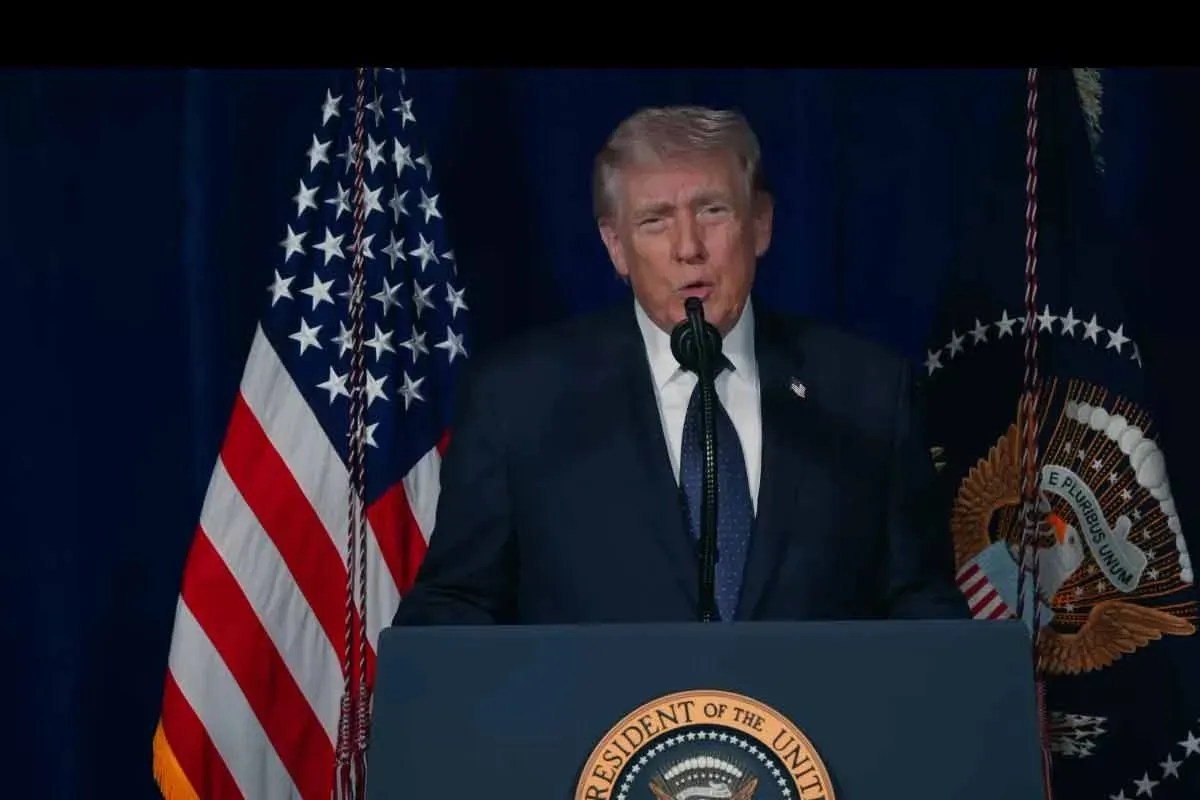
Donald Trump recently claimed that the Iranian regime killed 52,000 protesters during civil unrest, a figure that massively inflates documented casualty counts from independent human rights organizations. Speaking at a campaign-style rally, the former president used the staggering number to justify his administration's historic maximum pressure campaign and argue for continued aggressive posturing against Tehran. While Trump used the platform to position himself as the ultimate hardliner against Iranian aggression, his data contradicts verified tracking by international watchdogs, which place the actual death toll from recent major protest waves closer to hundreds or thousands, not tens of thousands.
The assertion immediately triggered alarms among intelligence analysts and Middle East experts. It is a classic rhetorical strategy. Take an existing, verifiable tragedy and multiply the metrics to maximize political impact. The strategy works because the Iranian government actively suppresses information, creating an information vacuum where any number can seem plausible to an angry audience.
Tracking the Missing Math behind the Fifty Two Thousand Figure
To understand where Trump's numbers diverge from reality, you have to look at the actual data collected on the ground during the most violent recent uprisings in Iran. The 2019–2020 protests, sparked by fuel price hikes, and the 2022–2023 "Woman, Life, Freedom" movement following the death of Mahsa Amini, represent the bloodiest domestic crackdowns in the Islamic Republic’s recent history.
During the 2019 demonstrations, Reuters reported that Iranian interior ministry officials quietly acknowledged around 1,500 people were killed over less than two weeks. Human rights organizations like Amnesty International and Human Rights Watch documented lower confirmed numbers, hovering between 300 and 500, due to their strict verification standards requiring names and specific locations. Even if one accepts the highest insider government estimates leaked to international media, the number falls short of Trump’s claim by over 50,000 lives.
The 2022 protests saw a similar pattern of brutal suppression and data fragmentation. The Human Rights Activists News Agency, a premier independent tracking group, documented approximately 530 protester deaths over months of sustained street battles. Combining every major protest wave over the last decade fails to yield a sum that approaches 52,000 deaths.
The danger of using inflated figures extends beyond mere political exaggeration. It actively harms the credibility of the opposition movement inside Iran. When Western leaders use unsubstantiated metrics, Tehran’s state-run media apparatus seizes on the errors to dismiss all foreign reporting on human rights abuses as fabricated Western propaganda.
How Washington Distorts Foreign Intelligence for Domestic Gain
This is not the first time a United States administration or political figure has manipulated foreign casualty data or intelligence to serve a specific policy agenda. The process usually follows a distinct pattern where unverified, worst-case scenario reports from exile groups are elevated directly to executive speeches, bypassing the standard vetting procedures of the intelligence community.
Exile groups often have an agenda. They want to provoke external intervention or harsher sanctions against the regime they flee. Consequently, their internal data gathering can lack the rigorous verification methods used by institutional watchdogs. Political figures looking for a quick, impactful talking point frequently grab these unverified numbers because they sound more dramatic than the nuanced, carefully caveated estimates provided by intelligence agencies.
This creates a dangerous feedback loop. Policymakers begin basing actual strategic decisions on their own public rhetoric rather than objective reality. If a political base believes a regime has slaughtered 52,000 people in a single wave of protests, they will demand policies that align with that level of atrocity, limiting diplomatic flexibility and potentially forcing the military into escalatory positions that the actual situation on the ground does not warrant.
The Realities of Iranian State Violence
The inflation of these numbers is particularly tragic because the real, verified numbers are horrifying enough on their own. The Iranian regime does not need its crimes exaggerated to be viewed as an authoritarian entity. The methods used by the Islamic Revolutionary Guard Corps and the Basij militia are well-documented, brutal, and systematic.
State security forces routinely use live ammunition against unarmed crowds, deploy snipers on rooftops to target protest leaders, and use security cameras with facial recognition technology to track down dissidents weeks after a rally ends. The violence continues inside the prison system. Torture, forced confessions, and swift executions following kangaroo trials are standard tools used by the judiciary to crush dissent.
Focusing on a fake metric shifts the international conversation away from these verifiable systemic abuses. Instead of debating how to stop the regime from using specific surveillance technologies or how to choke off the funds used by the Basij militia, the discourse devolves into a partisan debate over the accuracy of a speech transcript.
The True Cost of Political Hyperbole
Western policy toward Iran requires absolute precision. Iran operates a sophisticated network of regional proxies, advances its nuclear enrichment capabilities, and maintains a tighter grip on domestic dissent through digital authoritarianism. Dealing with these threats requires a clear-eyed assessment of the regime's capabilities and its vulnerabilities.
Relying on hyperbole clouds strategic vision. It alienates international allies who refuse to sign onto sanctions or coalitions built on flawed premises. European nations, which are geographically closer to the Middle East and more vulnerable to the fallout of a hot conflict with Iran, consistently demand empirical verification before shifting their diplomatic stances. When American leaders present easily debunked figures on the global stage, it fractures the unified front needed to hold Tehran accountable.
The true victims of this rhetorical inflation are the activists inside Iran who risk their lives to document the names of the fallen. Every time a verified list of casualties is overshadowed by a massive, fabricated number thrown out at a political rally, the painstaking, dangerous work of ground-level human rights defenders is undermined.
International policy must be anchored to verifiable facts. Trump's claim of 52,000 dead serves domestic political theater, but it fails the test of investigative scrutiny and weakens the long-term effort to hold the Iranian regime accountable for the atrocities it actually commits.