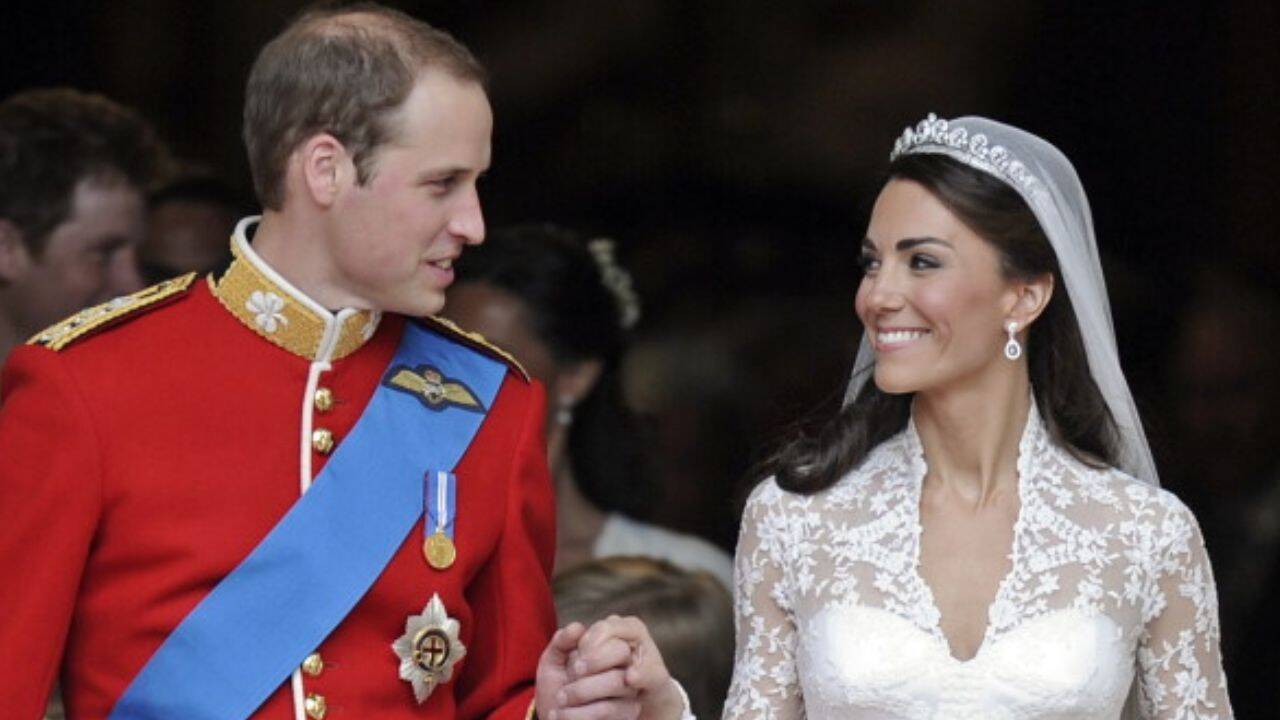
State-adjacent royal diplomacy operates as a low-risk, high-visibility instrument of foreign policy, designed to project continuity when formal executive negotiations face friction. When Prince William and Catherine, Princess of Wales, engage in a three-day itinerary in India culminating in a bilateral meeting with Prime Minister Narendra Modi in New Delhi, the operational objective extends far beyond ceremonial pageantry. The visit functions as a calibrated soft-power deployment meant to stabilize bilateral perception, reinforce institutional ties, and create atmospheric momentum for stalled or sensitive geopolitical tracks—most notably trade liberalization, defense cooperation, and climate finance.
Standard coverage of royal tours treats itineraries as chronological travelogues, cataloging wardrobe choices, crowd sizes, and photo opportunities. That framing misses the structural mechanics of modern constitutional monarchy. Because the British Crown holds zero executive authority over foreign policy, its principals act as non-partisan brand ambassadors for the United Kingdom's state interests. A three-day compressed schedule in India represents an acute allocation of scarce diplomatic bandwidth, signaling that Whitehall views the Indo-British relationship as a strategic priority requiring executive-level reinforcement without the political liabilities attached to a Prime Minister’s visit.
The Structural Mechanics of Non-Executive Diplomacy
To evaluate the utility of a royal visit to New Delhi, one must separate symbolic execution from geopolitical function. Foreign ministries deploy senior royals when traditional diplomatic channels require an external catalyst. Unlike cabinet ministers, whose engagements are tied to electoral cycles and immediate legislative deliverables, members of the Royal Family carry multi-decade institutional memory.
This structural position yields three distinct operational advantages:
- Asymmetric Media Penetration: A prime ministerial summit generates coverage confined largely to political and financial desks. A royal tour captures lifestyle, cultural, and mainstream broadcast audiences simultaneously across both nations. In a media environment characterized by audience fragmentation, the Crown remains one of the few remaining vehicles capable of commanding synchronized mass attention.
- Protocol Insulation: Executive summits carry binary pass-fail metrics; if a bilateral trade deal is not signed, the summit is framed as a failure. Royal engagements operate without binding policy deliverables, allowing both London and New Delhi to claim diplomatic success simply through optics and mutual protocol adherence.
- Sub-National Reach: Prime Ministers rarely have the schedule capacity to engage deeply with civil society, grassroots environmental initiatives, or regional cultural institutions during short bilateral trips. Royals absorb this bandwidth, building institutional goodwill across non-governmental sectors that executive officials overlook.
The limitation of this mechanism is equally clear. Soft power cannot resolve structural economic disagreements. If London and New Delhi remain deadlocked over visa mobility for Indian professionals or tariff reductions on Scotch whisky and automotive exports, a meeting at Hyderabad House between Prince William and Prime Minister Modi will not alter the underlying negotiating positions of the UK Department for Business and Trade or India's Ministry of Commerce and Industry.
Deconstructing the New Delhi Itinerary
A three-day timeframe imposes severe logistical constraints, forcing planners at Kensington Palace, the Foreign, Commonwealth and Development Office (FCDO), and the Indian Ministry of External Affairs (MEA) to strip away peripheral engagements. Every stop on a compressed schedule represents a deliberate policy signal.
The Bilateral Anchor with Prime Minister Modi
The central fixture of the New Delhi leg—the formal audience with Prime Minister Narendra Modi—serves as the political validation of the entire tour. In India's centralized executive system, proximity to the Prime Minister determines the perceived weight of any foreign delegation.
For Modi, hosting the future King of the United Kingdom reinforces India’s status as an indispensable global power courted by traditional Western institutions. For the British delegation, the meeting demonstrates access at the highest level of Indian governance. The interaction operates on mutual utility: Modi projects global stature to a domestic audience, while the British Crown demonstrates ongoing relevance in the post-colonial Commonwealth framework.
Climate Capital and the Earthshot Framework
Prince William’s diplomatic portfolio centers heavily on environmental conservation and climate innovation, institutionalized through the Earthshot Prize. India is both one of the world’s largest emitters of greenhouse gases and a primary hub for scalable, low-cost climate adaptation technologies.
Engagements focused on sustainability during a three-day Indian tour are rarely generic charity visits. They function as scouting and validation exercises for green capital. By spotlighting Indian environmental entrepreneurs or conservation projects, the Prince aligns the British monarchy with India's domestic development goals—specifically the transition toward renewable energy and urban sustainability—while positioning British financial institutions as preferred partners for green infrastructure investment.
Youth Demographics and Institutional Modernization
India possesses the world’s largest youth population, a demographic with minimal emotional attachment to the historical ties of the Commonwealth and high sensitivity to perceptions of colonial nostalgia. Traditional royal pageantry carries significant reputational risk in this environment; imagery that evokes the British Raj alienates the exact demographic London needs to engage for long-term economic partnership.
Consequently, modern royal itineraries in India systematically minimize colonial-era aesthetics in favor of technology incubators, startup ecosystems, and modern cultural hubs. The operational goal is to rebrand the United Kingdom from a former imperial power into a contemporary partner in innovation, higher education, and digital services.
The Cost-Benefit Calculus of Compressed Tours
Executing a high-security international tour over 72 hours introduces substantial operational friction. Security deployments in New Delhi require extensive coordination between the Metropolitan Police’s Royalty and Specialist Protection command and India’s Special Protection Group (SPG) and Delhi Police. Road closures, airspace restrictions, and multi-layered perimeter sweeps impose direct civic costs on the host city.
From a resource-allocation standpoint, a three-day tour exhibits a high fixed-cost-to-variable-output ratio. The logistical overhead—advance reconnaissance teams, diplomatic clearances, media accreditation, and aviation transport—remains largely identical whether a tour lasts three days or ten. Compressing the itinerary into 72 hours maximizes intensity while minimizing the risk of diplomatic fatigue or unscripted gaffes.
The primary risk of compression is superficiality. When principals move between engagements at 90-minute intervals, interactions are reduced to scripted handshakes and brief remarks. Critics within both the British press and Indian civil society frequently point out that rapid-fire itineraries prioritize broadcast visuals over substantive policy dialogue. If the visit is perceived domestically in the UK as an expensive photo opportunity during periods of fiscal tightening, or in India as performative tokenism, the soft-power return turns negative.
The Commonwealth Variable and Historical Friction
Any engagement between the British Royal Family and the Indian state operates within the complex architecture of the Commonwealth of Nations. While India is a republic and does not recognize the British monarch as head of state, it remains the largest member state of the Commonwealth by population and economic weight.
As King Charles III manages health constraints and reduces long-haul travel, Prince William increasingly assumes the operational burden of maintaining Commonwealth cohesion. India’s active participation is essential to the organization's survival; without New Delhi, the Commonwealth risks becoming an irrelevant club of smaller nations.
However, the historical ledger remains a persistent vulnerability. Unlike executive politicians, who can issue formal policy shifts, members of the Royal Family are constrained by constitutional neutrality when addressing historical grievances, colonial-era wealth extraction, or calls for formal apologies regarding events such as the Jallianwala Bagh massacre. Navigating this terrain requires extreme rhetorical discipline: expressing regret and acknowledging shared history without crossing into unauthorized state apologies that carry legal or diplomatic ramifications.
Strategic Execution for Bilateral Stakeholders
The true measure of a three-day royal visit to New Delhi lies not in the immediate press clippings, but in how executive agencies, trade envoys, and private-sector actors capitalize on the diplomatic wake created by the tour.
To extract tangible value from this deployment, British and Indian institutional stakeholders must execute three sequential moves immediately following the delegation's departure:
- Anchor Trade Delegations to the Media Cycle: The UK Department for Business and Trade must schedule ministerial trade missions within 30 to 45 days of the royal visit, utilizing the heightened public and corporate awareness in Mumbai, Bengaluru, and New Delhi to accelerate stalled sector-specific agreements in fintech, life sciences, and clean energy.
- Institutionalize Climate Financing Channels: Rather than leaving environmental engagements as standalone media events, British development finance institutions and private green funds should establish formal co-investment pipelines with the specific Indian climate startups and NGOs spotlighted on the itinerary, converting royal validation into measurable capital allocation.
- Decouple Bilateral Ties from Nostalgia: Both the FCDO and the MEA should audit future cultural and educational exchange programs to ensure funding flows toward STEM research, artificial intelligence governance, and vocational mobility rather than heritage preservation, aligning bilateral institutions with the economic priorities of India's under-35 demographic.
Without immediate institutional follow-through from Whitehall and South Block, the goodwill generated in New Delhi will dissipate within a single news cycle, leaving structural bilateral bottlenecks untouched.