National Democratic strategists spent years treating the Deep South like a charity case. They wrote off entire states before a single yard sign went up, funneling hundreds of millions of dollars into the same handful of Rust Belt and Sun Belt battlegrounds while starving local party infrastructure across the Gulf Coast.
Then Scott Colom happened. In related developments, take a look at: What Happens When Off-Road Vehicle Crashes Turn Fatal and Why Adult Supervision Fails.
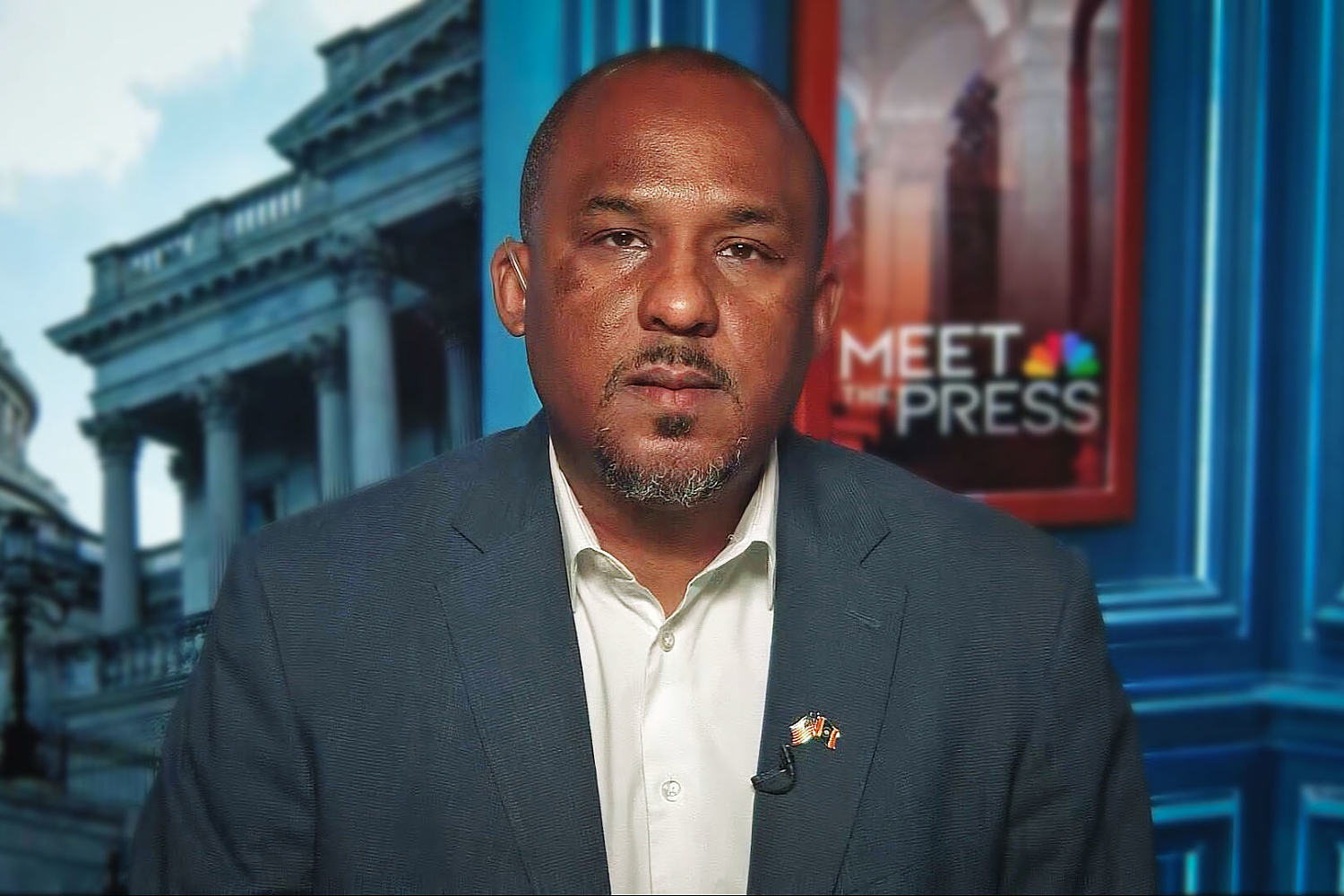
On November 3, 2026, Colom—a 43-year-old local district attorney from Columbus—defeated Republican incumbent Cindy Hyde-Smith in Mississippi’s U.S. Senate race. He didn't just eke out a fluke win in a wave election. He became the first African American elected statewide in Mississippi since Reconstruction and the first Democrat to win a new Senate term there since 1947. Weeks later, sitting across from Kristen Welker on NBC’s Meet the Press on November 15, Colom delivered a blunt reality check to the national party establishment.
His message was simple. If Democrats want a durable majority in Washington, they have to stop treating Southern states like lost causes. The Washington Post has provided coverage on this fascinating topic in great detail.
"In the South, we had to do more with less," Colom said during his November 15 appearance. "In Mississippi, we got it out the mud."
That single quote captures a massive blind spot in modern American campaign strategy. For two decades, consultant-driven orthodoxy insisted that spending money in states Donald Trump won by double digits—he carried Mississippi by nearly 23 points in 2024—was lighting cash on fire. Yet Colom’s 49.36% to 48.54% victory proved that when a candidate actually shows up, speaks to kitchen-table pocketbook pain, and builds local trust, the electoral map stretches far wider than beltway spreadsheets admit.
Why Scott Colom’s Mississippi Win Shattered Conventional Wisdom
You can't understand why Colom's warning matters unless you look at the math he had to overcome.
Heading into the 2026 midterms, virtually nobody outside Mississippi had this race circled on a top-tier target list. Federal Election Commission filings through mid-October 2026 show Cindy Hyde-Smith raised roughly $6.28 million and spent over $5 million defending her seat. Colom raised $4.4 million and spent about $3.38 million. He was outspent by nearly two million dollars in a state where Republicans had controlled every statewide office for years.
Even polling right up to late October showed Hyde-Smith ahead. A Change Research survey conducted October 21–22 put Hyde-Smith at 43% and Colom at 40%, with independent candidate Ty Pinkins pulling 6%.
So what changed between late October and Election Day?
Three things broke in Colom's favor, and none of them happened by accident:
- Relentless focus on household costs: While national pundits obsessed over cable news talking points, Colom hammered away at tariffs, grocery bills, and stagnant wages. When Hyde-Smith caught flak over a tone-deaf remark telling struggling shoppers to "pick another protein" amid high meat prices, Colom cut a raw, unvarnished digital ad featuring regular Mississippians reacting to her words. It didn't air on expensive broadcast television, yet it exploded organically on social media because it felt real.
- Credibility across racial and geographic lines: Colom wasn't a parachute candidate dropped in from Washington. As a three-term local prosecutor in the Golden Triangle region of northeast Mississippi, he had an established record on public safety and local governance. Back in 2022, President Joe Biden nominated him to the U.S. District Court for the Northern District of Mississippi—a nomination backed by senior Republican Sen. Roger Wicker and former GOP Gov. Haley Barbour before Hyde-Smith personally blocked it. That history gave Colom instant bipartisan credibility that attack ads couldn't easily erase.
- High-turnout mobilization in the Black Belt: Mississippi has the highest percentage of Black residents of any state in the country, yet chronic underfunding of voter registration and year-round field organizing often leaves hundreds of thousands of potential voters on the sidelines. Colom leaned directly into Mississippi’s civil rights legacy, reminding voters of the sacrifices made for the ballot while pairing that moral urgency with concrete economic promises.
When the votes were finally tallied—480,153 for Colom to 472,122 for Hyde-Smith, with Ty Pinkins taking 20,469—nearly every county in Mississippi had shifted leftward compared to 2024.
What "Investing in the South" Actually Means in Practice
When politicians talk about "investing in the South," donors usually hear "write a bigger check for TV ads in October."
That's the exact mistake Colom is warning against.
If you dump $10 million into a Southern state three weeks before Election Day, most of that money disappears into broadcast station profit margins and consultant commissions. Voters who haven't heard from a party in four years don't suddenly change their minds because they saw thirty-second spots during college football commercial breaks.
Real investment looks completely different on the ground. Having watched dozens of statewide campaigns succeed and implode across the region, the difference between performative spending and durable organizing comes down to four specific commitments.
1. Year-Round County Infrastructure Instead of Parachute Campaigns
In rural counties across Mississippi, Alabama, Georgia, and South Carolina, the Democratic Party often barely exists as a physical presence between presidential cycles. There are no local field offices, no paid county organizers, and no consistent voter registration drives at community colleges or barbershops.
When a national committee waits until summer of an election year to hire staff, those organizers spend half their time just figuring out who the local pastors, union stewards, and civic leaders are. By the time they build trust, early voting has already started. Funding full-time, local organizers twelve months a year costs a fraction of a single media buy in Philadelphia or Phoenix, yet it builds permanent voter files and community relationships that carry across multiple cycles.
2. Empowering Candidates Who Fit Their States
One of the biggest errors national donors make is demanding ideological uniformity from candidates running in conservative-leaning states. A platform tailored for Brooklyn or Seattle will sink a candidate in Tupelo or Meridian before Labor Day.
Look closely at how Colom positioned himself during his Meet the Press interview. He didn't recite a national activist checklist. Instead, he staked out a populist, economically focused agenda rooted in Mississippi realities:
- Reclaiming congressional authority over tariffs: Colom named lowering tariffs as his number-one legislative priority, pointing out that broad import taxes have punished Mississippi farmers who lost overseas buyers while raising everyday prices for working families.
- Raising the federal minimum wage: He noted that the federal minimum wage hasn't budged since LeBron James was in his first stint with the Cleveland Cavaliers, framing a wage hike as basic common sense for low-income Southern workers.
- Closing billionaire tax loopholes: Rather than running on broad middle-class tax hikes, he targeted the "buy, borrow, die" loophole that lets ultra-wealthy investors borrow against stock portfolios tax-free.
- Pragmatic healthcare and social stances: While backing reproductive freedom and opposing strict bans that lack exceptions for rape or incest, Colom also acknowledged that many Mississippians he spoke with on the campaign trail liked their private health insurance and wanted to keep it.
That blend isn't triangulation. It's listening to the people you actually want to represent.
3. Fixing Ballot Access and Structural Barriers
You can't win close elections in the Deep South if eligible citizens face an obstacle course just to cast a ballot. States across the region maintain some of the strictest voting rules in the nation—no-excuse absentee voting restrictions, early voting limits, and aggressive voter roll purges.
Investing in the South means funding legal defense teams, voter protection hotlines, and year-round ID assistance programs long before ballots are printed. In a race decided by roughly 8,000 votes out of nearly a million cast, basic voter protection isn't a side project. It's the ballgame.
4. Delivering Tangible Economic Wins Once in Office
Colom made a crucial point on NBC that too many strategists miss. Winning a seat once is only half the battle. Putting Southern Democrats in positions of real legislative influence—on agriculture, appropriations, commerce, and armed services committees—allows them to bring federal dollars, infrastructure projects, and trade relief back home.
When rural and working-class voters see concrete improvements in hospital funding, broadband access, or agricultural exports, party labels start to soften. That's how a surprise upset turns into what Colom called "a durable majority".
The Bigger 2026 Map Proves Mississippi Wasn't an Isolated Fluke
Critics of Colom's thesis will argue that 2026 was a unique midterm environment—a backlash election fueled by inflation fatigue, tariff pain, and frustration over foreign entanglements. They'll say Mississippi simply caught a historic wave that won't repeat in 2028 or 2030.
There's some truth to that caution. Midterm waves lift underdog candidates who might struggle in higher-turnout presidential years. Ignoring the structural Republican lean of states like Mississippi or Kansas would be naive.
Yet look across the rest of the Southern map in November 2026, and a clear pattern emerges:
- Georgia: Democrats didn't just hold ground—they swept key statewide offices, proving that sustained, multi-cycle organizing in Atlanta's suburbs and rural Black counties pays compound interest.
- South Carolina: Candidates like Annie Andrews outperformed historical baselines in long-shot territory, showing that voters in traditionally red Southern states respond when Democrats contest every zip code rather than conceding whole regions.
- North Carolina and Texas: Even where statewide victories remained elusive or razor-thin, down-ballot investments narrowed margins in suburban rings and rural counties that national consultants had written off a decade ago.
Meanwhile, look at what happened in Florida, where Democrats suffered another bruising cycle. As Florida state Rep. Angie Nixon pointed out after the election, out-fundraising gaps, chronic under-investment in voter registration, and unchallenged structural barriers left candidates trying to cover a state of 24 million people without the resources needed to compete.
The contrast between Mississippi and Florida tells the whole story. When Democrats write off a state as "too red" or "too expensive," it becomes a self-fulfilling prophecy. When they back authentic local leaders and fight for every precinct, even the deepest red states can flip.
What Smart Political Organizers and Donors Should Do Right Now
With Democrats holding a 55-seat Senate majority heading into January 2027, the temptation in Washington will be to play defense—hoarding cash for 2028 presidential swing states and protecting incumbents in Michigan, Pennsylvania, and Wisconsin.
That would be a strategic blunder. If you're a party leader, donor, or grassroots organizer looking to turn 2026's momentum into lasting power, take four concrete actions before the 2028 cycle even begins:
- Audit your giving and shift away from late-cycle TV pacs. Redirect contributions toward state-level party-building funds and grassroots civic groups in Mississippi, Georgia, North Carolina, and South Carolina that employ local organizers year-round.
- Put Southern senators on high-impact committees. Senate leadership should seat Scott Colom on panels like Agriculture, Appropriations, or Commerce where he can directly shape tariff policy, farm relief, and rural economic development before his next race.
- Recruit local problem-solvers early. Stop looking for media-savvy pundits to run in red and purple states. Look at county prosecutors, mayors, school board members, and small-business owners who already have cross-party trust in their communities.
- Build permanent voter-registration pipelines. Treat voter registration as a twelve-month operational budget item rather than a six-week autumn sprint, especially across the rural South where registration gaps decide close elections.
Scott Colom proved in Mississippi that no state is permanently locked behind a partisan wall. Whether national Democrats actually learn from his win—or go right back to ignoring the South until the next crisis—will decide how long their new majority survives.