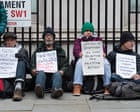
Everyone covering the unrest in Pakistan-occupied Jammu and Kashmir (PoJK) is applauding the latest press release.
The Jammu Kashmir Joint Awami Action Committee (JKJAAC) wants an international probe into the Pandi killings. Protesters are marching in the UK to back the Public Action Committee. Local outlets are treating this as a masterstroke of grassroots diplomacy.
They are wrong.
If you actually understand how international geopolitics and South Asian security apparatus work, you know this strategy is a dead end. Calling for a United Nations or third-party investigation into state violence in PoJK does not put pressure on Islamabad. It gives the Pakistani establishment the exact stalling mechanism it wants while draining the momentum of a movement that was actually winning on the ground.
The Illusion of International Intervention
Most regional commentary operates on a flawed premise: that global powers care about human rights violations in contested territories and will step in once presented with enough evidence.
Look at the track record. I have spent years analyzing South Asian geopolitical flashpoints and watching genuine grassroots movements suffocate under the weight of their own diplomatic naivety. Time and again, local leaders trade immediate, tangible domestic leverage for the mirage of international sympathy.
An "international probe" is not a magic wand. To launch a formal UN-backed inquiry, you need consensus at the UN Human Rights Council or the Security Council. Neither body operates as a neutral courtroom. They are geopolitical trading floors.
- China's Veto and Influence: Beijing has billions of dollars tied up in the China-Pakistan Economic Corridor (CPEC), which runs directly through Gilgit-Baltistan and borders PoJK. China will block, dilute, or ignore any formal international mechanism that threatens Pakistan’s internal security narrative.
- Western Apathy: Washington and London view Kashmir through the prism of nuclear stability between India and Pakistan, not municipal governance in Muzaffarabad or Rawalakot. A few dozen protesters outside a consulate in Birmingham or London will generate a local news clip, a few sympathetic tweets from backbench MPs, and zero shifts in Foreign Office policy.
- Islamabad’s Delay Playbook: The moment a domestic movement shifts its demands from local economic justice to international legal inquiries, the state wins time. Investigations take years. Terms of reference get bogged down in diplomatic mud. By the time a report is drafted, the street-level anger that forced the government to the negotiating table has evaporated.
How the JKJAAC Lost the Plot
To see why this pivot is so dangerous, look at why the Jammu Kashmir Joint Awami Action Committee succeeded in the first place.
The movement did not gain traction because of Geneva or London. It exploded because it focused on hyper-local, undeniable material realities: exorbitant electricity tariffs on hydropower generated in their own backyard, the elimination of wheat subsidies, and the absurd perks enjoyed by the local political elite.
Those demands were lethal to the state's narrative. You cannot easily label a shopkeeper demanding fair flour prices a "foreign agent." When the Public Action Committee shut down commerce and marched on Muzaffarabad, they forced Islamabad to blink and release billions in subsidies. That was real power.
Now, look at what happens when the narrative shifts to demanding an international probe into the Pandi killings.
The state security apparatus immediately reframes the entire movement. Instead of dealing with angry taxpayers and consumers, the establishment gets to tell its domestic audience that the protest has been hijacked by separatists trying to internationalize a domestic issue. It hands hardliners the exact justification they need to deploy paramilitary forces, enforce internet blackouts, and arrest organizers under anti-terrorism statutes.
What People Get Wrong About Diaspora Protests
A common assumption among regional activists is that mobilizing the British Kashmiri diaspora creates unstoppable pressure on Islamabad.
Let's be brutally honest about how diaspora politics actually function. The British Pakistani and Kashmiri diaspora is massive, politically active, and deeply generous with remittances. When protests erupt in London, Bradford, or Luton, it creates the illusion of global solidarity.
Here is the catch: diaspora outrage rarely translates into state policy.
British politicians court these voting blocs for local council seats and parliamentary constituencies. They will happily hold up a placard, issue a strongly worded statement calling for "restraint and dialogue," and pose for photos with community leaders. Then, behind closed doors, the UK Foreign, Commonwealth & Development Office continues business as usual with Rawalpindi and Islamabad because counter-terrorism cooperation and regional stability outrank local grievances every single time.
Worse, relying on diaspora demonstrations creates a dangerous feedback loop for activists on the ground in PoJK. Seeing crowds in London makes local leaders feel like the world is watching and ready to intervene. It emboldens them to reject pragmatic local compromises in favor of maximalist demands that they have zero capacity to enforce.
The Real Mechanics of State Accountability
If an international probe is a trap, what is the alternative? How do you actually force accountability when state forces kill unarmed civilians like those in Pandi?
You do not outsource your leverage to diplomats in New York or Geneva. You weaponize the exact things the state cannot afford to lose: economic output and administrative paralysis.
Imagine a scenario where the Public Action Committee completely ignores international bodies. Instead of drafting appeals to the UN, they target the economic arteries of the region. PoJK is not an economic wasteland; it is a critical supplier of hydroelectric power to Pakistan's national grid. The Mangla Dam and the Neelum-Jhelum Hydropower Project are massive strategic assets.
When a movement maintains laser focus on domestic civil disobedience—tax boycotts, commercial strikes, and peaceful blockades of administrative hubs—the state faces an immediate financial hemorrhage. Every day of a general strike costs the exchequer millions. The establishment can ignore a UN resolution for fifty years; it cannot ignore a collapsing local tax base and a grid crisis for fifty days.
The Legal Route Nobody Uses
Furthermore, demanding an "international" probe bypasses the one domestic vulnerability the Pakistani state actually struggles to manage: its own fractured judicial and political elite.
While the military establishment holds the ultimate reins of power in Pakistan, the civilian judiciary and opposition parties in Islamabad are constantly looking for ammunition to weaken the sitting government. Forcing a judicial commission staffed by retired Supreme Court judges—under the relentless glare of domestic citizen journalism—creates immediate friction within Pakistan's own power structure. It forces Pakistani political parties to take a side on the record, fracturing the artificial consensus that Islamabad tries to project to the world.
The Uncomfortable Truth About Leverage
There is an obvious downside to keeping the fight strictly domestic and localized: the immediate physical risk to the protesters is higher.
Without the perceived shield of international scrutiny, local organizers face direct, unfiltered state coercion. Arrests, sedition charges, and economic blacklisting are standard operating procedures for the state when dealing with internal dissent. Seeking international backing is a natural human reaction when you are staring down the barrel of a rifle. People want someone powerful to come save them.
Nobody is coming.
History across South Asia—from Balochistan to the tribal belt—proves that waiting for international investigators to deliver justice is a slow-motion surrender. International observers only arrive after a conflict has already been decided on the ground, usually to write post-mortems on movements that failed to secure their own objectives.
The Public Action Committee had the state on the ropes because they understood where the real pressure points were: the wallet, the power grid, and the streets of PoJK. Trading that hard-won domestic leverage for a seat in the waiting room of international diplomacy is not an escalation. It is a retreat.
Stop asking the world to investigate the killings in Pandi. Shut down the local economy until the people who pulled the trigger are sitting in a courtroom in Muzaffarabad.