The dust in the Murray Valley doesn’t just settle; it coats the throat like powdered bone. By the winter of 1950, that dust was all a third-generation Australian farmer had left. The soil, once rich enough to anchor acres of rye grass, had been reduced to a fine, grey powder that blew away with the slightest breeze.
It was not drought that did this. It was a gray, twitching tide.
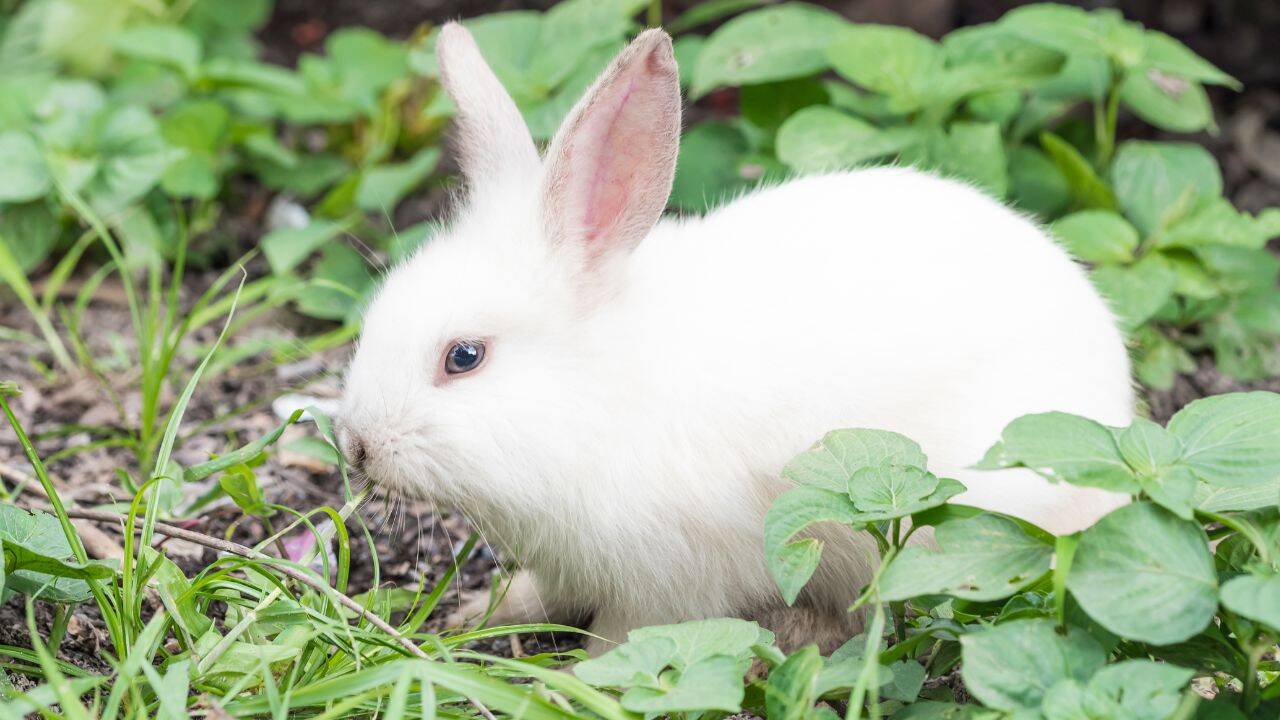
Rabbits. Billions of them. They did not just eat the pasture; they scalped it. They dug up the very roots of the grass, exposing the fragile topsoil to the harsh southern sun. A single warren could collapse a hillside. If you stood still in the twilight, the ground itself seemed to vibrate with the scratching of countless paws beneath the dirt. It was an ecological apocalypse, slowly starving the nation’s livestock and driving families off land they had spent decades clearing.
Desperation makes monsters of us all, or at least makes us willing to invite them in.
For years, a pediatric doctor named Jean Macnamara had been whispering a terrifying proposal into the ears of anyone who would listen. She had seen what a biological weapon could do, not to humans, but to pests. In South America, a specific pathogen called the myxoma virus had been discovered. In its native host, it caused nothing more than a mild swelling. But when introduced to the European rabbits that plagued Australia, it was lethal. It didn't just kill; it dissolved them from the inside out.
The scientists at the government research agencies were hesitant. They knew that when you open a cage containing a self-replicating biological entity, you lose the key. But by 1950, the politicians were out of options. The order was given. The virus was released at a few trial sites along the riverways.
Then, nothing happened.
For months, the virus seemed to simply vanish into the dry bush. The inoculated rabbits died, certainly, but the infection refused to travel. It required close, intimate contact to spread, and the vast Australian expanses seemed to swallow the plague whole. The critics scoffed. The farmers despaired. The scientists prepared to write their post-mortems on a failed experiment.
They forgot that nature does not operate in a vacuum.
On Christmas Eve of 1950, the skies over northern Victoria did something unusual. The dry, searing heat broke, replaced by an oppressive, heavy humidity that blew down from the tropics. Then came the rain. It fell in sheets, filling the dry billabongs and turning the parched Murray River into a bloated, brown snake.
Within days, the air became thick with a new sound: the high-pitched, maddening whine of millions of mosquitoes.
Consider what happens next: an invisible machinery, set in motion by a change in the weather. The mosquitoes didn't care about the warrens or the boundaries of the test sites. They simply fed. A mosquito would pierce the skin of an infected, dying rabbit, its mouthparts becoming coated in viral particles. Then it would fly a mile down the river, land on a healthy animal, and inject the payload. The insect wasn't a biological host; it was a mechanical syringe with wings.
By January 1951, the trickle of reports became a flood.
Farmers called into local radio stations, their voices cracking with a mixture of awe and horror. The gray tide was stopping. Across millions of square miles, rabbits were stumbling out of their holes in broad daylight, blind, their heads swollen to twice their normal size, covered in hideous, weeping tumors. They died by the millions. The stench of decaying flesh hung over the valleys like a physical wall. In less than two years, the rabbit population plummeted by over eighty percent. The wool and meat industries recovered almost overnight, saving the young nation from economic ruin.
But the jubilation was short-lived. A new ghost entered the room.
As the rabbit carcasses rotted in the sun, people in the same valleys began to fall ill. It started with a headache, then a skyrocketing fever, followed by confusion, tremors, and finally, comas. Children were dying in the local hospitals. The media, frantic and smelling blood, connected the dots with the subtlety of a sledgehammer. They called the area "Death Valley." They claimed the scientists had unleashed a mutant plague that had jumped from rabbits to humans.
The fear was infectious, far more transmissible than the virus itself. Parents refused to let their children play outside. Neighbors looked at each other with suspicion. The scientific community knew that the myxoma virus was physically incapable of binding to human cells, but nobody believed the men in white coats anymore. The public wanted a scapegoat.
To stop a panic, you cannot use logic. You must use theater.
Three men met in a quiet laboratory in Melbourne. Dr. Frank Macfarlane Burnet, a future Nobel laureate; Professor Frank Fenner, the man who would later help wipe smallpox from the face of the earth; and Dr. Ian Clunies Ross, the head of the government research council. They knew the human disease was actually Murray Valley encephalitis—a completely unrelated virus carried by the same explosion of mosquitoes. But they also knew that a press release would not convince a terrified mother.
Burnet reached for a vial containing a milky fluid. It was a concentrated dose of the live myxoma virus, roughly one hundred times the amount a rabbit would receive from a mosquito bite.
He didn't hesitate. He loaded a syringe and pushed the needle deep into Fenner’s arm. Then Fenner took the syringe, refilled it, and drove it into Burnet’s arm. Clunies Ross demanded his turn next.
One. Two. Three.
They did not hide behind laboratory walls. They announced what they had done to the press and walked out into the public eye. They spent the next three weeks waiting for the symptoms that they knew would never come, putting their own bodies on the line to prove a biological truth. It was a display of raw, terrifying confidence. The panic evaporated as quickly as the floodwaters.
The immediate crisis was over, but the real story was just beginning in the silence of the bush.
Scientists assumed that once the virus ran through the population, it would burn itself out and die alongside its hosts. It was a comforting thought: a temporary biological scythe that could be put back in the cupboard.
They were wrong. The virus refused to die because it did what all living things do when faced with extinction: it adapted.
Frank Fenner began collecting wild rabbits and viral samples from the field, bringing them back to his laboratory to test their potency over the years. What he discovered is a lesson that every bioengineer should tattoo on the back of their hands.
In the first year, the virus killed 99.8 percent of the rabbits it touched. It was too efficient. A rabbit infected with the original strain died within days, often before a mosquito could bite it and carry the lineage forward. The hyper-lethal strains were accidentally committing suicide by killing their transport.
But a few rabbits carried a slight, genetic resistance. They survived a few days longer. The virus inside them mutated, softening its blow just enough to keep the host alive for weeks instead of days. These milder strains gave the mosquitoes a much larger window to feed and spread the infection. Within a few generations, the hyper-lethal virus vanished, replaced by a stealthier, more moderate version of itself.
Simultaneously, the rabbits were changing. The survivors passed on their hard-won immunity to their offspring. It was a molecular arms race, played out in the dark depths of the subterranean warrens.
Today, seventy-six years after that fateful rainstorm, the myxoma virus is still out there in the Australian bush. It never left. It never will. It has reached an uneasy, permanent truce with the rabbits. The gray tide still rises and falls, kept in check not by a definitive victory, but by a perpetual, invisible war that redraws the genetic code of both hunter and hunted every single day.
We often talk about conquering nature as if it is a ledger we can balance, or a foe we can force to surrender. But when we tinker with the code of life, we are not authors writing a final chapter. We are merely handing a pen to an entity that has been rewriting itself for three billion years, and it always insists on having the last word.