Sunlight usually hits the trading floors of Hong Kong with a sharp, metallic glare. But on a Tuesday afternoon, sitting across from tech leaders and policymakers, Sun Dong wasn't looking at the skyline. He was looking at history. When Hong Kong’s Secretary for Innovation, Technology and Industry spoke, he didn't use the polite, sanitized language of bureaucratic press releases. He spoke of a tremor.
We have a habit of treating technological shifts like weather events. We assume they will roll in, change the scenery, and force us to carry an umbrella. We are wrong. What is happening right now in the laboratories of Shenzhen, the data centers of New Territories, and the startup hubs of Kowloon isn't a storm. It is a fundamental rewiring of how human beings justify their existence through work.
The steam engine took our muscle. The computer took our ledger books. This new wave wants our judgment.
The Whisper in the Clean Room
Consider a hypothetical engineer named Ming. For fifteen years, Ming has arrived at a semiconductor facility in Shatin at 8:00 AM. His value to the world is contained entirely in his ability to spot a microscopic flaw in a silicon wafer—a flaw measuring three nanometers across. His eyes are his livelihood. His experience is his mortgage payment.
Last month, Ming’s company installed a localized neural network. It doesn't sleep. It doesn't require coffee. It reviews ten thousand wafers a second with a perfection rate that makes Ming’s fifteen years of hard-won intuition look like guesswork.
Ming isn't fired. Not yet. Instead, his manager asks him to train the software. He is being paid to teach his replacement how to think.
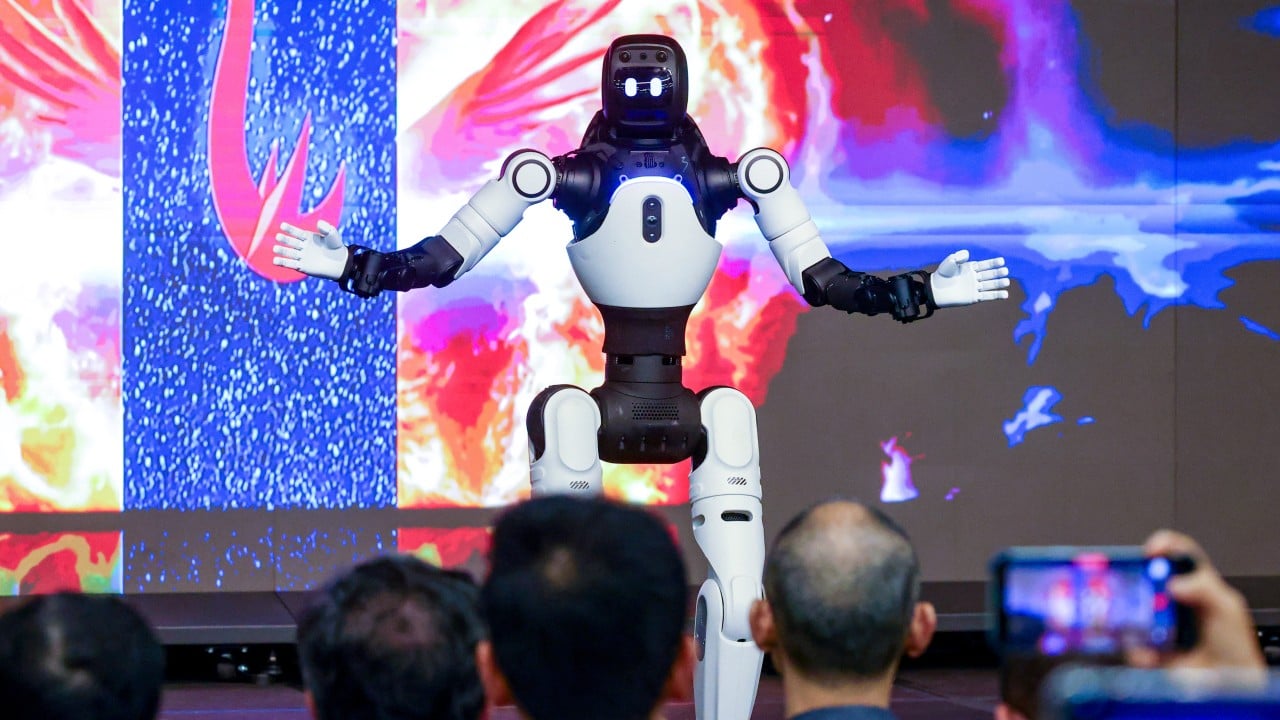
This is the friction Sun Dong is trying to warn us about. When he declared that artificial intelligence is steering the world toward the greatest industrial revolution human civilization has ever witnessed, he wasn't trying to sell software licenses. He was looking at Ming. He was looking at the thousands of Mings sitting in high-rises across Central and factories across the mainland.
The scale of this shift dwarfs the transition from agriculture to assembly lines. When the tractors arrived, farmers moved to the cities to build the tractors. The transition was brutal, spanning generations, but the math eventually balanced out. The terrifying truth about the current moment is that the tractor is now building itself.
The Great Compression
The numbers coming out of policy briefings tell a story of sheer velocity. Historically, industrial revolutions take a century to mature. They give societies time to breathe, to draft new labor laws, to reinvent education systems.
We do not have a century. We might not even have a decade.
Hong Kong is currently pouring billions into microelectronics, life sciences, and artificial intelligence infrastructure. The government is pushing for a transformation that turns a financial capital into a deep-tech powerhouse. But you cannot automate an economy overnight without fracturing the social contract.
Let us look at the mechanics of this displacement. It used to be that automation threatened the routine, the repetitive, the low-skilled. If you moved boxes in a warehouse, you were at risk. If you wrote legal briefs, analyzed market risk, or drafted architectural blueprints, you were safe behind a wall of credentialing.
That wall has crumbled.
The software can now pass the bar exam. It can read an MRI scan with a higher accuracy rate than a radiologist with thirty years of clinical experience. It can write functional Python code in three seconds. The cognitive monopoly of the professional class has evaporated.
I remember watching a young coder in a Cyberport incubator show off a new localized language model. He was proud. He should have been; the system was elegant. He pressed a button, and the machine generated a complete marketing campaign, including financial projections and localized Cantonese ad copy, in the time it took him to take a sip of water.
I asked him what the marketing agency down the street would do next year. He looked at me, his smile faltering slightly, and shrugged. "They'll adapt," he said.
It is an easy word to say. Adapt. But adaptation requires time, and time is the one luxury the algorithm refuses to grant us.
The Hidden Cost of Efficiency
The argument for this rapid acceleration always sounds reasonable on a balance sheet. Efficiency rises. Margins expand. Errors drop to zero.
But a society is not a balance sheet.
When Sun Dong talks about the necessity of embracing this revolution, he balances it with an unspoken anxiety. If a machine can do your job better, faster, and cheaper, what happens to the human sense of agency? We define ourselves by what we build, what we solve, what we provide. Take that away, and the vacancy left behind isn't just financial. It is existential.
Think about the junior analysts in the investment banks of Central. They used to grind through eighty-hour weeks, formatting decks and parsing spreadsheets. It was a rite of passage. It built character, but more importantly, it built a deep, visceral understanding of the markets.
Now, an executive can type a single natural-language prompt into a proprietary server and get a flawless hundred-page market analysis before their coffee gets cold. The junior analyst role is vanishing. If we eliminate the bottom rungs of the career ladder because a machine can do them instantly, how do we grow the experts of tomorrow? How do we build human wisdom when we no longer value human experience?
The New Geography of Power
This isn't just a story about individual workers. It is a story about geopolitical gravity.
The race to dominate this industrial revolution has created an insatiable hunger for two things: raw compute power and massive datasets. Hong Kong occupies a strange, precarious position in this landscape. It sits at the intersection of two different digital ecosystems, trying to act as a bridge while the ground beneath it shifts constantly.
The struggle is visible in the physical infrastructure. Walk through the industrial estates of Tseung Kwan O. You won't find smoke or steel. You will find massive, windowless concrete cubes humming with the sound of thousands of cooling fans. Inside these buildings, arrays of high-end graphics processing units are burning through megawatts of electricity, calculating probabilities, mapping language, and redefining human industries.
These data centers are the new coal mines. The data flowing through them is the new oil.
The nations and cities that control these resources will dictate the terms of human labor for the next century. If you rely on another country's model, you are effectively outsourcing your culture, your legal standards, and your economic future. That is why the push for localized AI development in Hong Kong isn't an academic exercise. It is a desperate bid for sovereignty.
Reclaiming the Narrative
We are told that the future is inevitable. We are told that we must run faster just to stay in place, that we must learn to code, then learn to prompt, then learn to manage the systems that prompt the systems that code.
But we have control over the speed limits.
The real test facing leaders like Sun Dong isn't whether they can build enough data centers or attract enough venture capital. The real test is whether they can build safety nets fast enough to catch the people who are about to be thrown off the machine.
We need a radical reassessment of what value means. If efficiency is the only metric that matters, then humanity loses by default. A machine will always be more efficient. We must begin to value the things that are intentionally inefficient: empathy, artistic eccentricity, mentorship, community care, and the messy, slow process of human consensus.
The sun finally dipped below the horizon outside the government offices, leaving the room in a soft, gray shadow. The glowing screens of phones and laptops suddenly seemed brighter, casting a pale light on the faces of the people in the room.
We aren't waiting for a revolution anymore. We are living in the wreckage of the old world, trying to learn the language of the new one. The machines are humming in the data centers down the road, cool, tireless, and indifferent to our adjustment. They will keep running through the night, rewriting our world while we sleep, waiting to see what we do with the morning.