Two individuals in Michigan have become the first recorded fatalities in the United States linked directly to Cyclospora cayetanensis, a microscopic, heat-loving intestinal parasite that triggers severe watery diarrhea, explosive bowel movements, and intense gastrointestinal distress. State health officials confirmed the deaths amid a massive national surge exceeding 18,000 confirmed or suspected cases. While public health agencies historically categorized cyclosporiasis as a miserable, protracted, but rarely fatal foodborne infection, these fatalities expose a widening vulnerability in modern globalized food supply chains.
The transition of Cyclospora from an obscure traveler's disease to a domestic mass-outbreak vector demands an unsparing look at how fresh produce moves from foreign fields to American plates. Behind the raw statistics lies an uncomfortable reality about agricultural oversight, climate shifts, and the limits of modern food safety inspection.
The Anatomy of a Neglected Parasite
Cyclospora is not a bacterium like E. coli or Salmonella. Bacteria multiply rapidly in contaminated food sitting at room temperature. Cyclospora operates differently. It is a protozoan parasite that requires a host to complete its life cycle, yet it spends part of its existence in the environment as an oocyst—a hard-shelled spore capable of surviving weeks or months in soil and water.
When a person ingests contaminated food or water, those oocysts hatch in the small intestine, invade mucosal epithelial cells, reproduce asexually and sexually, and eventually shed millions of new oocysts into the stool.
Standard chlorine washes or routine sanitizers used in commercial kitchens routinely fail to eliminate Cyclospora. The oocyst shell is remarkably resilient against standard chemical concentrations.
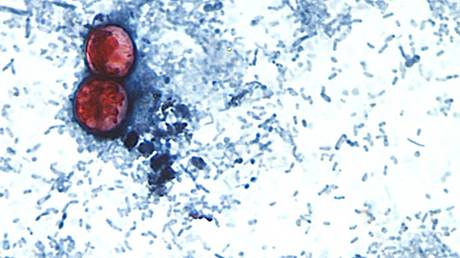
Routine medical stool tests ordered during an emergency room visit often miss the organism entirely. Standard ova and parasite exams require specialized laboratory staining techniques, such as modified acid-fast staining or ultraviolet fluorescence microscopy, because the oocysts are nearly transparent under standard light microscopes.
Patients suffering from relentless gastrointestinal distress often undergo days of broad-spectrum antibiotic treatments that are entirely useless against a protozoan infection. The standard pharmacological countermeasure requires specific prescription antibiotics, typically trimethoprim-sulfamethoxazole (TMP-SMZ). For patients allergic to sulfa drugs, alternative therapies remain limited and less reliable.
Tracking the Vectors of Contamination
The current public health investigation points squarely toward imported fresh produce, specifically iceberg lettuce sourced from central Mexico and distributed across multiple states. Federal agencies tracked significant clusters tied to commercial supply chains, including lettuce served at major restaurant chains and retail outlets.
The mechanism of contamination usually traces back to agricultural irrigation water or field worker hygiene practices in regions lacking robust municipal sanitation infrastructure.
[Contaminated Irrigation Water / Soil]
       │
       ▼
[Resistant Oocysts Coat Fresh Produce (e.g., Imported Lettuce)]
       │
       ▼
[Ingestion by Consumer Without Thermal Cooking]
       │
       ▼
[Invasion of Small Intestine / Severe Gastrointestinal Illness]
Consider a hypothetical farming region where untreated surface water or agricultural runoff feeds overhead irrigation systems. If that water contains fecal matter from upstream human populations carrying the parasite, microscopic oocysts settle directly onto the leaves of leafy greens, berries, or herbs.
Because these crops are consumed raw, no thermal kill-step occurs between the packaging plant and the dinner table.
For decades, the United States viewed cyclosporiasis primarily as an exotic souvenir picked up by travelers returning from tropical or subtropical destinations. Domestic cases were statistical anomalies.
That epidemiological profile flipped completely over the past ten years. Imported winter and summer fruits and vegetables now supply year-round supermarket shelves, tying American domestic health directly to the sanitation standards of foreign farming operations thousands of miles away.
Underlying Vulnerabilities and the Danger of Dehydration
Public health announcements regarding the Michigan fatalities noted that both deceased individuals possessed serious underlying health conditions. This detail is crucial for understanding why a parasite that usually resolves on its own can turn lethal.
Cyclosporiasis creates a clinical picture defined by relentless fluid loss. Patients report frequent, explosive watery diarrhea accompanied by profound fatigue, explosive gas, loss of appetite, and severe abdominal cramping that can persist for weeks or even months if left untreated.
For a healthy adult, severe dehydration requires intravenous fluid replacement and targeted antibiotics, rendering the infection uncomfortable but manageable.
For elderly patients or individuals managing compromised immune systems, chronic kidney disease, or cardiovascular vulnerabilities, the sudden electrolyte shifts and hypovolemic stress triggered by severe diarrhea act as a fatal catalyst.
The body cannot compensate for the rapid depletion of intravascular volume. Organ systems already operating near their baseline capacity fail under the added burden of acute systemic inflammation and dehydration.
State health authorities have declined to release granular details regarding the specific medical histories of the Michigan victims, citing privacy regulations. However, infectious disease specialists emphasize that the sheer scale of the current surge—surpassing 11,000 cases in Michigan alone and tens of thousands nationwide—mathematically guaranteed that vulnerable populations would eventually intersect with the outbreak.
Systemic Failures in Produce Safety
The response from regulatory bodies like the Food and Drug Administration and the Centers for Disease Control and Prevention relies heavily on retrospective traceback investigations. When an outbreak hits critical thresholds, investigators interview hundreds of sick individuals to cross-reference what they ate two weeks prior—the typical incubation window for Cyclospora.
This backward-looking methodology creates an inherent time lag. By the time a specific farm or distributor is identified and a recall is initiated, thousands of consumers have already ingested the contaminated product and cleared it from their refrigerators.
Preventative measures at the farm level remain difficult to enforce across international borders. While the FDA conducts foreign inspections, the sheer volume of perishable produce entering the American market defies comprehensive oversight.
Agricultural water testing standards vary wildly by jurisdiction. Growers operating in arid or water-stressed regions often rely on surface retention ponds or canals exposed to wildlife and human runoff, amplifying the risk of persistent pathogen introduction.
Washing produce at home offers a false sense of security. Rinsing lettuce leaves under a kitchen faucet removes visible dirt, but it fails to dislodge or destroy oocysts clinging tightly to plant surfaces via microscopic biofilms.
The only absolute defense against Cyclospora in contaminated food is complete thermal destruction, requiring internal temperatures to reach levels that cook the produce entirely—an unpalatable option for consumers purchasing salad greens or fresh herbs.
As climate patterns shift and global food distribution networks expand to meet consumer demands for out-of-season fresh produce, microscopic pathogens like Cyclospora find fertile ground for wider transmission. The first U.S. deaths mark a grim milestone, transforming an invisible nuisance into a lethal indicator of systemic fragility within modern agriculture.