Every June, the same well-oiled machinery grinds into motion. Light buildings purple. Run profiles of remarkably brave individuals staring down Amyotrophic Lateral Sclerosis (ALS). Pump out press releases tracking "unprecedented momentum" and "historic progress."
It is a comforting narrative. It is also entirely hollow.
As an industry insider who has spent over a decade watching clinical trial data dissolve and patient advocacy dollars evaporate into administrative black holes, I am done smiling through the forced optimism. The annual ALS awareness song-and-dance does not save lives. It acts as an emotional pacifier for the public, obscuring a brutal reality: we are fighting a 21st-century disease with a 19th-century biomedical infrastructure.
If awareness alone could cure a disease, ALS would have been eradicated the summer everyone poured buckets of ice over their heads. Instead, the survival timeline for someone diagnosed today remains virtually identical to what it was when Lou Gehrig stepped away from baseball in 1939. Two to five years.
Stop celebrating awareness. Start demanding systemic destruction of how we fund, trial, and approve neurodegenerative therapies.
The Mirage of "Pipeline Progress"
Open any standard media coverage of ALS Awareness Month and you will see glowing reports on the expanded drug pipeline. Journalists love to list the number of molecules currently in Phase 2 or Phase 3 trials as proof that a breakthrough is just around the corner.
This is a dangerous misdirection.
The standard pipeline metric is a vanity stat. In neurodegeneration, the historical failure rate for drugs entering clinical trials hovers around 99%. When you look closely at the handful of drugs that actually secured FDA approval over the last thirty years, the word "progress" feels like a dark joke.
Let us look at the hard data, stripped of pharmaceutical marketing spin:
- Riluzole (Approved 1995): The grandfather of ALS drugs. It extends median survival by roughly two to three months. It does not reverse damage. It does not stop progression. It buys a few weeks.
- Edaravone (Approved 2017): Approved based on a highly specific, stripped-down trial population in Japan. Subsequent real-world evidence studies across Europe and North America have repeatedly struggled to replicate any meaningful survival benefit in broader, unselected patient cohorts.
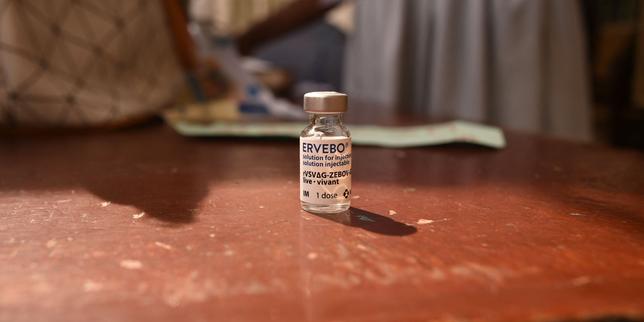
- Relyvrio (Approved 2022, Withdrawn 2024): The ultimate cautionary tale of modern advocacy. Pressured by intense public campaigns and emotional awareness drives, the FDA approved this drug based on flimsy, small-scale Phase 2 data. Two years later, the definitive Phase 3 trial showed the drug flatly did not work. The manufacturer pulled it from the market, leaving patients who spent thousands of dollars out of pocket holding nothing but broken promises.
When the industry braddles about "unprecedented options," they are conflating the volume of attempts with the velocity of success. We are running more laps on a broken track.
Why the ALS Research Model is Fundamentally Flawed
The public assumes that ALS is a single disease waiting for a single magic bullet cure. This premise is fundamentally incorrect.
ALS is an umbrella term for a chaotic collection of distinct biological failures that all end in the death of motor neurons. Treating "ALS" as a monolithic entity is like treating "fever" as a specific illness.
Imagine a scenario where a mechanic tries to fix ten different cars—one with a dead battery, one with a cracked engine block, one with an empty gas tank—by applying the exact same wrench to the bumper of all of them. That is our current clinical trial methodology. We dump clinically heterogeneous patients into the same trial pool, deliver a targeted molecule, and then look shocked when the drug fails to hit its endpoints across the average population.
The heavy hitters in neurology know this. Researchers at institutions like the Sean M. Healey & AMG Center for ALS at Massachusetts General Hospital are trying to pivot toward platform trials to test multiple drugs simultaneously. But the broader regulatory and funding ecosystem is still stubbornly addicted to the single-molecule, multi-year trial design.
The current system forces a structural trade-off that nobody wants to talk about:
| Current Clinical Trial Paradigm | The Required Reality |
|---|---|
| Monolithic Recruiting: Patients grouped purely by clinical symptoms (weakness, fasciculations). | Molecular Stratification: Grouping patients by specific genetic mutations (SOD1, C9orf72) or distinct biomarker profiles. |
| Placebo Control Hoops: Forcing terminal patients to take sugar pills for 12 to 18 months to prove a baseline. | Digital Twins & Historical Controls: Leveraging AI-generated patient models to eliminate the need for physical placebos in terminal cohorts. |
| Late-Stage Intervention: Testing drugs on patients who have already lost 50% or more of their motor neurons. | Pre-Symptomatic Screening: Intervening at the earliest biochemical sign of neurofilament elevation, years before physical weakness begins. |
The downside to pushing for this hyper-targeted approach is obvious: it shrinks the target market for pharmaceutical companies. It makes trials harder to recruit for initially. But continuing to run massive, unstratified trials is simply funding expensive failures.
The Perverse Incentives of Non-Profit Charity
We need to talk about where the money goes.
Major ALS charities raise tens of millions of dollars every year through walks, galas, and awareness months. A significant portion of this capital is diverted into "support services" and "community education."
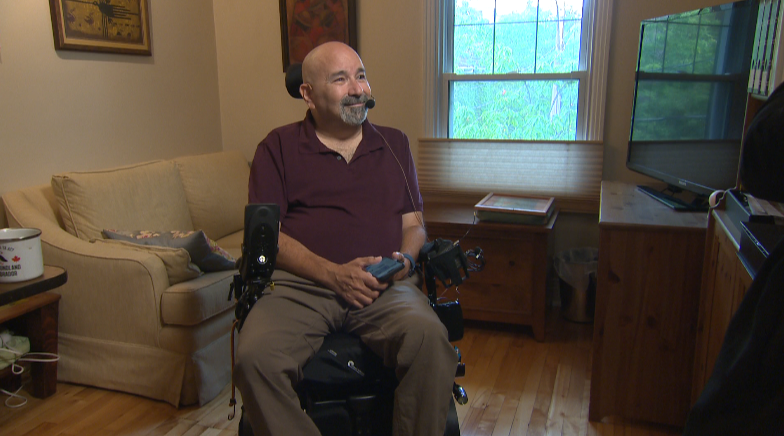
Providing wheelchairs, ramp installations, and speech devices to suffering families is vital, humane work. But let us be brutally honest: providing a better wheelchair is a failure of science. Every dollar spent mitigating the descent of a terminal patient is a dollar that was not spent stopping the descent entirely.
By framing ALS awareness around adaptation and coping, charities subtly shift the public's expectations. We become conditioned to cheer for a patient who can still smile while paralyzed, rather than becoming furiously angry that they are paralyzed in the first place.
Furthermore, the academic funding loops driven by these charities incentivize incrementalism. Academic researchers need steady, predictable publications to secure the next round of non-profit grants. This reality actively discourages high-risk, high-reward radical science. It favors safe, boring studies that add a single brick to a wall that is facing the wrong direction.
Dismantling the Premise of Common ALS Questions
If you look at what people actually search for regarding this disease, the disconnect between public understanding and medical reality becomes glaringly obvious. The internet is flooded with bad premises.
Can you survive ALS if caught early?
No. This is a myth born from cancer screening logic. In oncology, catching a localized tumor early saves lives. In ALS, early diagnosis merely extends the window of time you spend watching yourself decline. Because the underlying mechanisms of motor neuron death are not stopped by current drugs, an early diagnosis does not alter the ultimate trajectory. It just gives you a longer view of the cliff.
Why is there still no cure for ALS?
Because we are insisting on evaluating efficacy through primitive clinical metrics like the ALS Functional Rating Scale (ALSFRS-R). This scale relies on subjective questions like "How well can you cut your meat?" or "Is your speech understandable?" Relying on a patient's self-reported ability to use a fork to determine if a multi-million dollar molecular compound is slowing down intracellular degeneration is absurd. Until we switch entirely to objective, fluid biomarkers—like tracking neurofilament light chain levels in spinal fluid—we will keep missing subtle therapeutic signals and greenlighting useless placebos.
Did the Ice Bucket Challenge cure ALS?
It funded the discovery of NEK1, a gene associated with a tiny fraction of familial ALS cases. It did not alter the clinical reality for 95% of patients who suffer from sporadic ALS, which has no known genetic trigger. To frame it as a victory is to satisfy a public hunger for a happy ending at the expense of scientific truth.
The Unconventional Blueprint for Real Change
If you are diagnosed with ALS today, or if you actually want to impact the trajectory of this disease, stop participating in awareness walks. Stop wearing the ribbons. Move your energy toward aggressive, disruptive disruption of the status quo.
First, demand the immediate, absolute elimination of placebo groups for terminal neurodegenerative trials. In an era where we can digitally model disease progression based on decades of historical data, forcing a human being with 24 months to live to risk taking a sugar pill is scientifically lazy and ethically bankrupt.
Second, bypass the traditional academic funding channels. Direct capital exclusively to ventures practicing open-science data sharing. The current system allows private labs and university departments to hoard patient data in proprietary silos, protecting their intellectual property while slowing down global discovery. If an organization does not open-source its trial data in real-time, it should not receive a single dime of public or charitable funding.
Third, force the regulatory framework to accept proxy biomarkers for accelerated approval, with the immediate mandate for parallel, real-world tracking. We cannot wait five years for functional scales to move while thousands of people suffocate.
The narrative of hope and awareness is a comforting blanket wrapped around a horrifying status quo. It allows society to feel like it is doing something while doing fundamentally nothing. Strip away the purple lights, silence the inspirational music, and acknowledge the truth: the current strategy is failing completely.
The only thing worth building is a system that burns the old framework to the ground. Anything less is just administrative theater performed on the graves of the dying.