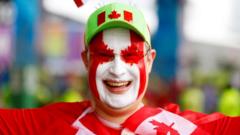
Canada enters the global soccer spotlight facing a harsh geopolitical and economic reality. While the official narrative celebrates a unified North American tournament, the ground truth is that Canada is operating as a junior partner in an event whose financial and political gravity sits squarely within the United States. This position leaves Canadian taxpayers and sports administrators holding a massive bill for a handful of matches, while the bulk of the prestige, commercial revenue, and decision-making power remains south of the border. It is a calculated gamble that could easily backfire.
Money talks in modern sports. When the unified bid won the hosting rights, the power dynamic was immediately clear based on match allocation. Out of the expanded tournament structure, the vast majority of games went to American cities, leaving Canada and Mexico with modest slices of the pie. For Canada, hosting matches in Toronto and Vancouver is less about national pride and more about managing a high-stakes logistical puzzle dictated by soccer executives in Zurich and corporate sponsors in New York.
The Illusion of an Equal Partnership
The joint bid was marketed as a tri-nation triumph. It looked beautiful on promotional materials, showcasing a continent united by sport. The reality of the organizational structure tells a completely different story, one where the Canadian Soccer Association found itself constantly yielding to the immense leverage of the US Soccer Federation and FIFA itself.
The match distribution highlights this imbalance. The United States secured every single match from the quarterfinals onward. Canadian cities were handed group stage matches and early knockout rounds, ensuring that the highest-profile teams, global dignitaries, and peak television audiences would be concentrated in American stadiums. Canada is essentially providing the opening acts for a concert where the headliner stays in Los Angeles, Dallas, or New York.
This minor status has practical consequences for local organizers. When you do not hold the keys to the premier matches, your ability to attract top-tier local corporate sponsorships diminishes. Domestic brands are hesitant to pour tens of millions of dollars into a tournament where their exposure is limited to a brief window before the global circus packs up and moves to the American multi-purpose arenas. The prestige is transient, but the financial obligations are written in stone.
The Exploding Cost of Temporary Upgrades
Public money is flowing rapidly out of provincial and municipal coffers to meet stringent international stadium requirements. Toronto and Vancouver are the chosen battlegrounds for this financial experiment. Both cities operate stadiums that require substantial modifications to be deemed acceptable by international inspectors.
Consider the physical requirements of the playing surfaces. Both BMO Field in Toronto and BC Place in Vancouver utilize artificial turf for their regular tenants in Major League Soccer and the Canadian Football League. FIFA mandates natural grass. This is not a simple matter of rolling out sod over concrete. It requires sophisticated, temporary grass systems equipped with specialized irrigation, under-soil heating, and growth-light infrastructure to keep the pitch in pristine condition under heavy usage.
+-----------------------------------------------------------------+
|                    ESTIMATED HOST CITY BURDENS                  |
+-------------------+--------------------+------------------------+
| Requirement       | Toronto (BMO Field)| Vancouver (BC Place)   |
+-------------------+--------------------+------------------------+
| Surface Type      | Temporary Grass    | Temporary Grass        |
| Capacity Upgrade  | +17,500 temporary  | Existing adequate      |
| Public Funding    | Multi-million gap  | Significant provincial |
| Primary Challenge | Structural seating | Complex roof lighting  |
+-------------------+--------------------+------------------------+
The structural changes are even more demanding. BMO Field had to undergo a massive seating expansion to reach the minimum capacity required for tournament matches. This means constructing temporary grandstands that must integrate with existing stadium architecture, an engineering feat that carries a premium price tag in an era of inflation and supply chain volatility. The cost of these temporary seats will not yield long-term ticket revenue for the city once the tournament concludes. They will be torn down, leaving the stadium back where it started, minus the public funds used to erect them.
Security Budgets and the Shadow of Sovereign Liability
The true wildcard in any major sporting event is the security apparatus. Governments routinely underestimate what it costs to secure a modern international gathering. Because Canada is hosting global matches, the federal and provincial governments must prepare for complex geopolitical risks, cybersecurity threats, and massive crowd control operations.
The policing costs alone are projected to swallow a significant portion of the host city budgets. Every transit hub, team hotel, and training ground requires around-the-clock monitoring by law enforcement personnel working overtime. These figures are rarely fully disclosed during the initial bidding phase, when politicians are eager to stand on stage and celebrate a winning bid. They emerge later, hidden in municipal budget adjustments and supplemental funding requests.
Municipalities bear the brunt of this financial risk. While the federal government provides some assistance, the host city agreements signed with soccer governing bodies often contain indemnification clauses that protect the sport's central authorities from cost overruns. If security expenses double due to an elevated global threat environment, the local taxpayer is the insurer of last resort.
A National Association in Financial Crisis
The timing of this tournament could not be more complicated for the domestic governing body, Canada Soccer. The organization has spent the years leading up to the tournament mired in financial instability, leadership turnover, and public disputes with its own national teams.
A controversial long-term commercial agreement signed years ago locked the association into fixed revenues while outsourcing its media and sponsorship rights. This left Canada Soccer starved of cash precisely when it needed capital to build out its administrative infrastructure for the biggest event in its history. While the men's national team reached historic heights on the pitch by qualifying for the 2022 tournament in Qatar, the business side of the house was crumbling.
This internal chaos hampered Canada's ability to negotiate from a position of strength within the tri-nation framework. A governing body consumed by labor disputes and executive restructuring lacks the institutional bandwidth to challenge decisions made by wealthier, more stable counterparts in Washington and Zurich. Consequently, Canada accepted terms that favored its southern neighbor, reinforcing its position as a supporting character in the narrative.
The Myth of the Automatic Tourism Windfall
Proponents of hosting always point to the tourism numbers. They promise packed hotels, bustling restaurants, and a massive influx of foreign currency that will rejuvenate local economies. Economic history suggests these projections are frequently built on shaky methodologies.
The phenomenon of tourism displacement is well-documented by sports economists. Regular tourists, business travelers, and convention organizers actively avoid host cities during major sporting events due to inflated hotel rates, crowded flights, and heightened security. A soccer fan occupying a hotel room replaces a traditional traveler who might have spent more money in local museums, boutique shops, and theater districts. The net economic injection is often a wash, or worse, a negative total for businesses that do not cater directly to sports fans.
Furthermore, the profits generated during the tournament do not stay within the local economy. Ticket sales go directly to the international governing body. Global corporate sponsors take their marketing revenues back to their international headquarters. The local economy is left with the low-wage hospitality labor and the cleanup bill, while the real wealth generated by the event evaporates into offshore bank accounts.
Grassroots Legacy or White Elephants
The ultimate justification for spending hundreds of millions of public dollars on a temporary sporting event is the promise of a lasting legacy. Organizers claim that hosting the world will inspire the next generation of Canadian youth to lace up their boots, building a sustainable soccer culture from coast to coast.
This argument ignores the structural deficiencies in Canadian grassroots sports. True development does not happen by watching elite international athletes play a handful of games in a restricted-access stadium. It happens through consistent investment in local community facilities, affordable coaching education, and accessible youth leagues. The millions spent on temporary stands at BMO Field could have funded hundreds of all-weather community pitches in under-served neighborhoods across the country.
Instead, Canada risks inheriting minor infrastructure adjustments that do little to solve the systemic issues facing the sport domestically. Once the final whistle blows and the international media corps moves on, the provincial associations will still face the same old problems: high registration fees that price out working-class families, a lack of indoor facilities for winter training, and a fractured developmental pathway. The tournament is a flash in the pan, a temporary distraction from the hard, unglamorous work of building a sport from the ground up.
The true measure of Canada's tournament will not be found in the attendance figures of the group stage matches or the manufactured enthusiasm of fan zones. It will be found in the municipal audit reports published years after the event concludes. Canada took a seat at the table with global sports giants, but it did so without the leverage, resources, or strategic position to protect its own interests, leaving a country to fund an expensive party where the primary beneficiaries live elsewhere.