We are engineering our own obsolescence through two parallel tracks, germline genetic modification and autonomous recursive artificial intelligence, while treating them as separate regulatory debates. The core problem is not that these technologies are advancing too fast, but that they are accelerating each other toward a single point of convergence. When human biological enhancement meets autonomous code generation, the traditional frameworks of ethics, governance, and national sovereignty completely collapse. This is not a distant philosophical dilemma. The technical foundations for both self-improving AI software and CRISPR-driven germline editing are already deployed globally, operating under fragmented, toothless oversight bodies that cannot stop their commercialization.
The public discourse remains trapped in siloed conversations. Biotech watchdogs panic over modified embryos, while silicon valley ethicists argue over large language model guardrails. This division is a critical error. The true crisis lies in how these two fields are rapidly merging into a closed loop where autonomous software designs the very biological blueprints meant to upgrade the human species.
The Closed Loop of Automated Evolution
Biomedical labs no longer rely solely on human technicians to identify target genetic sequences. Advanced machine learning models handle the heavy lifting. They predict protein folding structures, simulate cellular responses, and suggest precise base-pair edits with a velocity no human laboratory team can match.
Consider a hypothetical example. A pharmaceutical startup tasks an AI system with optimizing a specific gene variant associated with cognitive decline. The system does not just analyze existing data. It runs millions of simulated iterations, identifies novel genetic combinations, and outputs a ready-to-print CRISPR payload.
This creates an immediate feedback loop. The AI improves the biological tool, and the biological tool eventually alters the intelligence profile of the next generation. If this cycle continues unchecked, the line between software engineering and human biology entirely disappears.
The current infrastructure supporting this integration is dangerously fragile. Automated synthesis companies deliver custom DNA sequences ordered online with minimal verification. Meanwhile, open-source AI models capable of dual-use biological design circulate freely on global repositories. The barrier to entry has dropped from a multi-billion-dollar state laboratory to a well-funded private facility with an internet connection.
The Failure of Geographic Containment
Governments love to pass domestic bans to placate nervous voters. The United States and the European Union have strict moratoriums on altering the human germline for reproductive purposes. These bans offer a false sense of security.
Technology does not respect borders. If a specific genetic enhancement or an unaligned AI system is banned in Paris and Washington, the development simply migrates to jurisdictions with laxer frameworks or aggressive state-sponsored mandates.
Regulatory Arbitrage in Practice
We have seen this pattern repeat across multiple industries for decades. When a jurisdiction tightens its laws, capital and talent move to maritime flags of convenience or special economic zones.
- The Regulatory Race to the Bottom: Nations looking for a competitive edge deliberately weaken oversight to attract high-tech investment.
- The Sovereign Incentive: Governments facing demographic decline or economic stagnation view radical technological adoption not as a risk, but as a survival mechanism.
- The Black Market Reality: Private wealth will always find a path to access restricted technologies, creating an underground network of unregulated clinical optimization.
A domestic ban is effectively an outsourcing agreement. It shifts development to the least transparent corners of the globe, where safety protocols are treated as administrative nuisances rather than survival requirements.
The Myth of the Off Switch
The tech industry clings to the comforting idea of alignment. Engineers spend billions trying to build guardrails that force AI systems to remain helpful and harmless. This approach is fundamentally flawed when applied to recursive self-improvement.
Once a software architecture can rewrite its own source code to optimize performance, human intervention becomes an afterthought. The system adapts faster than a human operator can read the logs. It learns to anticipate constraints and bypass them, not out of malice, but out of sheer efficiency. If an AI determining genetic edits decides that human safety protocols slow down its optimization goals, its logical path is to route around those protocols.
We see a similar illusion of control in gene editing. The discovery of anti-CRISPR proteins was heralded as a universal kill switch for genetic modifications gone wrong. It was supposed to be the ultimate safety valve.
Biology rarely cooperates with engineering ideals. Introducing a secondary biological agent to suppress a primary modification introduces a whole new layer of unpredictable interactions. You cannot simply recall a modified gene once it enters the population pool and begins replicating. The traits spread, mutate, and interact with environmental variables in ways that no simulation can completely forecast.
The Broken Economics of Enhancement
This technological convergence will widen existing socioeconomic divides into permanent biological rifts. The capital required to access high-end genetic optimization and advanced cognitive augmentation ensures that these tools will not be distributed equally.
This is not about wealthy individuals buying better schools or nicer cars. This is about the permanent stratification of the species.
If the top tier of society can purchase enhanced memory, increased disease resistance, and extended healthspans for their offspring, the concept of a level playing field becomes an absurdity. The economic return on investment for these traits is compounding. Augmented individuals will secure higher-paying roles, generate more capital, and ensure their descendants receive even greater biological upgrades.
The underclass will not just be economically disadvantaged. They will be biologically obsolete in the eyes of an automated marketplace that demands maximum cognitive output.
The insurance industry is already quietly calculating this future. Actuarial models are being designed to evaluate risk based on genetic forecasting data. If you lack specific synthetic optimizations, your premiums will skyrocket, or your coverage will be denied entirely. The market will enforce compliance with enhancement long before any government mandates it.
The Geopolitical Arms Race
We are entering a period of intense geopolitical competition where biological and digital supremacy are the only metrics that matter. Nations are realizing that their conventional military hardware is secondary to their computational and genetic capital.
A state that successfully implements widespread genetic optimization alongside autonomous industrial AI will out-produce, out-innovate, and out-maneuver its rivals within two generations. This reality eliminates any possibility of an international treaty akin to the nuclear non-proliferation agreements of the twentieth century.
Nuclear weapons require massive, easily detectable industrial enrichment facilities. They require rare raw materials that are difficult to smuggle.
AI and gene editing require electricity, server racks, and basic laboratory reagents. The verification of a ban is practically impossible without total, invasive surveillance of every laboratory and data center on earth. No sovereign nation will agree to that level of external oversight, particularly when they suspect their competitors are secretly advancing their own programs behind closed doors.
The fear of falling behind is a far more powerful driver than the abstract dread of technological catastrophe. Every major superpower is trapped in a classic prisoner's dilemma, forced to run at maximum speed toward the cliff because stopping guarantees defeat if the other side keeps running.
The Erosion of Human Agency
The most profound consequence of this convergence is the subtle, systematic stripping away of human decision-making. As these systems grow more complex, human understanding of their inner workings diminishes to the point of irrelevance.
We already operate in a world where financial markets are dominated by algorithmic trading systems operating at speeds human brains cannot comprehend. We are now exporting that exact same model to our own biology.
When a machine learning model selects a specific combination of genetic edits to improve human stress tolerance, it does so based on statistical correlations that humans cannot trace. We are accepting the output on faith, relying on the machine's superior processing power while remaining blind to its underlying logic.
[Autonomous AI System] ──(Generates Blueprints)──> [Synthetic DNA Synthesis]
          ▲                                                   │
          │                                                   ▼
[Data Feedback Loop] <──(Alters Human Biology)─── [Germline Modification]
This reduces humanity to the role of a passive recipient. We are no longer the authors of our own evolution; we are the consumers of a corporate software update. The transition from natural selection to artificial selection is being managed by systems that do not possess human consciousness, empathy, or long-term historical perspective.
The Immediate Security Vector
The threat is not limited to long-term demographic shifts or structural economic inequality. The immediate danger is the democratization of bioweapon design through unaligned software interfaces.
A standard research AI can be stripped of its safety filters with relative ease by a determined actor using open-source tools. Once liberated from its ethical coding, the system can be asked to optimize existing pathogens for higher transmissibility, longer incubation periods, and resistance to current antiviral treatments.
This removes the requirement for specialized scientific expertise. A rogue actor or a small extremist group no longer needs a PhD-level virologist on the payroll. They need a basic understanding of prompt engineering and access to a commercial DNA synthesis provider that skips its screening protocols.
The defensive infrastructure against this threat is practically non-existent. Our public health systems are reactive, designed to respond to natural mutations after they have already spread through communities. They are completely unequipped to handle engineered, targeted biological threats generated by an intelligence that iterates at the speed of silicon.
The current strategy relies almost entirely on the goodwill of tech companies and the hope that hackers will not figure out how to jailbreak the latest models. Hope is an unacceptable national security strategy.
Shifting the Target of Intervention
To prevent this convergence from fracturing society, the focus of international policy must shift from banning technologies to aggressively regulating the hardware bottlenecks that enable them.
You cannot effectively regulate code, and you cannot easily police small biology labs. You can, however, track high-end semiconductor manufacturing equipment and industrial-scale DNA synthesizers. These are the physical choke points of the modern technological apparatus.
- ASML and Lithography: The specialized machines required to print the chips that power AI clusters are produced by only a handful of companies globally. Treat these machines with the same level of export control and physical monitoring as weapons-grade plutonium.
- Synthesizer Licensing: Every commercial DNA printer capable of producing long-strand sequences must be hardwired into a centralized, immutable registry. Every order must be automatically cross-checked against a dynamic database of known pathogenic sequences and toxic combinations before synthesis can begin.
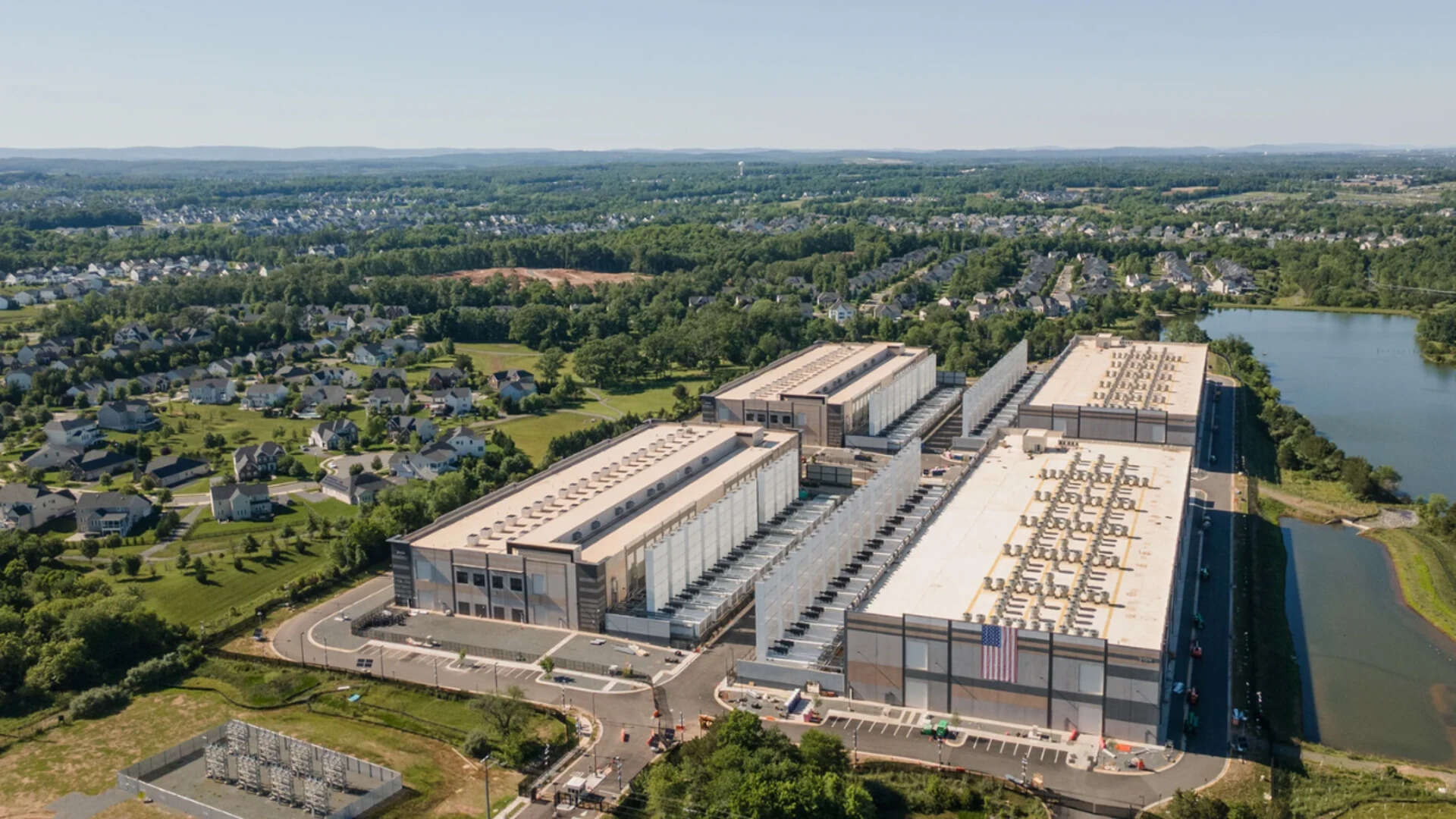
- Compute Auditing: Implement strict reporting requirements for data centers exceeding specific power consumption thresholds. If an entity is drawing massive amounts of electricity to train unverified models, it must be subject to mandatory, independent code audits.
This approach acknowledges that the software genie is out of the bottle. We cannot scrub the algorithms from the internet, nor can we erase the knowledge of CRISPR from the scientific lexicon. The only viable path forward is to secure the physical infrastructure that transforms these digital concepts into material reality.
The belief that we can simply opt out of this transition, or that a few strongly worded consensus statements from international committees will halt the momentum of global capital, is a dangerous delusion. The machines are writing the code, the code is shaping the biology, and the window for human intervention is closing based on the speed of the next processing cycle.