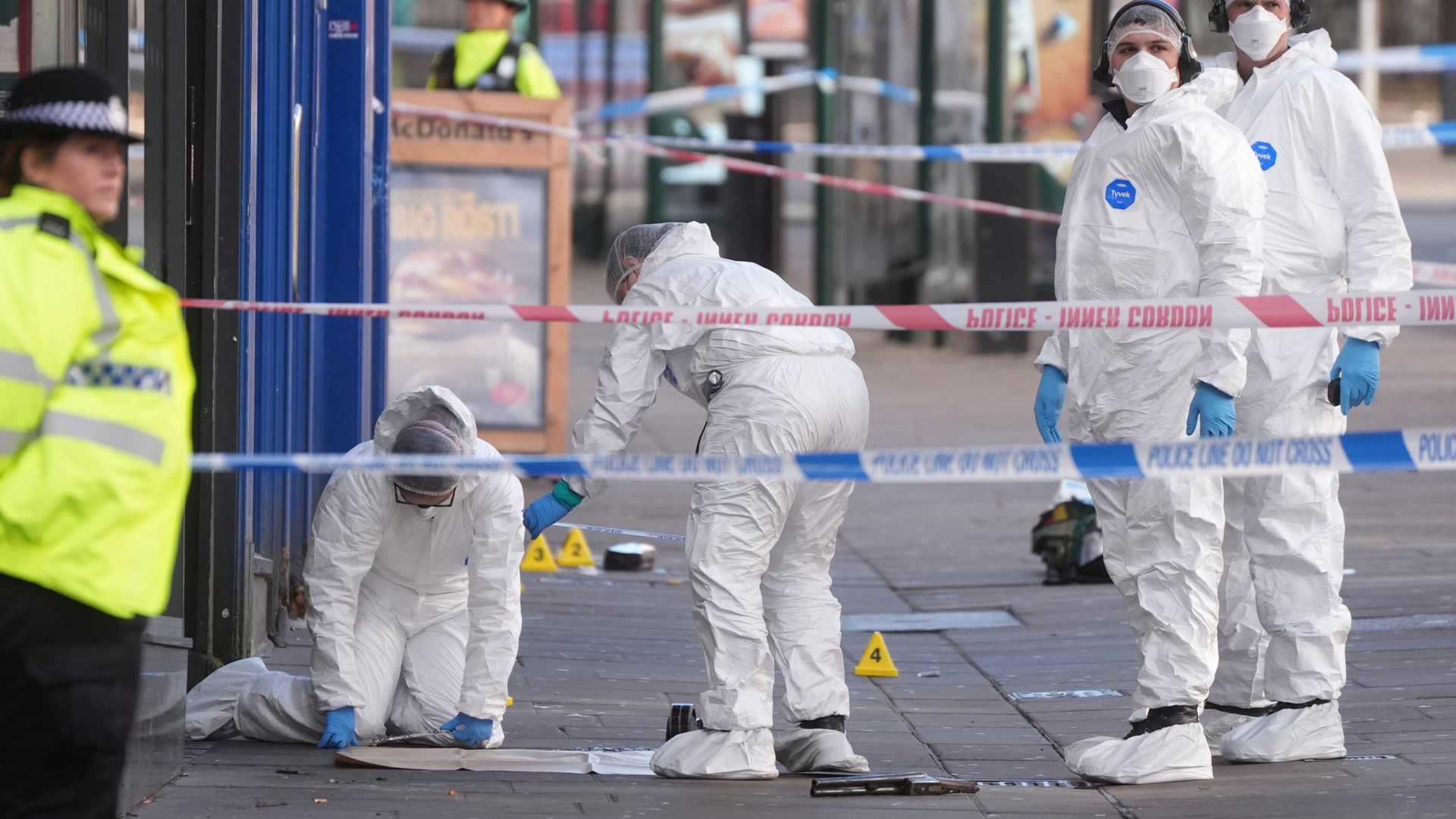
Shutting down a major arterial road near an airport after a fatal crash feels decisive. It looks like action. It satisfies the public urge to see yellow tape, flashing lights, and authorities "doing something" while an investigation drags on.
It is also largely performative.
Standard crash reporting follows a script so predictable you could write it before the tow trucks arrive. Police announce an upcoming closure of a major route feeding an airport corridor. Officials cite an ongoing collision investigation. Commuters brace for gridlock. Travelers worry about missed flights. And everyone nods along under the lazy consensus that closing the road is the natural, responsible, safety-first step while investigators reconstruct what happened.
That consensus confuses motion with progress. Worse, it treats a complex corridor failure like a simple crime scene on a quiet cul-de-sac.
When a fatal crash happens on a high-speed, high-volume road linking a city to an airport, shutting down the entire stretch often creates secondary hazards, distorts the very traffic patterns investigators need to understand, and signals a deeper failure in how we design and manage high-stakes corridors. Closing the road after the fact does not bring back the dead. It does not automatically improve the geometry of a dangerous merge. Often, it just pushes tens of thousands of stressed, late, distracted drivers onto narrower surface streets that were never built to handle airport-bound surges.
Let's strip away the comforting routine and look at what actually happens when a major airport corridor goes dark.
The Lazy Consensus Around Post-Crash Road Closures
The conventional wisdom sounds reasonable on the surface. A fatal wreck occurs. Investigators need time, space, and sightlines to measure skid marks, collect debris, inspect sight distance, and reconstruct vehicle speeds without rubberneckers or live traffic breathing down their necks. Closing the road protects first responders and preserves evidence.
Nobody serious argues against protecting personnel at an active scene. If a vehicle is down, fuel or fluids are leaking, or investigators are walking active lanes in the dark or rain, physical separation saves lives.
The flaw lies in treating a total, prolonged closure of a major airport connector as the default solution for hours at a time—or reopening it without fixing the conditions that set up the fatal crash in the first place.
Traffic engineering is not a light switch. An arterial road feeding an airport carries a distinct, unforgiving mix of vehicles: rideshares with drivers staring at navigation apps, rental car drivers unfamiliar with local merges and signage, exhausted travelers running behind schedule, heavy delivery or service trucks, and local commuters cutting across lanes at the last second. When you sever that artery abruptly, the traffic does not evaporate. It spills.
Surface streets absorb the overflow. Residential collectors see spikes in cut-through speed and abrupt braking. Signalized intersections back up across multiple cycles. Drivers looking for alternate routes to the terminal make frantic U-turns, block intersections, and miss unfamiliar turns. By trying to make one stretch of pavement safe for an investigation, an indiscriminate closure can quietly raise the risk of fender-benders, pedestrian conflicts, and secondary crashes across the surrounding grid.
What Investigators Actually Need Versus What a Full Closure Gives Them
There is a widespread assumption that a complete shutdown of a multi-mile corridor is required to conduct a thorough crash investigation. In reality, investigators need controlled access to the incident zone and accurate context for the corridor, not an empty highway stretching five miles in each direction.
Modern crash reconstruction relies on physical measurements, scene photography and scanning, vehicle telemetry or event data recorders where available, roadway design records, signal timing logs, and witness or camera data. Once immediate emergency response and initial scene preservation are handled, much of the analytical work depends on precision, not total gridlock.
Closing too wide a footprint for too long also creates a perverse side effect: it erases the normal operating environment. When normal traffic flow is cut off for hours, officials lose the real-time operational picture of how drivers actually behave along that approach—where queues form, where sightlines are blocked by glare or structures, and where drivers routinely make late lane changes to reach airport terminals or parking garages.
Why Airport Corridors Are uniquely Punishing
Airports sit at the intersection of high speed and high cognitive load. That combination makes nearby roads uniquely unforgiving compared to a standard Tuesday morning commute to an office park.
I have spent years watching municipalities and infrastructure operators pour millions of dollars into reactive fixes—extra signage after a tragedy, temporary cones, press briefings promising "full cooperation"—while ignoring the structural traps baked into the road network years earlier. You see the same pattern repeat: a fatal crash triggers outrage, a road closes, a report comes out months later, and the underlying roadway design that punishes human error stays mostly intact.
In traffic safety and human factors engineering, researchers and practitioners associated with the Safe System approach—championed globally by organizations like the International Transport Forum (ITF) and institutions such as the Insurance Institute for Highway Safety (IIHS)—emphasize a simple truth: humans make mistakes, and roadways should be forgiving enough that those mistakes do not become fatal. Speed and kinetic energy dictate survival. When a high-speed road has abrupt decision points, confusing lane drops, or harsh conflict zones right where drivers are trying to figure out whether they need Terminal A, Terminal B, cargo, or cell phone lots, the margin for error shrinks to zero.
Consider how we define key terms in corridor management, because sloppy language leads to sloppy policy:
- Incident management is the coordinated set of actions used to detect, respond to, and clear a crash safely while restoring normal flow as quickly as practicable.
- Traffic calming refers to physical design measures—such as lane narrowing, raised treatments, or curb extensions—intended to reduce vehicle speeds and conflict severity, typically on local or collector streets rather than high-speed airport arterials.
- Corridor resilience is the network's ability to absorb a disruption—like a major crash—without cascading delays and secondary safety failures across surrounding routes.
People routinely conflate closing a road with managing an incident. Closing a road is one tactic inside incident management, often the blunt instrument used when bypass planning, dynamic lane control, or rapid clearing protocols are weak.
Imagine a scenario where a fatal crash occurs on a four-lane divided highway two miles from an airport terminal during peak afternoon departure traffic. Police shut down all lanes in that direction for four hours while an investigation continues. Thousands of airport-bound vehicles divert onto a two-lane arterial lined with driveways, crosswalks, and shopping plazas. Drivers grow impatient, tailgate, and weave aggressively to beat red lights. A minor rear-end collision happens on the detour route twenty minutes later, tying up the detour as well. Meanwhile, the original crash site sits quiet, but the broader network is now more volatile than when the first wreck happened.
That thought experiment is not far-fetched. Every transportation agency that has ever watched a single highway closure trigger gridlock across three adjacent neighborhoods recognizes the dynamic.
Redefining the Real Question Behind the Headline
When readers see a headline about police closing a major road near an airport after a fatal crash, the instinctive questions are predictable:
- Why are police closing the road instead of letting traffic through? Usually to protect responders, preserve physical evidence, and maintain order at the scene. The better question is whether the scope and duration of the closure are calibrated to the actual scene footprint or set out of habit.
- How long will the road be closed during the investigation? Often longer than travelers hope, because scene documentation, towing, debris removal, and preliminary assessments take time. Yet asking only "how long" misses the bigger operational question: what interim routing, real-time traveler information, and phased lane reopenings are being used so the closure does not paralyze the corridor?
- Does closing the road prevent future crashes? Not by itself. A closure is an investigative and response measure, not a permanent engineering upgrade. Lasting prevention comes from fixing speed differentials, sightlines, signage clarity, access points, and enforcement before—not merely after—lives are lost.
The premise behind asking "Why close the road?" is often an assumption that keeping traffic moving is always more important than an investigation. That is the wrong frame. The real question is: How do we conduct rigorous, safe investigations while minimizing secondary danger and network collapse on high-stakes corridors?
You do not answer that with slogans. You answer it with operational discipline.
Actionable Shifts That Actually Work
If transportation leaders, police departments, and airport authorities want fewer fatal crashes and smarter responses when one happens, several practical shifts beat knee-jerk shutdowns:
- Pre-plan tiered detour corridors with signal timing adjustments. Do not wait until blue lights flash to figure out where 3,000 cars an hour are supposed to go. Pre-identify primary detour arterials, adjust traffic signal green times along those routes during major incidents, and prohibit high-risk turns where bottlenecks form.
- Separate the active evidence zone from reusable capacity whenever safe. If a multi-lane roadway has physical separation or wide shoulders and responders can safely cordon off the exact impact and debris zone, reopening non-affected lanes earlier—once initial documentation is complete—can relieve pressure without compromising the scene.
- Audit the airport approach for "decision overload." Review every sign, merge, weave zone, and exit ramp within five miles of the airport. Strip out ambiguous or redundant signs. Give drivers clear, early lane choices well before high-speed merge points.
- Publish realistic, structured updates—not vague placeholders. Travelers and commuters make worse decisions in the dark. Clear updates on which segments are closed, expected staging milestones, and vetted alternate routes reduce erratic last-second lane changes.
- Measure post-crash success by safety and flow, not just closure time. Track secondary crashes on detour routes, clearance bottlenecks, and follow-up engineering changes triggered by the crash data.
The Honest Trade-Offs of Challenging the Status Quo
Taking a contrarian stance against sweeping road closures comes with real downsides, and pretending otherwise would be dishonest.
First, responder safety is non-negotiable. Officers, firefighters, tow operators, and crash reconstructionists work on roadsides where distracted or impaired drivers already pose a lethal threat. If keeping a lane open or narrowing a buffer puts a single first responder or investigator at higher risk of being struck, erring on the side of closure is the right call. No schedule or commute time outweighs a human life at the scene.
Second, some scenes genuinely require full shutdowns. Complex multi-vehicle fatal crashes, commercial truck rollovers, hazardous spills, structural damage, or low-visibility conditions may leave zero safe room to route traffic past the wreck. In those cases, pushing cars through a compromised corridor is reckless.
Third, rapid or partial reopenings require coordination that many agencies still lack. Ad-hoc lane openings without clear traffic control can confuse drivers and create worse hazards than a clean closure. A nuanced approach demands training, pre-agreed protocols between police and traffic engineers, and disciplined communication.
Critiquing the lazy consensus does not mean demanding recklessness. It means demanding precision.
A fatal crash near an airport is a tragedy that demands sober investigation, honest engineering scrutiny, and practical traffic management. Closing the road is easy to announce and easy to photograph. Building safer corridors, smarter detours, and faster, better-calibrated responses takes actual work.
Stop mistaking yellow tape for a plan.