We measure our lives in chunks that are far too small.
A minute passes while we wait for an elevator. An hour slips away beneath the harsh glare of a spreadsheet. We treat time as an unyielding ledger, a strict master that demands punctuality and punishes slackers. Yet this frantic rhythm we call modern existence is nothing more than a recent invention, a brief agreement whispered among humans who forgot the wild, spinning history of the earth beneath their boots.
Go back seventy million years.
Step away from the asphalt and the hum of traffic. Close your eyes and stand in the shadow of a towering fern, feeling the damp heat of the late Cretaceous air thick against your skin. A Tyrannosaurus Rex drinks from a shallow, prehistoric river nearby, its massive jaws dripping with water. Overhead, pterosaurs slice through a sky tinted the color of bruised plums.
That creature does not know it, but its day is too short.
The sun climbs, blazes, and sinks below the horizon far quicker than it does today. Back then, a single rotation of the planet took roughly twenty-three hours instead of twenty-four. The earth spun faster, a dizzying top hurled through the dark. Because the globe rotated at a brisker pace, a single year required an entirely different math. There were three hundred and seventy-two days in that year.
Stop for a moment and let that sink in.
Three hundred and seventy-two sunrises. Three hundred and seventy-two cycles of fading light and creeping shadows, packed tightly into an annual journey around the sun.
We forget that time is not a clock on a wall. It is a motion.
When you study geology, you realize that the earth is a slowing machine. The moon is to blame. Our pale, cratered neighbor acts as an eternal brake, dragging its invisible fingers through our oceans via gravitational pull. This endless friction creates tidal drag, stealing a fraction of the earth's rotational energy day by day, century by century. The planet yields to this cosmic pull, spinning just a bit slower with each passing era.
Think about what this means for the anatomy of a year. The distance from the earth to the sun has not fundamentally changed in a way that shifts our orbit drastically, but the number of spins required to complete that orbit has dropped. Seventy million years ago, the earth spun faster, meaning more days fit into the exact same orbital journey.
Science tells us this through the most delicate archives on the planet.
Consider the humble clam.
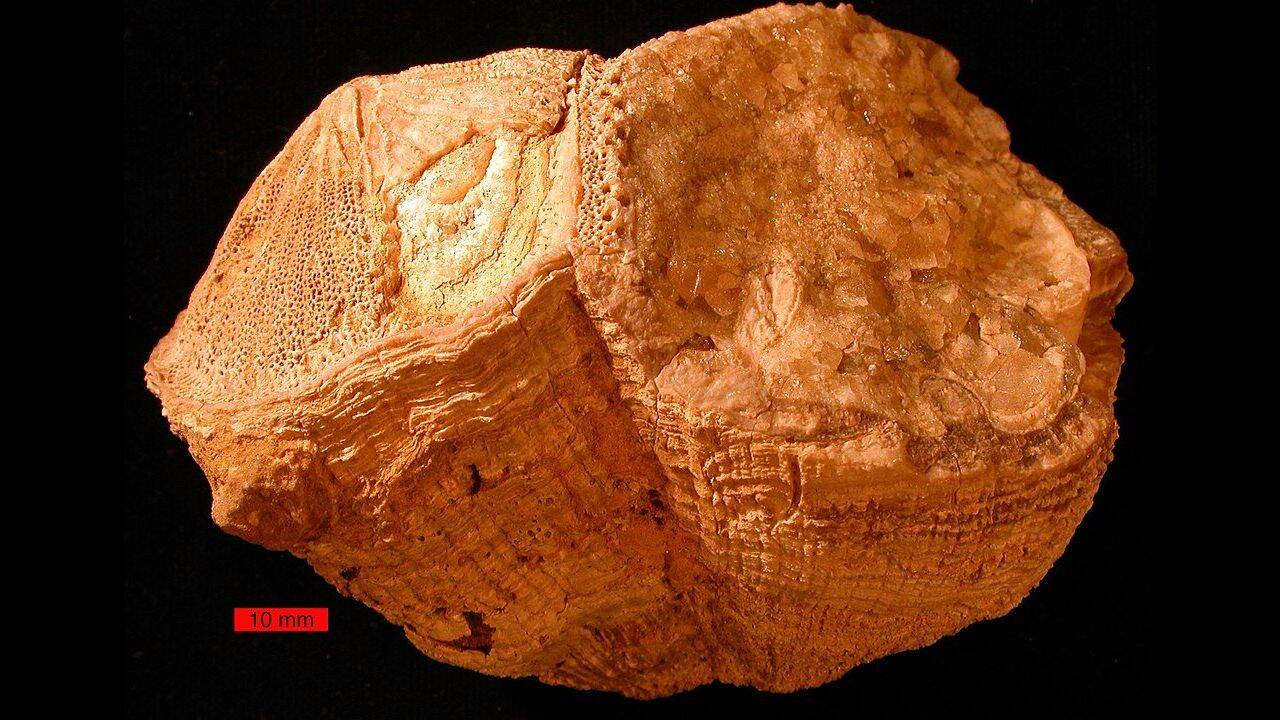
Specifically, fossilized mollusks from millions of years ago. To the untrained eye, they are just rocks shaped like shells, heavy and gray. But put them under a microscope, and you witness a quiet miracle. Mollusks grow daily shells, adding microscopic rings as the sun rises and sets, much like the rings of a tree trunk. They also record broader seasonal changes. When scientists count the daily growth lines tucked inside these ancient shells from the Late Cretaceous, they do not find three hundred and sixty-five rings per seasonal cycle. They find three hundred and seventy-two.
The shells remember the frantic spin of a younger world.
Imagine being alive in that era. If you were a creature bound by biology, your internal clock would run faster. Your youth would burn through those extra days like dry kindling. You would experience seven more birthdays every single year, seven more cycles of growth, seven more chances to outrun a predator or find a patch of shade.
Of course, this is a hypothetical scenario. No human was there to feel the rapid rotation. Our ancestors were millions of years away from standing upright, let alone worrying about schedules or meetings. But the absence of humans does not make the reality any less visceral.
We often talk about history as something written in ink on parchment, or carved into stone tablets by kings. We think of time as a human construct, something we carved up into sixty-minute chunks and divided into tidy calendars. But the calendar was never ours to design. We merely inherited a slowing clock.
Every single day, we lose a fraction of a millisecond. The slowdown is imperceptible to anyone living a normal human lifespan. You will never wake up and notice that the sun stayed in the sky an extra half-second. Your phone will not ping to announce that the planet just dragged its feet a little more than usual.
Yet the accumulation of this deceleration is staggering over deep time. A billion years ago, a day on earth lasted a mere eighteen hours. Two billion years ago, it was even shorter. The earth is gradually unwinding, a magnificent top losing its momentum as it pirouettes through the silence of space.
When we look at our current calendar, we are looking at a snapshot of a moving target. Three hundred and sixty-five days is not a permanent fixture of the universe. It is a temporary address. Millions of years in the future, future descendants of our planet—if anything remains to watch the skies—will experience even longer days and fewer rotations per year. The twenty-four-hour day is just a brief stop on a very long journey toward a sluggish, weary rotation.
There is a strange comfort in this.
We rush through our lives as if every second lost is a tragedy. We panic over missed deadlines, wasted hours, and the relentless march of the calendar. We treat our modern twenty-four-hour day as an absolute law of existence, a prison of our own making where we must constantly produce, achieve, and consume.
But the earth itself rebels against constancy.
The planet remembers a time when it danced faster, when the days were breathless and brief, when life had to squeeze thirty-seven extra sunrises into every single trip around the sun. It reminds us that change is the only constant rule of the cosmos. Everything slows down. Everything shifts.
The next time you feel the weight of a long day dragging on your shoulders, remember the ancient clams. Remember the fast-spinning world of the dinosaurs, where the sun rose more often and the earth was eager to complete its dance. We are riding a giant, slowing rock through an indifferent void, carrying the ghosts of shorter days locked deep inside the stones beneath our feet.
Time is not running out. It is simply stretching its legs.