Twenty-one miles.
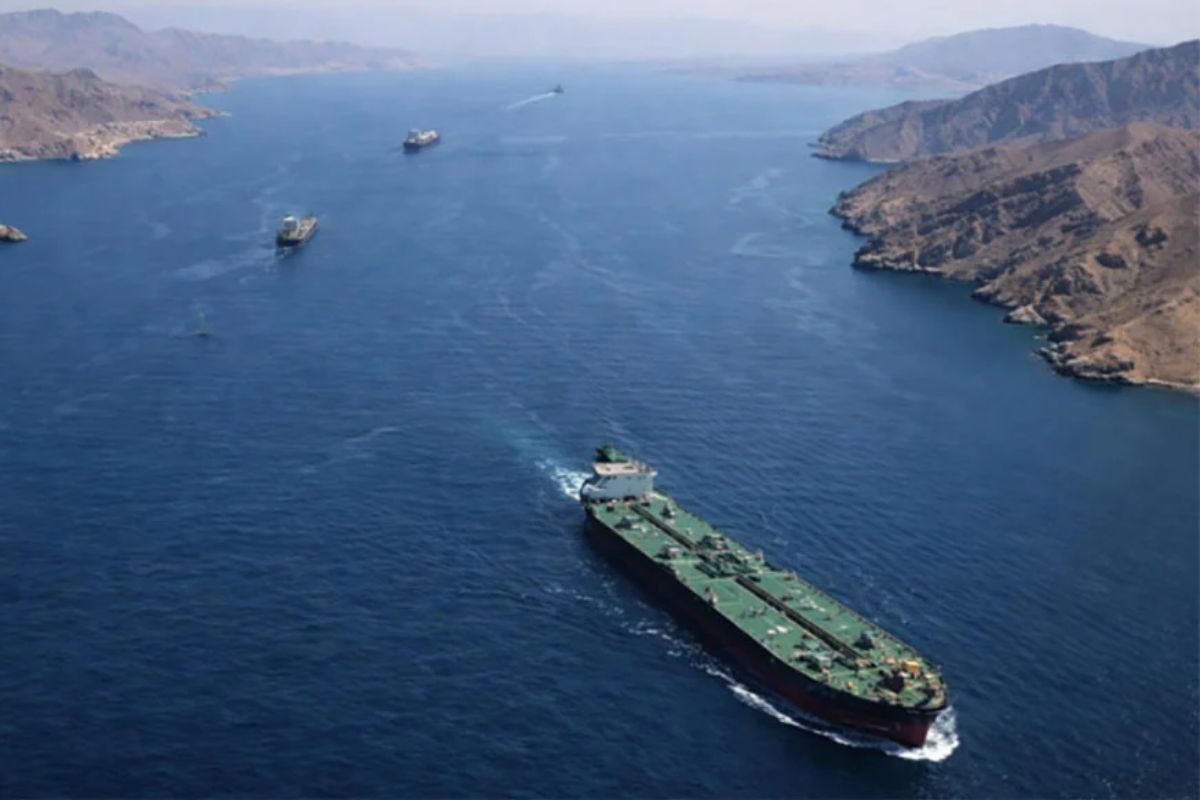
That is the width of the narrowest stretch of the Strait of Hormuz. To a seafaring captain piloting a Very Large Crude Carrier (VLCC) stacked with two million barrels of oil, that gap feels less like a majestic gateway and more like a tightrope stretched over a canyon. On one side, the jagged coast of Oman; on the other, the territorial waters of Iran. Through this needle’s eye flows one-fifth of the world’s daily petroleum consumption. It is the jugular vein of the global economy, and right now, there is a hand hovering over it, weighing the cost of a squeeze.
The recent rumblings out of Tehran aren't about missiles or mines this time. They are about something far more bureaucratic and arguably more disruptive: a toll. Iranian lawmakers have floated the idea of charging a "transit fee" for every vessel passing through the strait. It sounds like a simple highway tax, the kind you pay at a turnpike booth without thinking twice. But in the fragile ecosystem of international trade, this is a seismic shift that could rewrite the rules of the sea.
The Ghost in the Engine Room
Consider Captain Elias. He is a hypothetical composite of the men who bridge the gap between the Persian Gulf and the rest of the world. He sits on the bridge of a tanker, watching the radar pips that represent billions of dollars in cargo. To Elias, the Strait of Hormuz is not a geopolitical "flashpoint." It is a place where the air smells of salt and heavy fuel oil, where the heat shimmers off the deck, and where the legal status of the water beneath his keel determines his ship's survival.
For decades, Elias and his peers have relied on the principle of "transit passage." This is a bedrock of the United Nations Convention on the Law of the Sea (UNCLOS). It dictates that ships have the right to pass through international straits quickly and without obstruction, provided they don't threaten the coastal state. It is the reason why a gallon of gas in a Midwestern suburb doesn't fluctuate wildly every time a regional leader has a bad day.
But Iran is not a full party to UNCLOS. They recognize "innocent passage," a much more restrictive concept that allows a coastal state to suspend transit if they deem it a threat to their security. By suggesting a toll, Iran is effectively claiming ownership of a global commons. They are saying the "blue highway" belongs to them, and everyone else is just a guest.
The Invisible Math of a Surcharge
If you think a few thousand dollars per ship won't affect you, look at the math of a supply chain. A toll in the Strait of Hormuz is never just a toll. It is a signal.
When a state demands a fee for passage through a vital waterway, the first reaction isn't a checkbook; it's a risk assessment. Insurance companies—the quiet giants of the maritime world—immediately see the toll as a precursor to conflict. If a nation is bold enough to tax the water, they are bold enough to seize the ship that doesn't pay.
Insurance premiums for "War Risk" would skyrocket overnight. Shipping companies, already operating on thin margins, would pass those costs down. The crude oil destined for refineries in India, China, Japan, and eventually the gas stations of Europe and America, becomes "tainted" by this extra layer of cost.
$$Total Cost = (Market Price + Freight Rate + Insurance Premium) + The Iranian Surcharge$$
Even a modest $1 %$ increase in the total cost of transport across the millions of barrels moving daily creates a multi-billion dollar drag on the global GDP. It is an inflationary pressure that doesn't show up in a headline but manifests in the price of a plastic toy in London or a bag of fertilizer in Brazil. Everything is connected to the Strait.
A Precedent Written in Water
Why now? The move is a calculated response to the tightening net of Western sanctions. Iran’s economy has been under a suffocating pressure for years, with its oil exports often forced into the shadows of the "ghost fleet" to find buyers. By demanding a toll, Tehran is attempting to monetize the one thing the world cannot take away from them: their geography.
It is a play for leverage. They are looking at the Suez Canal, which brings in billions for Egypt annually. They see the Panama Canal as a massive revenue generator. Why, their logic goes, should the world’s most important oil transit point be free of charge when it sits in their backyard and requires their navy to patrol and secure?
But the Suez and Panama canals are man-made. They are services. The Strait of Hormuz is a natural formation. To tax it is to challenge the very idea of freedom of navigation. If Iran succeeds in normalizing a toll here, what stops other nations from doing the same? Could Indonesia tax the Malacca Strait? Could a future Mediterranean power tax the Strait of Gibraltar?
We are looking at the potential "Balkanization" of the oceans. The sea has always been the last great frontier of shared human interest—a place where, despite our wars on land, we agreed that the goods must move. Once you put a price tag on the horizon, that era of shared interest begins to evaporate.
The Human Toll of a Maritime Tax
Back on Captain Elias’s bridge, the tension isn't about the money. It's about the friction. A toll requires enforcement. Enforcement requires inspections. Inspections require stopping.
Every time a tanker stops in the Strait of Hormuz, it becomes a sitting duck. In a region where "limpet mines" and "drone strikes" are part of the daily vocabulary, a mandatory stop for toll collection is a nightmare for a crew. You aren't just paying a fee; you are surrendering your momentum.
The psychological weight on the thousands of sailors who man these ships is immense. They are the invisible labor force of the modern world, spending months at sea so that the lights stay on in cities they will never visit. Now, they are being told that their route—already the most scrutinized 21 miles on Earth—is about to become a checkpoint.
The debate over the Hormuz toll is often framed as a battle of budgets or a spat between diplomats. In reality, it is a question of how we value the connective tissue of our civilization. If we allow geography to become a weapon of economic war, the cost won't just be measured in dollars or rials. It will be measured in the slow, grinding breakdown of the trust that allows a ship to set sail from one side of the planet and arrive safely at the other.
The toll is a shadow. It is the shadow of a world where every border is a barrier and every passage is a negotiation. As the sun sets over the jagged cliffs of Musandam, the tankers continue to nose through the dark water, their engines humming a steady, rhythmic pulse that keeps the world alive. For now, the water is free. But the hand over the jugular is getting closer.
The next time you pull up to a pump and watch the numbers spin, remember those twenty-one miles. Remember the heat, the salt, and the precarious balance of a world that relies on the kindness of geography—and the fragile laws that keep it open.