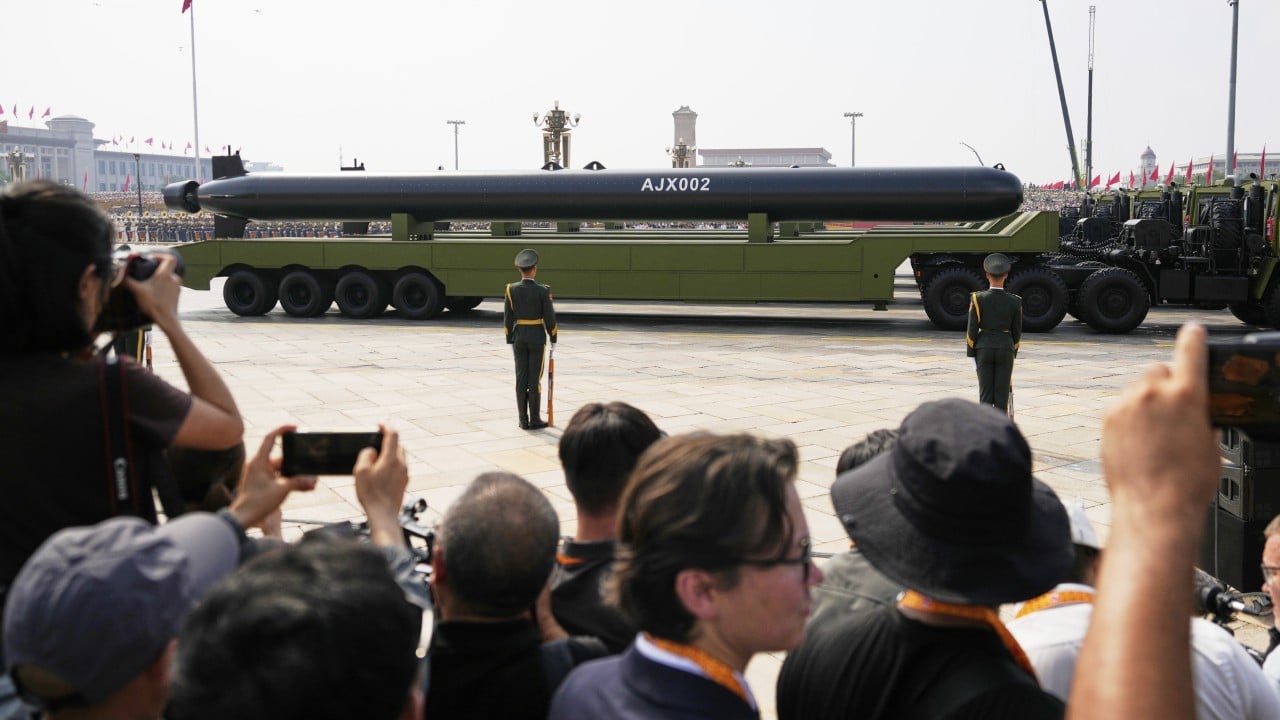
Western military analysts have spent years obsessing over China’s "carrier killer" missiles. But while we're staring at the sky watching for the DF-21D, Beijing is looking much lower. Specifically, they're looking at the water. If a conflict breaks out over Taiwan, the People's Liberation Army (PLA) doesn't just want to sink ships; they want to make the water itself a graveyard. Enter the minelaying drone—a tool that's cheaper than a missile, harder to track than a submarine, and capable of turning the First Island Chain into a giant cage.
You've probably heard of the "Porcupine Strategy," where Taiwan uses sea mines to keep China at bay. Well, the PLA is flipping the script. They’re developing a "Reverse Porcupine" using autonomous systems to seal Taiwan off from the world. It’s not just a theory anymore. With the recent rollout of the GJ-21 naval stealth drones and the conversion of older J-6 jets into unmanned platforms, the PLA is building a mass-producible blockade force that can drop thousands of mines without risking a single pilot.
The Math of an Autonomous Blockade
A traditional naval blockade is expensive and risky. You have to park multi-billion dollar destroyers in harm's way, where they're sitting ducks for land-based anti-ship missiles. Drones change the economics of the entire operation.
Think about the Taiwan Strait. It’s roughly 100 miles wide. To effectively shut down the primary shipping lanes and the ports of Kaohsiung or Keelung, you don't need to sink every ship. You just need to make the risk of hitting a mine high enough that no insurance company will touch a vessel entering the zone.
The PLA's strategy likely involves "saturation minelaying." By using swarms of low-cost aerial drones and Unmanned Underwater Vehicles (UUVs), they can seed the seabed with smart mines. These aren't your grandfather’s floating iron balls. Modern mines are sophisticated sensors. They can wait for months, "listening" for the specific acoustic signature of a US aircraft carrier or a Taiwanese supply ship before detonating.
Why Drones are the Perfect Delivery Vehicle
- Stealth and Survivability: Large aircraft like the H-6J bomber are great for carrying heavy loads, but they're easy to spot on radar. Stealth drones like the GJ-11 or the newer GJ-21 can slip through air defense gaps to drop mines in sensitive areas like the Miyako Strait or the Bashi Channel.
- Attrition-Ready: If Taiwan shoots down a $50 million fighter jet, it's a headline. If they shoot down ten $1 million drones, the PLA barely blinks. They have the manufacturing base to replace them faster than Taiwan can fire its interceptor missiles.
- Precision Placement: Unlike traditional "dumb" mines dropped in a general area, drones can use GPS and sonar to place mines in exact "kill zones" or narrow maritime chokepoints.
Breaking the First Island Chain
The First Island Chain—stretching from Japan through Taiwan to the Philippines—is meant to be a barrier that keeps the PLA Navy contained. But mines turn that barrier against the defenders.
If the PLA uses drones to mine the deep-water exits into the Philippine Sea, they effectively trap the Taiwanese Navy in its ports. Even worse, they could prevent US reinforcements from Guam or Hawaii from getting close enough to be useful. We're talking about a "no-go zone" that stretches hundreds of miles.
During a 2026 exercise near the Senkaku Islands, the PLA demonstrated how integrated drone patrols could monitor maritime traffic in real-time. Adding minelaying to that mix is a natural evolution. By the time a US carrier strike group arrives, the seabed could already be a labyrinth of "rising mines"—weapons that sit on the bottom and launch a torpedo upward when they detect a target.
What Most People Get Wrong About Mine Warfare
Most folks think mines are just a defensive tool for the underdog. That's a mistake. In a blockade scenario, the aggressor uses mines to shape the battlefield.
If I'm the PLA, I don't want to fight the US Navy in a fair fight. I want to force them to spend weeks—not days—performing dangerous, slow mine-clearing operations. According to recent naval simulations, a single small minefield of 600 mines can delay an advancing fleet by nearly 48 hours. In a high-speed conflict over Taiwan, two days is the difference between a successful defense and a fait accompli.
The Counter-Drone Problem
Taiwan isn't sitting still. They've recently deployed the Aegis counter-UAS system to protect air bases. It uses millimeter-wave radar to track and jam drone swarms. It's a solid start, but it's designed for aerial threats.
The real nightmare is the "cross-domain" threat. Imagine an aerial drone dropping an underwater drone, which then crawls along the seafloor to plant a mine under a pier. How do you stop something you can't even see? The US "Replicator" initiative aims to counter this by fielding thousands of its own "attritable" drones to create a "Hellscape" in the Strait, but it's a race against time and Chinese industrial capacity.
The Reality of 2026
We're moving into an era where "presence" doesn't just mean having a ship on the horizon. It means controlling the volume of the ocean from the surface to the seabed.
The PLA's investment in minelaying drones suggests they've realized they don't need to win a grand Midway-style battle. They just need to make the First Island Chain too dangerous to navigate. If you're a maritime strategist or just someone watching the tensions in the Pacific, keep your eyes on the drones. They’re the ones rewriting the rules of the blockade.
To stay ahead, Taiwan and its allies need to prioritize autonomous mine-hunting tech. The days of sending a manned minesweeper to clear a path are over. If the water is full of "smart" threats, the response has to be just as intelligent—and just as expendable. Don't wait for the first explosion to start thinking about the bottom of the ocean. It's already becoming the most important part of the fight.