China has officially deployed the world’s first large-scale Grid-Forming (GFM) converter system, a technical feat that effectively ends the era where wind and solar were considered "weak" energy sources. By shifting from grid-following technology to a system that dictates its own voltage and frequency, Chinese engineers have solved the instability problem that has plagued renewable-heavy provinces. This isn't just an incremental update. It is a fundamental pivot in how electricity moves across a continent.
For decades, the global energy transition has hit a hard ceiling known as System Strength. In a traditional grid, massive spinning turbines in coal or nuclear plants provide "inertia." They are heavy, they are fast, and their physical momentum keeps the grid stable at 50Hz or 60Hz. If a surge hits, that momentum absorbs the shock. Solar panels and wind turbines, however, use digital inverters. These inverters are historically "followers"—they wait for the grid to tell them what the frequency is before they inject power. When you have too many followers and not enough leaders, the grid collapses.
China’s new stabilizers act as those leaders. They don't wait for a signal. They create it.
The Inertia Gap and the Death of Spinning Iron
The problem with the green energy revolution was never just about storage. It was about physics. Modern power grids are delicate ecosystems that require a constant, unwavering heartbeat. When a traditional power plant goes offline, the literal weight of the remaining spinning generators provides a buffer, a few seconds of grace that prevents a total blackout.
Renewable energy is different. It is "inverter-based." It has no weight. It has no physical momentum.
In provinces like Qinghai and Gansu, where wind and solar penetration levels are skyrocketing, the lack of inertia became a structural threat. Engineers call this a "weak grid" environment. In these regions, if a cloud passes over a massive solar farm or the wind suddenly drops, the voltage fluctuates so violently that the grid can't recover. The old solution was simple but expensive: keep coal plants running just to provide inertia, even if they weren't needed for actual power generation. This practice, known as "must-run" thermal generation, effectively defeated the purpose of building the solar farms in the first place.
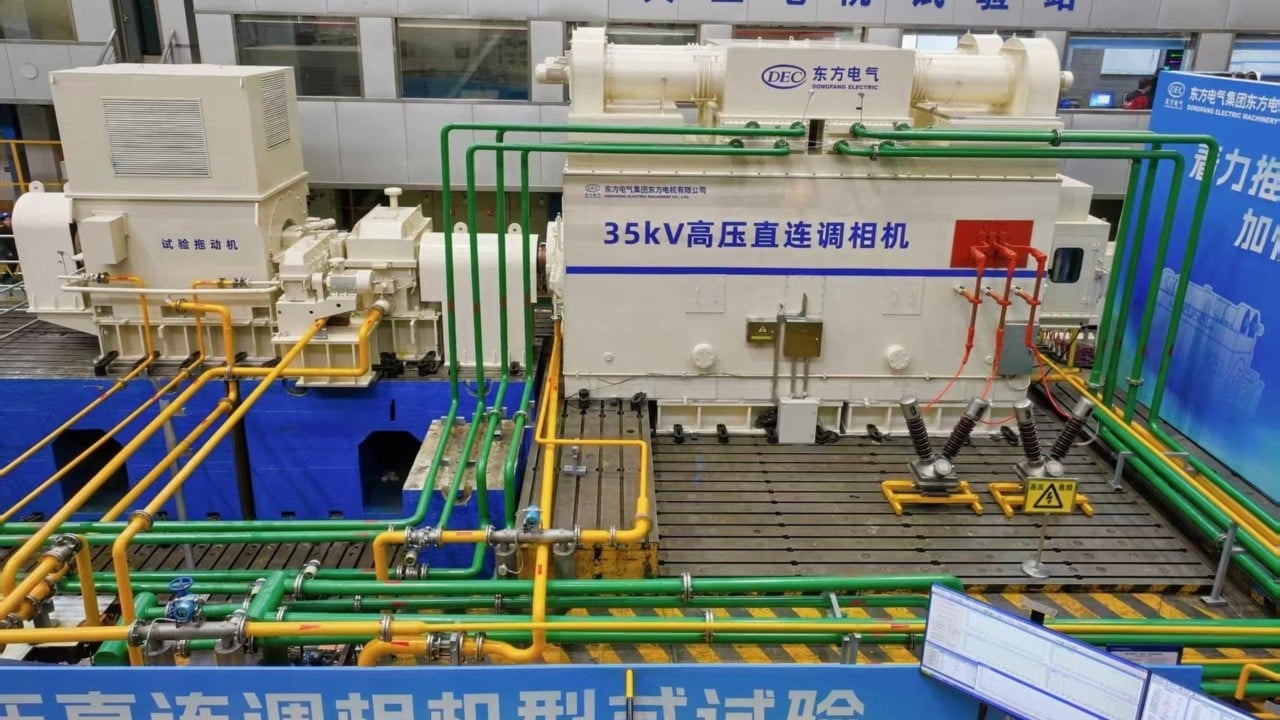
China’s breakthrough involves high-capacity Static Synchronous Compensators (STATCOMs) and specialized GFM inverters that mimic the behavior of a spinning turbine using software and supercapacitors. This is code-driven inertia. It allows the grid to remain rock-solid even when 80% or more of the power comes from intermittent, weather-dependent sources.
How Grid Forming Technology Flips the Script
To understand why this matters, you have to look at the difference between a pulse and an echo. A standard inverter is an echo; it repeats the frequency it hears from the main grid. A grid-forming inverter is the pulse. It sets the rhythm.
The technical challenge of making an inverter "form" a grid is immense. Most inverters are programmed to shut down if they detect a frequency deviation, a safety feature called "anti-islanding." To make a grid-forming stabilizer, you have to do the opposite. You have to program it to stand its ground and fight the deviation.
The Virtual Synchronous Machine
The core of the Chinese update is the Virtual Synchronous Machine (VSM) algorithm. This software layer makes a battery or a solar farm "feel" like a 500-ton spinning piece of iron to the rest of the network.
- Active Response: When the grid frequency drops, the VSM instantly injects power from local storage to arrest the fall.
- Voltage Support: It maintains a steady pressure in the wires, preventing the "brownout" effect that damages industrial equipment.
- Black Start Capability: Unlike traditional solar farms that need an external power source to "wake up" after a blackout, these new systems can jump-start themselves and the surrounding grid.
This isn't a laboratory experiment. The State Grid Corporation of China (SGCC) has integrated these stabilizers into the world’s largest ultra-high-voltage (UHV) transmission lines. These lines carry power from the windy deserts of the West to the hungry megacities of the East. Without these stabilizers, those lines would be too unstable to operate at full capacity.
The Economic Brutality of Grid Stability
Why did China get there first? The answer is a mix of geographic necessity and aggressive industrial policy.
Western nations like the United States and various European states have aging, decentralized grids managed by private entities. In these markets, there is often no financial incentive for a solar developer to install expensive grid-forming hardware. Their job is to sell kilowatt-hours, not to provide "system services" like frequency regulation. The market fails to price in the value of a stable grid until a blackout occurs.
China operates under a different mandate. The SGCC is a state-owned monopoly with a single goal: build the world’s most powerful energy web. They are not waiting for a market to form; they are building the infrastructure they know they will need in 2030.
By standardizing these stabilizers now, China is lowering the long-term cost of wind and solar. When you can remove the "coal crutch" and still keep the lights on, the levelized cost of energy (LCOE) for renewables drops significantly. They are effectively de-risking the entire energy transition for their manufacturing sector.
The Weakness in the Silicon Armor
Despite the triumph, this technology has a "dirty little secret" that many analysts ignore. These digital stabilizers require massive amounts of power electronics—specifically Insulated Gate Bipolar Transistors (IGBTs).
The world is currently in a silent war over these components. While much of the media focuses on AI chips and high-end CPUs, the power electronics that run these grid stabilizers are just as critical. China has moved aggressively to internalize the production of IGBTs and Silicon Carbide (SiC) wafers. If they control the stabilizers, they control the blueprint for every modern grid on the planet.
There is also the issue of "control interaction." When you have thousands of these smart stabilizers all talking to each other across a grid, there is a risk of them fighting each other. Imagine a room full of people all trying to conduct the same orchestra at once. If the software isn't perfectly synchronized, you get "sub-synchronous oscillations"—high-speed vibrations that can literally shake a wind turbine to pieces or cause transformers to explode.
China’s current success suggests they have solved the coordination problem through centralized command-and-control software. However, as the grid becomes more complex, the threat of a software-driven systemic failure grows. We are moving from a world of mechanical failures to a world of algorithmic ones.
The Export Strategy Nobody is Watching
This breakthrough isn't just about domestic energy security. It is an export product.
As developing nations in Southeast Asia, Africa, and Latin America look to build their own grids, they are finding that traditional Western designs are ill-suited for high-renewable futures. China is now positioning itself as the only country that can provide a "grid-in-a-box." They aren't just selling solar panels anymore. They are selling the stabilizers, the software, and the UHV lines that make those panels viable.
The "world first" status of these updates gives Chinese firms like Huawei and Sungrow a massive head start in the global market. They are setting the technical standards that everyone else will eventually have to follow. If you want a grid that can handle 90% wind and solar, you have to use the protocols developed in the Qinghai desert.
The End of the Renewable Penalty
For years, critics of green energy have pointed to the "intermittency penalty"—the hidden costs of backup power and grid upgrades needed to support renewables. By integrating GFM stabilizers directly into the transmission architecture, China is neutralizing that argument.
They are proving that the grid doesn't need coal to stay upright. It needs better math.
This technological leap marks the moment when renewable energy stopped being an "alternative" and became the foundation. The physical momentum of spinning turbines is being replaced by the digital momentum of silicon and software. The transition is no longer a matter of environmental will; it is a matter of who owns the best stabilizers.
The next time a major blackout hits a Western city because of a frequency collapse, the question won't be "Where was the coal?" but "Where were the stabilizers?" China already has the answer.
Industrialized nations now face a choice. They can either develop their own grid-forming ecosystems or eventually find themselves importing the very brains of their national infrastructure from Beijing. The wires might stay the same, but the logic flowing through them has changed forever.
Modern civilization is built on the 50Hz hum. That hum used to come from fire. Now, it comes from code.