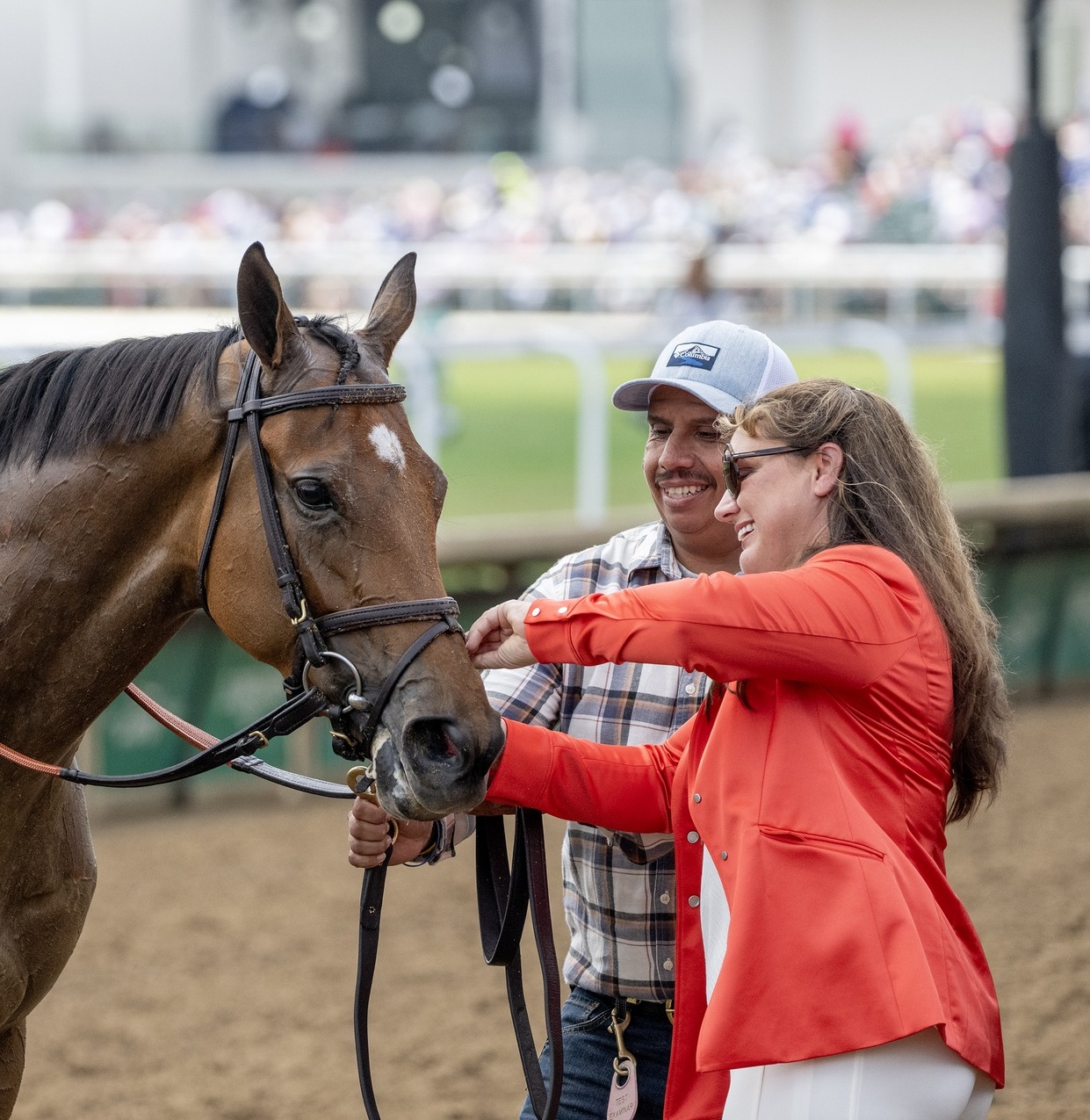
The glass ceiling of the Kentucky Derby didn’t just crack; it vanished. When Cherie DeVaux stood in the winner’s circle at Churchill Downs, she wasn't just another trainer celebrating a career-defining moment. She was the personification of a fundamental shift in how Thoroughbred racing operates at its highest levels. For over a century, the Derby was a playground for a specific archetype—the legacy trainer backed by old-money stables, operating on gut instinct and generational gatekeeping. DeVaux’s victory dismantled that model by proving that a meticulous, data-driven approach built on the back of elite-level apprenticeship can outperform the established giants of the backstretch.
This win serves as a hard reset for the industry. While casual observers see a historic first for a female trainer, the real story lies in the methodology. DeVaux didn't stumble into the Derby winner's circle. She engineered her way there. Her stable operates with the precision of a private equity firm rather than a traditional barn. By combining the old-world horsemanship she absorbed during her years as a top assistant to Chad Brown with a modern, analytical perspective on horse health and race selection, she has created a template that the rest of the industry is now scrambling to replicate.
The Assistant Tax and the Path to the Paddock
Most trainers spend decades trying to find a single Derby horse. Many fail. The traditional path involves taking out a license, training a few low-level claimers, and hoping a wealthy owner takes a flyer on you. DeVaux skipped the "hope" phase. Her tenure as the right hand to Brown—himself a protégé of the legendary Bobby Frankel—was essentially a PhD in elite stable management.
During those years, she wasn't just saddling horses. she was managing a massive roster of million-dollar athletes, navigating the egos of billionaire owners, and learning exactly how to peak a horse for a specific Saturday in May. This is the "Assistant Tax." To get to the top, you pay in years of anonymity while running someone else's empire. When DeVaux struck out on her own in 2018, she didn't start from zero. She started with a blueprint for a championship-caliber organization.
The transition from assistant to lead trainer is a notorious graveyard for talent. Being a great horseman is not the same as being a great CEO. Many brilliant assistants fail because they cannot handle the business side—the recruitment of owners, the management of staff, and the crushing financial pressure of a private stable. DeVaux’s success stems from her ability to bridge that gap. She treats every horse as an individual investment project, balancing the physical needs of the animal with the fiscal reality of the sport.
Data Over Tradition in the Modern Barn
Horse racing is a sport obsessed with "the way we’ve always done it." Trainers often rely on anecdotal evidence passed down through decades of stable hands. DeVaux represents a different school of thought. While she possesses the "eye" for a horse—that intangible ability to see a champion in a yearling—she backs it up with a rigorous commitment to sports science and diagnostic technology.
The Diagnostic Revolution
The modern barn uses tools that would have seemed like science fiction to the trainers of the 1970s. We are talking about digital radiography, ultrasound, and endoscopic evaluations used not just to find injuries, but to prevent them. DeVaux has been a vocal proponent of early intervention.
- Pre-emptive Scanning: Checking fetlocks and knees before a horse ever shows a limp.
- Biometric Tracking: Using wearable tech to monitor heart rate recovery and stride length during morning breezes.
- Nutritional Precision: Customizing feed programs based on blood work rather than a standard "one size fits all" grain bag.
This isn't about being "tech-heavy" for the sake of it. It’s about risk mitigation. In a sport where a single injury can wipe out a $2 million investment, the trainer who uses data to stay ahead of the curve is the one who keeps their owners coming back. DeVaux’s Derby win was the ultimate validation of this high-tech, high-touch philosophy. She brought a horse to the starting gate that was not just talented, but physically optimized to the highest degree possible.
The Recruitment of the New Money Owner
The demographics of horse ownership are changing. The "blue blood" families that once dominated the sport are being supplemented, and in some cases replaced, by tech entrepreneurs, venture capitalists, and professional athletes. These new owners don't want to hear vague stories about a horse's "spirit." They want metrics. They want communication. They want a professional experience.
DeVaux speaks their language. Her operation is transparent. Owners receive regular video updates, detailed spreadsheets on expenses, and clear, unsentimental assessments of their horses' abilities. If a horse isn't good enough to compete at the top level, she tells them early. This honesty is a radical departure from the "keep 'em paying" mentality that has plagued the backstretch for years.
By building trust through transparency, she has secured a roster of owners who are willing to go deep into their pockets at the Keeneland and Saratoga sales. They aren't just buying horses; they are buying into her system. The Derby win is the ultimate marketing tool, but the foundation was built on years of professionalized client relations.
Navigating the Politics of the Backstretch
You cannot win the Kentucky Derby without navigating a minefield of industry politics. Between the Horse Racing Integrity and Safety Authority (HISA) regulations and the ongoing debates over medication, the modern trainer spends as much time on paperwork as they do at the rail.
DeVaux has managed to remain a neutral, respected figure in a highly polarized environment. While other trainers have spent their energy fighting new safety mandates, she has simply adapted. Her barn is a model of compliance. This isn't just about following rules; it's about efficiency. A trainer who isn't bogged down in litigation or suspensions has more time to focus on the horses.
There is also the matter of the gender barrier. For years, the narrative around female trainers was focused on the "novelty." DeVaux has effectively killed that conversation. By winning on the biggest stage, she has shifted the focus from her gender to her win percentage and her stakes earnings. She isn't a "female trainer" who won the Derby; she is a Tier 1 trainer who happened to do it better than the men she was lined up against.
The Strategic Importance of the Stakes Schedule
The Derby is the crown jewel, but the business of racing is won in the months leading up to it. DeVaux’s 2024 campaign was a masterclass in "stair-stepping" a horse's development. She didn't overtax her runners in the winter. Instead, she targeted specific prep races that allowed her horses to gain experience without being "gutted" before they ever got to Louisville.
This patience is a hallmark of the Brown/Frankel lineage. It requires a trainer with enough backbone to tell an owner "no." Many trainers, pressured by owners who want the Derby glory, will run a young horse into the ground just to get the qualifying points. DeVaux’s willingness to bypass lucrative races to ensure a horse is peaking at the right time is what separates a one-hit wonder from a perennial contender.
Anatomy of a Championship Prep
A successful path to the Derby requires a delicate balance of three factors:
- Conditioning: Building the stamina to handle the classic 1.25-mile distance.
- Mental Maturity: Ensuring the horse can handle the screaming crowd of 150,000 people and the chaos of a 20-horse field.
- Point Management: Earning enough in the Kentucky Derby Leaderboard standings to guarantee a spot in the gate without exhausting the animal.
DeVaux executed this balance perfectly. Her Derby winner arrived in Louisville with a high "cruising speed" and the tactical versatility to sit off the lead or challenge early. That doesn't happen by accident. It is the result of a training regimen that emphasizes recovery just as much as exertion.
The Infrastructure of a Dynasty
Success at this level requires a massive support system. The public sees the trainer, but the win is supported by a small army of exercise riders, grooms, farriers, and assistant trainers. DeVaux has cultivated an environment of high accountability and low turnover. In an industry known for its transient workforce, her staff remains remarkably loyal.
She pays well, she expects excellence, and she leads by example. You can find her at the barn long before the sun comes up, checking legs and monitoring temperatures. This hands-on approach, combined with her ability to delegate to a trusted team, allows her stable to scale. She isn't limited to a 20-horse barn; she can manage multiple strings across different states because she has built a repeatable system.
This scalability is what will lead to the "many more wins" predicted by analysts. The Derby wasn't the ceiling; it was the proof of concept. Now that the system is proven, the influx of high-quality talent into her barn will only accelerate.
Why the Old Guard is Nervous
The rise of Cherie DeVaux is a signal that the "old ways" are no longer sufficient. The trainers who rely on luck, shadow-boxing with regulators, or the "good old boys" network are finding themselves outmatched. We are entering an era of the "Elite Professional Trainer."
In this new era, the trainer is part scientist, part diplomat, and part corporate executive. The margin for error has shrunk to nearly zero. The cost of horses has skyrocketed, the scrutiny on horse welfare is at an all-time high, and the competition for owners is fierce. DeVaux thrives in this environment because she was built for it.
The real threat to the established order isn't just that she won the Derby. It's that she showed everyone exactly how she did it. She showed that a disciplined, transparent, and modern approach can win the most tradition-bound race in the world. The era of the "legendary trainer" who operates in a black box is over. The era of the transparent professional has begun.
The industry should stop looking at DeVaux as a historical footnote and start looking at her as the benchmark. The blueprint is out. The question is which of her competitors are capable of following it. If you aren't evolving your barn to match the sophistication of the DeVaux stable, you aren't just falling behind; you are becoming irrelevant. The winner's circle at Churchill Downs is no longer reserved for the past. It belongs to those who can master the future of the sport.
Stop waiting for the "next" big thing in racing. It’s already here, and it’s wearing the DeVaux silks.