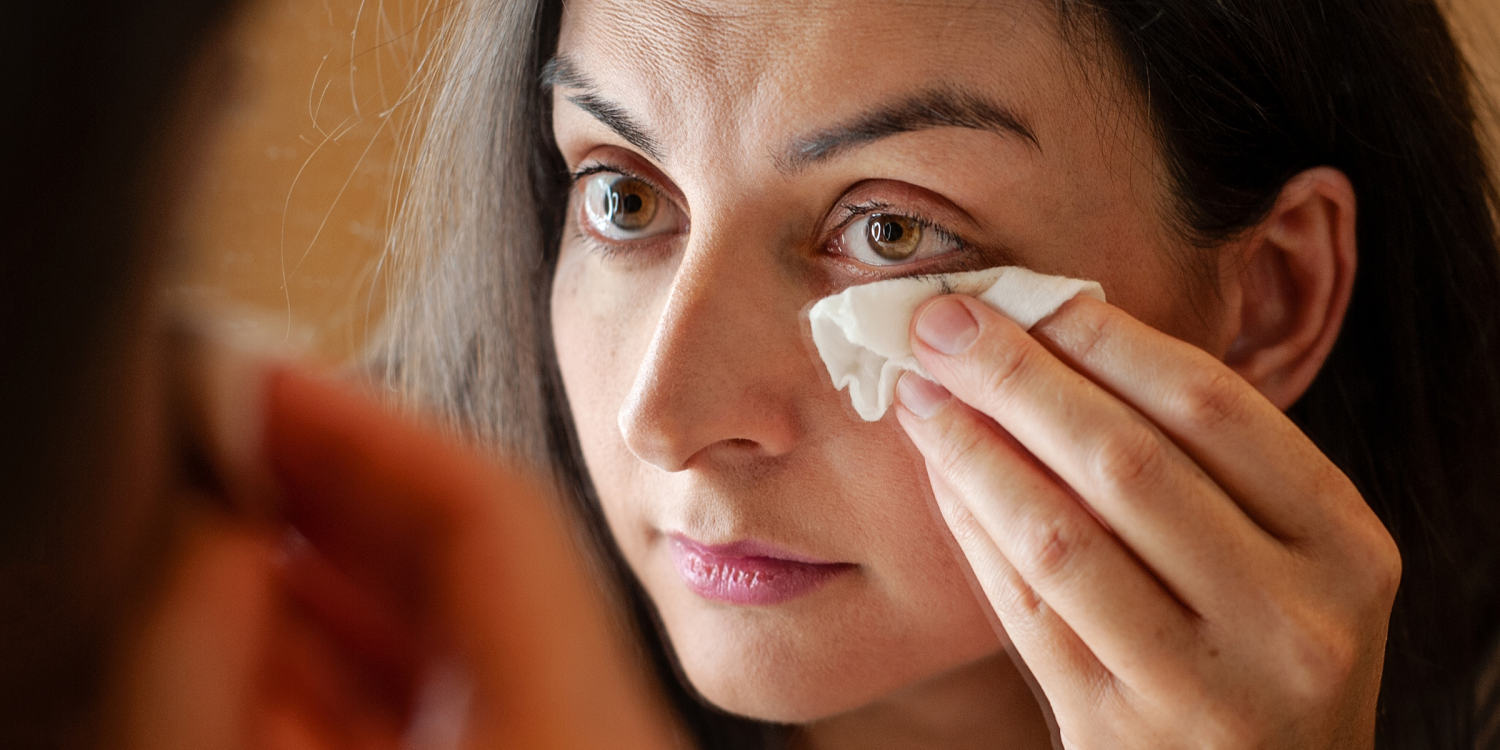
Match your makeup remover to your cosmetics based on basic solubility, not marketing claims. Oil-based products like cleansing balms and bi-phase liquids are chemically required to break down waterproof, silicone-heavy, and long-wear formulas, whereas water-based micellar waters and gel cleansers only dissolve water-soluble pigments and light daily grime. Using a water-based cleanser on silicone-bonded foundation forces you to scrub, which shreds your skin barrier and leaves pore-clogging polymers behind.
The beauty industry thrives on selling universal solutions. Walk down any pharmacy aisle and you will see bottles promising to erase "all makeup, even waterproof" in a single swipe. That is a marketing fiction. Cosmetic chemists formulate modern makeup to survive sweat, sebum, humidity, and friction for sixteen hours at a time. To achieve that kind of adhesion, brands rely on complex film-formers, volatile silicones, and synthetic waxes. Expecting a gentle, water-based surfactant to dissolve a polymerized silicone film is like trying to wash roofing tar off your hands with cold tap water. It will not happen without severe mechanical friction, and your skin will pay the price.
The Chemistry of Adhesion and Dissolution
To understand why your makeup remover is failing, you have to look at what actually holds modern cosmetics onto the human face. We are no longer dealing with simple crushed minerals suspended in basic animal fats or vegetable oils. Today’s long-wear foundations, liquid lipsticks, and tubing mascaras are feats of polymer engineering.
When you apply a transfer-proof foundation, you are spreading a liquid suspension containing pigments, emollients, and volatile carriers like isododecane or cyclomethicone. Within seconds of hitting the warmth of your skin, those volatile carriers evaporate. What remains is a tightly cross-linked mesh of trimethylsiloxysilicate or acrylates copolymer that locks the pigment to your epidermis. This mesh is hydrophobic. It actively repels water.
Chemistry operates on a strict, unyielding rule: like dissolves like. Non-polar substances dissolve other non-polar substances, while polar substances dissolve polar substances. Water is polar. Oils, waxes, and silicones are non-polar.
If you press a cotton pad soaked in a standard, water-based micellar water against a non-polar silicone film, the surfactants in the water simply cannot penetrate the polymer network. You end up dragging a piece of dry, fibrous cotton across your face, using physical abrasion to scrape the makeup off rather than chemical dissolution to melt it away. Over months and years, this daily micro-trauma leads to chronic low-grade inflammation, broken capillaries around the nose and cheeks, and a compromised stratum corneum.
Waterproof Mascara and Liquid Lipsticks Require Biphasic Solvents
The toughest battleground on the face is the eye and lip area, precisely where the skin is thinnest and most vulnerable to mechanical damage. Waterproof mascaras and matte liquid lipsticks are formulated with high concentrations of hard waxes—such as carnauba, beeswax, and synthetic ozokerite—alongside heavy-duty film-formers.
Standard cleansing oils often struggle here because their molecular weight is too large to quickly penetrate dense wax matrices without prolonged massaging. This is where bi-phase makeup removers earn their keep. You recognize them instantly in the bottle: a clear, watery layer floating atop a tinted or slightly denser oily layer.
When you shake the bottle, you create a temporary emulsion. The oil phase typically utilizes ultra-lightweight hydrocarbons like isohexadecane or volatile silicones like cyclopentasiloxane. These specific solvents have low surface tension and high spreading coefficients. They slip between the eyelashes and immediately begin softening and dissolving the rigid wax bonds of waterproof mascara. Meanwhile, the water phase contains mild humectants and gentle surfactants that prevent the formula from feeling suffocatingly greasy and help rinse away any water-soluble debris.
Consider a hypothetical scenario. Imagine applying three coats of a heavy, waterproof lash-volumizing formula before an outdoor summer wedding. At midnight, you try to remove it with a standard foaming face wash. The water and surfactants will bead up on the lashes, leaving the wax untouched. If you instead saturate a cotton pad with a shaken bi-phase remover and hold it against your closed eyelid for twenty full seconds without rubbing, the lightweight solvents do the heavy lifting. The wax softens, the pigment releases its grip on the keratin of your lashes, and the entire product slides onto the pad with almost zero downward pressure.
Heavy Foundations and Silicone Primers Demand Cleansing Balms
Modern complexion products are built to resist the natural oils your sebaceous glands produce throughout the day. If a foundation breaks down the moment your T-zone gets shiny, consumers call it a bad product and leave scathing reviews. Consequently, cosmetic formulators load foundations and primers with dimethicone and cross-linked silicone elastomers that sit on top of the skin like an invisible, breathable shield.
To dismantle this shield, you need a solid cleansing balm or a high-viscosity cleansing oil.
These products are anhydrous, meaning they contain zero water. They are packed with lipid-rich esters—like ethylhexyl palmitate or caprylic/capric triglyceride—alongside plant oils or synthetic mineral oils. Because they are entirely non-polar, they bond instantly with the silicones and waxes in your foundation, sunscreen, and concealer. As you massage the balm into dry skin, your body heat melts the solid waxes into a slick oil, and the esters physically surround and lift the pigment particles out of your pores.
Crucially, a well-formulated cleansing balm or oil is not just pure oil. It contains emulsifiers, such as PEG-20 glyceryl triisostearate or polysorbate 80. An emulsifier is a molecule with a water-loving head and an oil-loving tail. While you massage the balm onto a dry face, the oil-loving tails grab onto your makeup and sebum. The moment you splash warm water onto your face, the water-loving heads grab onto the water, turning the entire mixture into a thin, milky emulsion that rinses clean down the drain.
If you buy a cheap cleansing oil that lacks adequate emulsifiers, or if you try to remove your makeup with pure coconut oil or olive oil from your kitchen pantry, you are making a massive mistake. Pure oils do not emulsify. Water will simply roll right off them, leaving a thick film of trapped pigment, dead skin cells, and heavy lipids sitting directly inside your pores. That is a guaranteed recipe for comedones and cystic breakouts.
Light Tints and Daily Sunscreen Work Best With Micellar Water
Not every makeup routine requires heavy artillery. If your daily look consists of a sheer tinted moisturizer, a touch of cream blush, and a standard water-resistant sunscreen, pulling out a heavy balm every night might be unnecessary—provided you understand the limitations of micellar water.
Micellar water is a deceptively simple invention. It consists of purified water, hydrating humectants like glycerin, and very low concentrations of mild surfactants such as poloxamer 184 or PEG-6 caprylic/capric glycerides. When suspended in water at a specific concentration, these surfactant molecules naturally cluster together into microscopic spheres called micelles. The oil-loving tails point inward toward the center of the sphere, while the water-loving heads face outward toward the water.
When you sweep a micellar-soaked cotton pad across your skin, the cotton fibers disrupt the micelles, forcing them to open up. The oil-loving tails reach out and trap light oils, surface dirt, and water-soluble pigments, pulling them into the cotton pad.
However, micellar water has a severe flaw that almost no brand advertises: it leaves surfactants on your skin. Surfactants are designed to break down lipids. Your skin barrier is held together by a precise ratio of lipids—specifically ceramides, cholesterol, and free fatty acids. If you use micellar water as your sole cleanser and go straight to bed without rinsing your face with water, those residual surfactant molecules remain active on your epidermis all night. Over time, they slowly degrade your natural lipid barrier, leading to transepidermal water loss, tightness, and sudden sensitivity to products you have used for years. Micellar water is an effective first-step pre-cleanse for light makeup, not a standalone leave-on toner.
The Tubing Mascara Anomaly
There is one major category of modern makeup that completely defies the oil-dissolves-all rule: tubing mascara.
Unlike traditional mascaras that coat lashes in waxes and oils, tubing formulas rely on water-soluble polymers—typically acrylates/ethylhexyl acrylate copolymer—that wrap around each individual eyelash like a tiny, flexible sleeve. Once these polymers dry, they are completely impervious to tears, sweat, and natural skin oils.
If you try to remove tubing mascara with a heavy cleansing balm or a bi-phase oil remover, nothing happens. The oil cannot dissolve the polymer sleeve. You will end up tugging at your lashes in frustration, pulling out healthy hairs by the root. Tubing polymers are engineered to respond to one specific trigger: warm water and gentle mechanical slippage. When exposed to water heated to roughly body temperature or slightly higher, the polymer tubes swell, lose their grip on the eyelash, and slide off intact into the sink, often looking like tiny dark spider legs. Knowing whether your mascara is wax-based or polymer-based saves your lashes from months of unnecessary breakage.
The Double Cleanse Myth and When It Actually Applies
Dermatologists and skincare enthusiasts frequently preach the gospel of the double cleanse—using an oil-based cleanser followed immediately by a water-based foaming or gel cleanser. While this method is the gold standard for removing heavy, multi-layered makeup, treating it as a mandatory daily ritual for everyone is flawed advice.
If you are wearing full-coverage silicone foundation, waterproof eyeliner, and mineral sunscreen, a single cleanse is rarely enough. The first cleanse (oil or balm) breaks down the hydrophobic barrier of cosmetics and oxidized sebum. The second cleanse (a gentle, pH-balanced gel or cream wash) removes any leftover emulsified residue, sweat, and water-soluble environmental pollutants, leaving the skin clean enough to absorb active treatments like retinoids or vitamin C.
On the other hand, if you worked from home all day wearing nothing but moisturizer, or if you only wore a light dusting of mineral powder, double cleansing strips your skin of essential lipids for zero benefit. Over-cleansing is just as destructive as under-cleansing. The skin’s acid mantle sits at a slightly acidic pH of roughly 4.5 to 5.5. Every time you introduce water and surfactants, you temporarily spike that pH, forcing your skin to work overtime to restore its natural defenses. Match the intensity of the removal process strictly to the tenacity of the products on your face that specific day.
The Hidden Mechanics of Cleansing Wipes
Makeup wipes are the ultimate convenience trap, and from a chemical standpoint, they are among the worst tools you can put on your face. Because a wipe must sit inside a plastic packet for months without drying out or growing mold, the liquid saturating the cloth is loaded with high concentrations of solubilizers, preservatives like phenoxyethanol, and aggressive surfactants.
Wipes do not rinse off. They merely smear dissolved makeup, dirt, and concentrated cleansing agents around the surface of your skin. Worse, the physical substrate of the wipe—usually a blend of polyester and rayon fibers—creates significant friction. To get stubborn foundation off with a wipe, users instinctively press harder and scrub faster. You are essentially exfoliating your face with a chemical-soaked scouring pad. Keep them in your gym bag for absolute emergencies, but keep them entirely out of your daily bathroom routine.
Auditing Your Vanity
Look at the ingredient lists on the back of your favorite cosmetics tonight. If the top five ingredients of your foundation, concealer, or primer include words ending in -cone, -siloxane, or isododecane, throw out your micellar water as a primary remover and buy an emulsifying cleansing balm. If you wear waterproof eye makeup, buy a bi-phase liquid and commit to holding the pad still for twenty seconds before wiping. Your skin barrier does not care about clever packaging or viral trends; it only responds to basic chemistry and the absence of friction.