Every time a family member steps up to microphones decades after a disappearance, the public nods in solemn agreement. We are conditioned to treat every renewed plea, every weathered photograph, and every anniversary broadcast as a sacred duty. Media outlets feed the cycle. Emotional appeals tug at the collective conscience.
The lazy consensus says we must never stop looking, never stop talking, and never accept that time has won.
It is a comforting narrative. It is also entirely detached from how investigative reality actually functions.
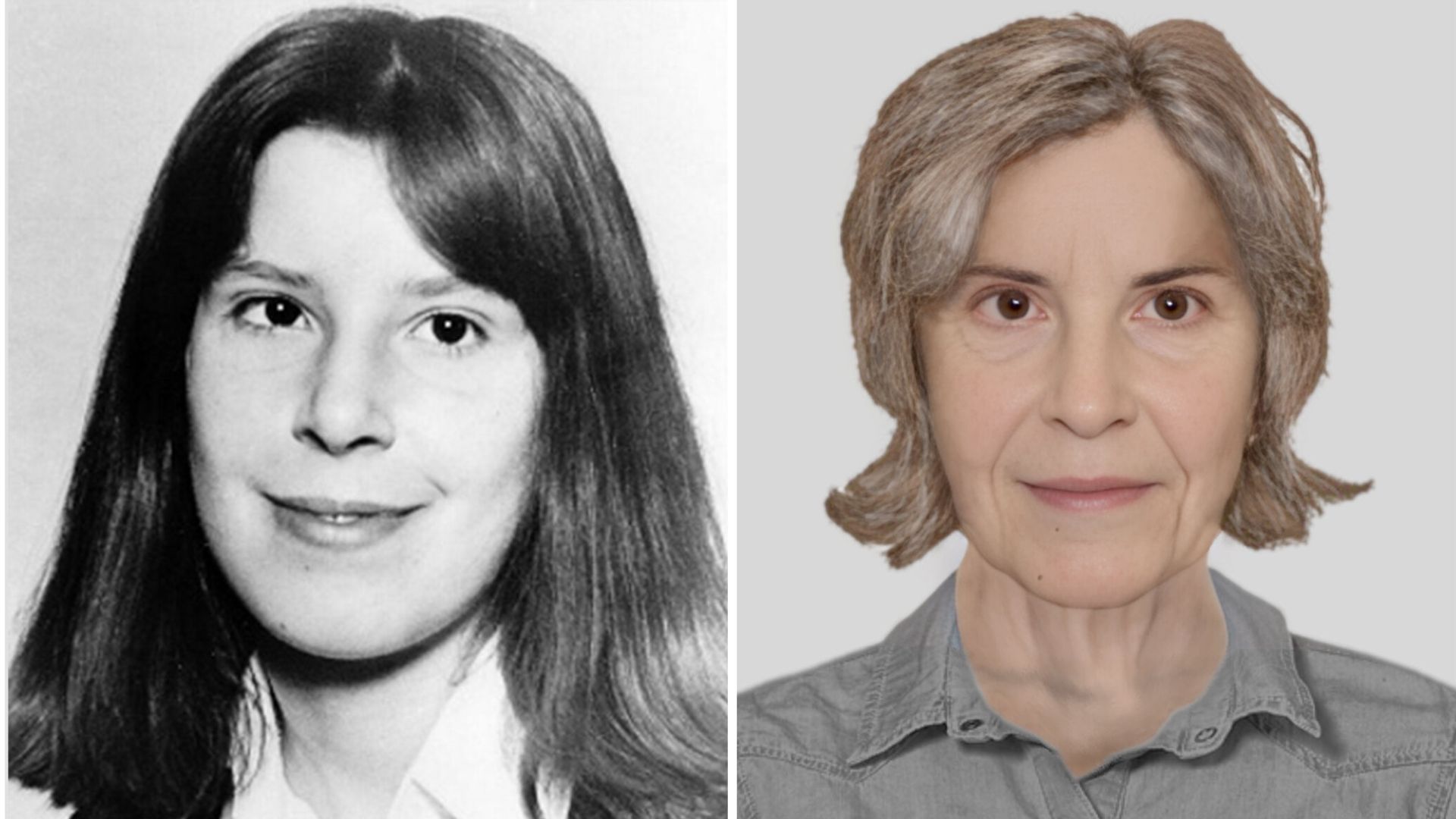
When a sister appeals to the public over a girl who went missing in 1979, the reaction is predictable sympathy. But sympathy does not solve homicides that are nearly half a century old. Sentimentality is the enemy of cold case resolution. Behind the glossy television segments and the renewed public pressure campaigns lies a brutal truth: decades-old missing persons appeals driven by raw emotion rarely yield answers. They yield noise.
I have spent years watching investigative units drown in a sea of well-intentioned static. Every public plea brings a flood of garbage tips, confused memories, and attention-seeking fabrications that pull limited resources away from actual work. It is time to stop pretending that nostalgia-fueled media campaigns are effective investigative strategies.
The Decay of Forensic Reality
Let us confront the physics of time. A missing person case from 1979 belongs to a completely different technological and bureaucratic universe.
In 1979, the DNA database did not exist. Computerized fingerprint matching was in its infancy. Cross-jurisdictional communication relied on physical teletypes and phone calls that took days to clear. Most importantly, the physical evidence trail from that era has either degraded, been improperly stored, or vanished entirely during decades of municipal reorganization and evidence room purges.
When an appeal drops forty or fifty years later, people assume modern science will swoop in to save the day. That is a fantasy. Modern forensic genealogy and familial DNA profiling require biological samples. If the clothing, the vehicle, or the remains were lost, contaminated, or never collected properly in the first place, advanced science is completely useless. You cannot sequence DNA from a missing person flyer.
The media loves to run stories about genetic genealogy cracking ancient cases. What they leave out is that those breakthroughs rely on preserved biological material recovered at the time, not public memory jogged by a sister crying on the evening news. If the physical evidence no longer exists, a thousand televised appeals will change nothing.
The Poison of Faulty Memory
Human memory is not a video recording. It is a fragile, malleable reconstruction that alters itself every single time it is accessed.
Imagine a scenario where a witness comes forward today claiming they saw a teenager matching the 1979 description getting into a blue sedan outside a convenience store. That witness was twenty years old at the time. Today, they are in their sixties or seventies. They have consumed thousands of true crime podcasts, local news updates, and internet message board theories over the intervening decades.
Their brain has actively contaminated their own memory. They are no longer recalling the actual event from 1979. They are recalling the memory of the memory, warped by forty years of cultural saturation.
Investigators know this rule by heart, which is why old witness testimony generated by fresh media appeals is routinely discarded. Yet, families push for these campaigns because it feels like action. Movement feels like progress. In investigative terms, however, unverified eyewitness testimony from four decades ago is worse than useless. It is a resource black hole. Detectives end up spending weeks running down dead-end tips called in by people whose cognitive timelines are hopelessly blurred.
The Resource Allocation Fallacy
The most common objection to my stance is simple: what do you have to lose? Why not keep the name out there? What is the harm in an appeal?
The harm is opportunity cost.
Police departments have finite budgets, finite personnel, and overwhelming caseloads. Cold case units are routinely understaffed. Every hour a detective spends sorting through hundreds of garbage tips generated by a resurrected 1979 media appeal is an hour stolen from active, solvable violent crimes happening right now.
We romanticize the lone detective burning the midnight oil over a yellowed file folder. Real life is starkly different. It is triage. When a department diverts attention to appease public pressure over an ancient case with zero physical evidence, they are robbing current victims of urgency.
Cold case units should operate on a strict algorithmic triage model, not a public relations schedule. If a case lacks preserved DNA, a paper trail that points to a specific living suspect, or verifiable physical coordinates, it belongs in archival storage. Pumping oxygen into a dead fire just to generate headlines is cruel to the families because it sells false hope, and it is irresponsible to the taxpayers funding the department.
What Real Resolution Looks Like
If we want to stop treating cold cases as emotional theater and start treating them as administrative puzzles, we have to change how we handle them from day one.
First, we must ruthlessly digitize and centralize unidentified remains data. The disconnect between local Jane Doe files and missing persons reports across state lines has historically been the true bottleneck. Solving a 1979 disappearance is rarely about finding a witness who remembers a face; it is about matching an anonymous body buried in a distant county to a name in a filing cabinet.
Second, law enforcement agencies need to embrace radical transparency about evidence integrity. Instead of playing along with public appeals for cases where the evidence room was cleaned out in 1994, departments should own up to the reality. Telling a family the truth—that the physical trail is cold beyond resurrection—is painful. But it prevents decades of agonizing limbo.
Third, the media needs to stop treating unresolved tragedies as seasonal entertainment. True crime culture has turned missing persons into a spectator sport where the goal is emotional catharsis for the audience rather than structural accountability.
The Hard Truth About Closure
Closure is a modern therapeutic buzzword that law enforcement has mistakenly adopted as a goal.
Justice requires evidence, suspects, and proof beyond a reasonable doubt. It does not require a press conference. It does not require a viral social media thread. When those elements are gone—swept away by time, incompetence, or simple bad luck—no amount of public grieving will bring them back.
We owe victims truth, but we also owe society realism. Continuing to chase ghosts while ignoring the structural limits of time and evidence helps nobody. It is time to stop confusing public theater with actual investigation.