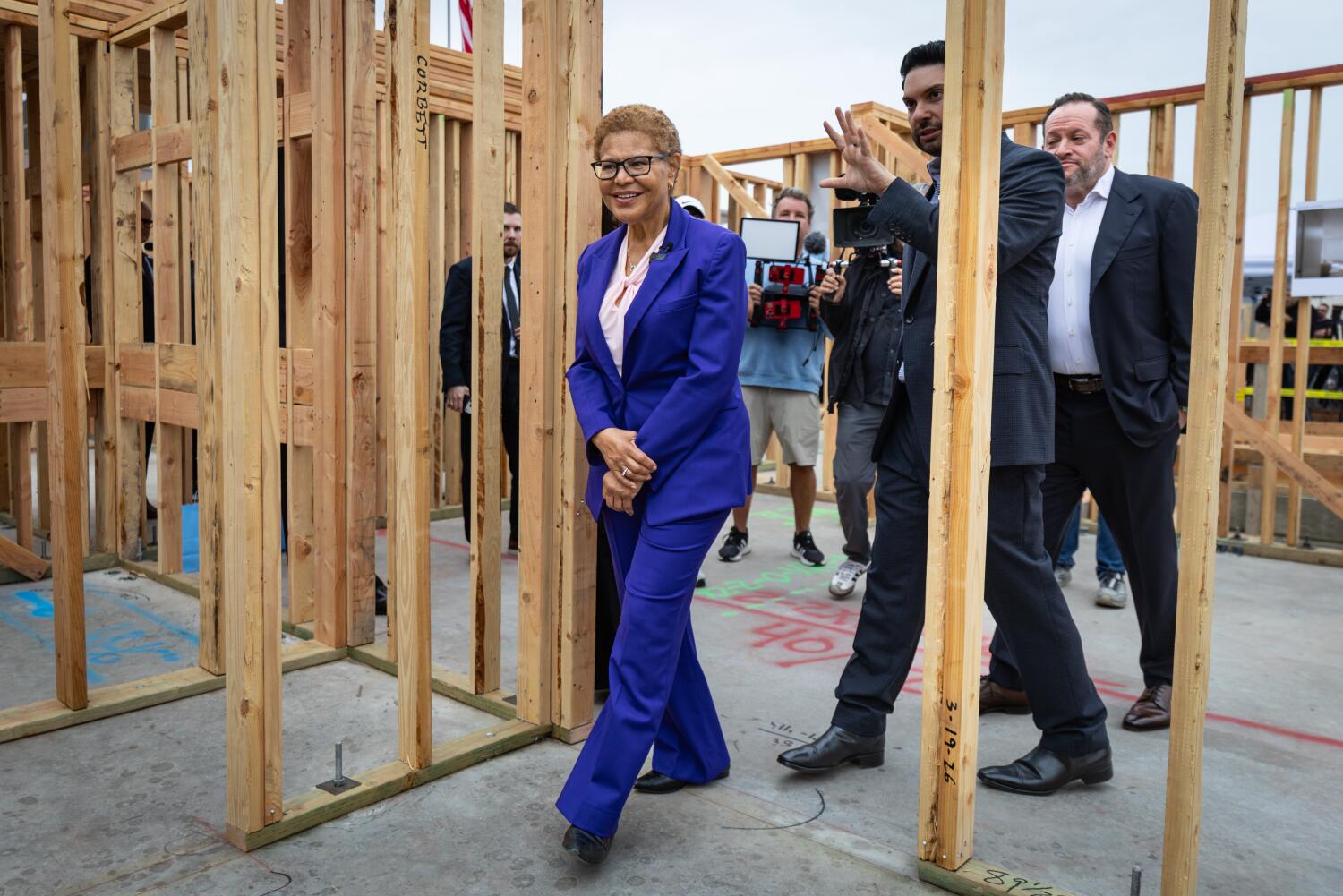
The proposed $360 million allocation for affordable housing by the Los Angeles Mayor’s office functions less as a philanthropic gesture and more as a high-stakes experiment in municipal capital deployment. To evaluate its potential success, one must move beyond the surface-level politics of "housing the unhoused" and scrutinize the underlying unit economics and the structural bottlenecks that historically throttle public works in California. The efficacy of this capital injection rests on three critical variables: the speed of site acquisition, the compression of the soft-cost-to-hard-cost ratio, and the long-term solvency of the operating subsidies.
The Tri-Lens Analysis of Municipal Housing Deployment
To understand why $360 million often fails to produce the expected volume of housing units, we must apply a structural framework that decomposes the project lifecycle. In Los Angeles, the gap between a funding announcement and a resident moving in is often stretched by a "regulatory friction coefficient" that erodes the purchasing power of the dollar through inflation and carry costs.
1. Capital Velocity and Acquisition Friction
The primary constraint on municipal housing is not always a lack of funds, but the speed at which that capital can be deployed. When a city announces a large allocation, land prices in target zones often experience an artificial surge, a phenomenon known as "grant-driven appreciation." If the city does not have a pre-vetted pipeline of shovel-ready sites, the $360 million will be diluted by rising real estate values before a single foundation is poured.
The "Velocity of Capital" in this context is measured by the duration between the legislative approval and the construction start date. Every month of delay represents a percentage loss in utility. A $360 million fund sitting in an account for 24 months loses significant value due to:
- Construction Inflation: Building material costs typically outpace general CPI.
- Opportunity Cost: The delayed tax revenue and social savings (decreased emergency service usage) from housing the population.
- Carry Costs: Interest on bridge loans and site maintenance fees for properties held in limbo.
2. The Soft-Cost Compression Ratio
A recurring failure in Los Angeles housing initiatives, notably Proposition HHH, was the disproportionate allocation of funds toward "soft costs"—permitting, legal fees, consultants, and environmental impact reports—rather than "hard costs" like lumber, concrete, and labor. In many California projects, soft costs can exceed 30% of the total budget.
For the $360 million allocation to outperform its predecessors, the administration must force a shift in the cost structure. This requires a "Fast-Track Protocol" that bypasses standard discretionary reviews. Without an executive mandate to standardize floor plans and expedite zoning variances, the $360 million risks being consumed by the very bureaucracy meant to manage it. The goal is to reach a Hard-to-Soft cost ratio of at least 4:1.
3. Operational Sustainability vs. Initial Capital Outlay
There is a fundamental difference between building housing and maintaining it. The $360 million is a "one-time" capital expenditure (CapEx). However, the populations being targeted—specifically those transitioning from chronic homelessness—require high-intensity supportive services.
The structural risk here is an "unfunded operational liability." If the city builds 1,000 units but does not secure a permanent revenue stream for the wrap-around services (mental health, addiction counseling, security), the physical assets will degrade rapidly. This creates a feedback loop where high maintenance costs eventually cannibalize the funds intended for new construction.
The Economic Impact of the "Inside Safe" Mechanism
The Mayor's strategy relies heavily on the "Inside Safe" initiative, which prioritizes moving people from encampments directly into motels or interim housing before permanent housing is available. This creates a bifurcated spending model:
- Interim Absorption: High-cost, low-permanence. This involves renting motel rooms at market rates. While it provides immediate relief, it is a drain on capital with zero asset equity for the city.
- Permanent Stock Creation: Low-cost (long-term), high-permanence. This involves the $360 million allocation for new construction or adaptive reuse.
The tension between these two creates a "Survival Gap." If the permanent stock is not delivered fast enough, the interim absorption costs (motel rents) will eventually exhaust the city's discretionary budget, forcing a reduction in the $360 million capital pool to cover current operational deficits.
Deconstructing the Per-Unit Cost Function
In Los Angeles, the average cost to produce a single unit of affordable housing has recently fluctuated between $500,000 and $700,000. At these rates, a $360 million allocation yields approximately 514 to 720 units. This is a negligible fraction of the total demand.
To elevate this from a symbolic gesture to a systemic solution, the administration must attack the cost function variables:
$$C = L + (H + S) \times T + F$$
Where:
- $C$ = Total Unit Cost
- $L$ = Land Acquisition
- $H$ = Hard Costs (Labor/Materials)
- $S$ = Soft Costs (Permits/Legal)
- $T$ = Time (Duration of project)
- $F$ = Financing costs
The most volatile variable in this equation is $T$. In a high-interest-rate environment, the time-value of money is the silent killer of housing projects. A project that takes five years to complete is fundamentally different from one that takes two, even if the nominal dollar amount remains the same. The interest on construction loans alone can bloat the budget by 10-15%.
Scaling via Adaptive Reuse
One method to optimize the $360 million is a pivot toward "Adaptive Reuse"—the conversion of underutilized commercial or office space into residential units. This strategy addresses two problems simultaneously: the surplus of vacant "Class B" office space in a post-pandemic economy and the need for rapid housing delivery.
Adaptive reuse typically bypasses the "L" (Land Acquisition) and "H" (Foundation/Shell) costs, potentially reducing the per-unit price by 20-30%. Furthermore, because the structure already exists, the "T" (Time) variable is significantly compressed. However, this is not a universal solution; many office buildings have "deep floor plates" that make residential plumbing and window access a technical and financial nightmare.
The Risk of Displacement and "The NIMBY Tax"
A significant portion of any housing allocation in Los Angeles is spent on political and legal defense. "Not In My Backyard" (NIMBY) litigation can stall projects for years. This is essentially a "Tax on Density." When a project is delayed by a CEQA (California Environmental Quality Act) lawsuit, the city isn't just paying lawyers; it is paying the inflated cost of materials three years down the line.
The $360 million must be protected by state-level preemption laws that limit the ability of local groups to litigate against density. Without this legal shield, the allocation is vulnerable to "death by a thousand injunctions."
Strategic Diversification of the Fund
The allocation should not be viewed as a monolith. A sophisticated strategy would partition the $360 million into three distinct tranches to manage risk:
- Tranche A: Immediate Acquisition (40%): Purchasing existing, distressed multi-family assets that can be converted to affordable units within 6-12 months. This provides immediate "wins" and stabilizes the unhoused population.
- Tranche B: High-Density Ground-Up Construction (40%): Traditional long-term development of new units on city-owned land. This maximizes unit count but has a 3-5 year horizon.
- Tranche C: Innovation and Bridge Loans (20%): Providing low-interest capital to private developers who agree to set aside a percentage of units for affordable housing. This "leverages" private capital, turning the city’s $72 million into $300 million of total project value.
The Metric of Success
The success of the $360 million allocation will not be found in the number of press conferences held, but in the "Net New Bed" count generated per dollar spent. If the city continues to pay $600,000 per unit, the initiative will be a mathematical failure relative to the scale of the crisis.
The administration must pivot toward industrialized construction methods—pre-fabricated modular units manufactured off-site. Modular construction can reduce the "T" variable by 40% and hard costs by 15%. However, this requires a confrontation with powerful labor unions who view off-site manufacturing as a threat to traditional trades.
The strategic play is to use the $360 million as a "Loss Leader" to prove a new, modular, fast-track development model. If the Mayor can demonstrate a per-unit cost of $350,000 through regulatory bypass and modular assembly, it creates a blueprint that can attract massive private-sector investment and federal grants. If the city follows the traditional procurement and construction path, the $360 million will be a rounding error in the city’s multi-decade struggle with inventory scarcity. The mandate is clear: the city must stop being a developer and start being a platform that enables rapid, low-friction production of shelter.


