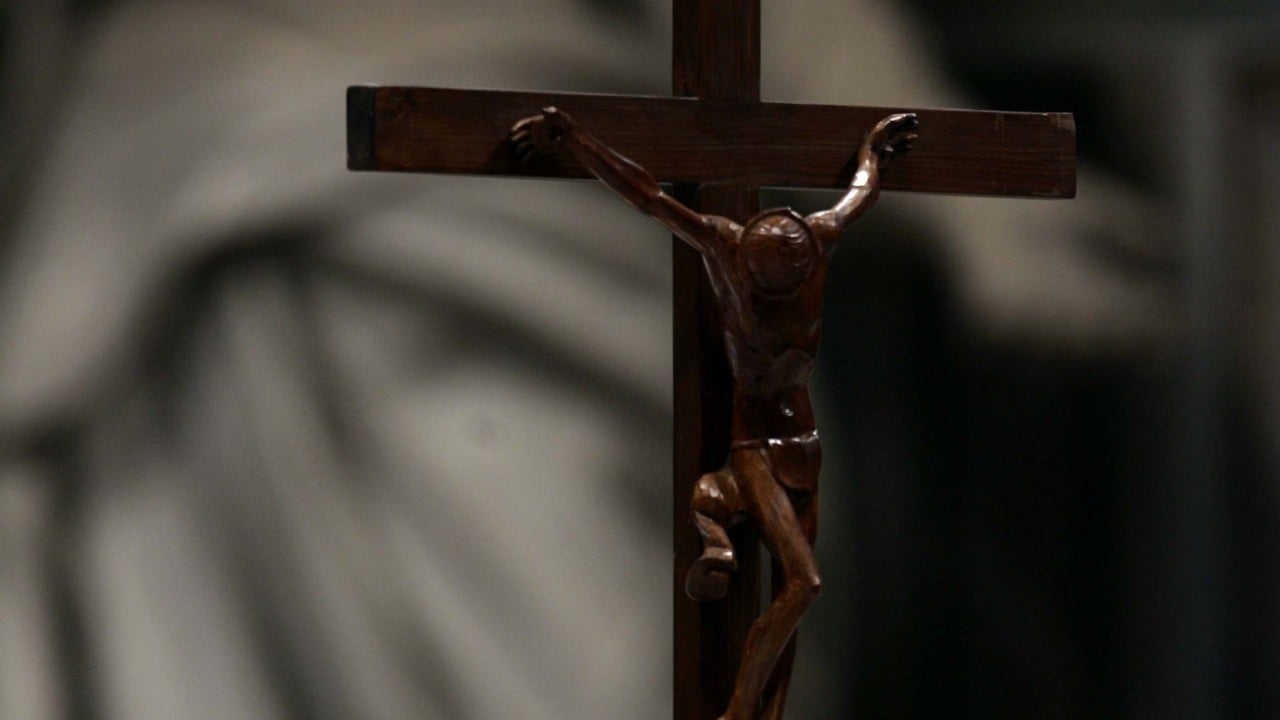
A heavy crucifix detaches from a wall in Guayaquil. A priest dies during a livestreamed Mass. The internet immediately splits into two predictable camps.
Camp A sees eerie irony. Camp B sees a one-in-a-million freak accident.
Both camps are lazy. Both are looking at the wrong thing.
When Rev. Patricio Alfredo Sánchez Molinari died at Our Lady of Perpetual Help church in Ecuador's largest city, standard breaking-news coverage did what it always does. It gave you the clip description. The screams. The ambulance call. The Latin prayer from the archdiocese. Then it moved on to the next outrage, treating a fatal structural failure like a spooky campfire story that happened to have a livestream camera pointed at it.
That framing is a cop-out. It lets institutions off the hook for basic physical maintenance while turning human tragedy into cheap algorithmic shock value.
The Lazy Consensus Around Church Accidents
Coverage of incidents like the Guayaquil tragedy relies on a tired script. Headline writers love the juxtaposition of sacred objects and sudden death. Comment sections fill up with theological hot takes, cynical jokes, or fatalistic shrugs about "bad luck."
Here is the flaw in that consensus: gravity does not care about symbolism, and shear stress does not care about intent.
A wooden crucifix mounted high on a wall is not a mystical object suspended by grace. It is an overhead load. It has mass. It hangs from anchors, brackets, fasteners, and substrate material—plaster, masonry, concrete, or timber—subject to thermal cycling, vibration, moisture, corrosion, and creep over time.
When news outlets treat a falling altar fixture as a bizarre anomaly, they obscure a mundane, preventable reality. Overhead fixtures fail. They fail quietly for years before they fail all at once.
Imagine a scenario where a municipality inspected every heavy wall-mounted fixture in public assembly spaces using basic pull-test and visual-corrosion protocols before a single tragedy occurred. Most headlines about "freak" falling objects would vanish overnight. They wouldn't look like mysteries anymore. They would look like deferred maintenance bills coming due.
Why You Are Asking The Wrong Question
People scrolling past the clip of Father Sánchez Molinari's final moments usually ask one of two questions:
- How could something like that just fall out of nowhere?
- Why didn't anyone see it coming?
Both questions assume the failure was sudden and invisible. In structural mechanics and facility risk management, catastrophic release is rarely the start of the failure. It is the final step.
In structural engineering and building safety, we distinguish between serviceability failure (wear, loosening, minor cracking, sagging) and ultimate limit state failure (complete detachment or collapse). Most overhead hardware gives warnings long before it drops: hairline cracks around wall plugs, rust staining, slight tilt, hollow tapping sounds in plaster or masonry, or loose anchors working themselves free under repeated micro-vibrations.
Nobody checks those warnings when a fixture has hung in the same spot for decades. Out of sight becomes out of mind. Familiarity breeds blind spots.
Experience From High-Risk Facilities
I have seen organizations blow millions of dollars on flashy security tech, cameras, and crisis PR while ignoring a rusted bracket above a high-traffic walkway. I have walked through historic halls, theaters, and sanctuaries where multi-pound ornaments hung by undersized hardware driven into aging masonry that had long since lost its grip.
When you work in risk and facility audits long enough, you stop being surprised by what falls. You start paying attention to what was never inspected.
Addressing The "People Also Ask" Premise
Search engines love surface-level questions around stories like this. Let's strip away the polite phrasing and answer them straight.
"Could a falling crucifix really kill someone instantly?"
Yes. Blunt-force trauma to the head, neck, or torso from an object dropping from height—especially a heavy assembly combining dense wood, metal hardware, or mounting backings—delivers high kinetic energy over a small contact area. Even when a victim does not die on the exact second of impact, severe cranial or spinal trauma can be fatal despite rapid emergency response.
"Are churches uniquely dangerous compared to other old buildings?"
No. The danger comes from building age, deferred upkeep, and heavy overhead decor, not the religious function of the room. Historic theaters, civic halls, museums, and older commercial buildings share the exact same vulnerability: high ceilings, heavy ornamental mounts, and budgets that prioritize visible renovations over unglamorous structural checks. (Just look at how older structures worldwide occasionally shed heavy stone or fixtures onto people below—a reminder that masonry and mounts age everywhere.)
"Why do livestreamed accidents feel worse to watch?"
Because livestreaming removes editorial distance. There is no cut away, no slow-motion buffer, and no curated framing before you hear real people screaming for an ambulance in real time. Your brain processes raw, unedited proximity—which makes the moment feel more personal, even when you are thousands of miles away.
The Heavy Hitters We Should Actually Listen To
If you want to understand why objects drop off walls and ceilings, skip the pundits and read the people who study structural reliability and safety engineering.
Figures like Henry Petroski, the late civil engineer and failure-analysis scholar, spent his career showing that engineering failures rarely come from exotic physics. They come from hubris, overlooked assumptions, routine habits, and small details ignored over time.
In high-reliability organization theory—associated with researchers like Karl Weick and Kathleen Sutcliffe—safe institutions don't assume nothing can go wrong. They obsess over small anomalies, resist complacency during long stretches of quiet operations, and treat routine checks as non-negotiable rather than box-ticking theater.
That mindset is the exact opposite of how most small venues, parishes, and local institutions operate.
What Actually Works Instead Of Thoughts And Prayers
Sympathy matters after a death. Respect for a grieving congregation matters. Do not confuse empathy with operational competence.
If you manage any space with heavy overhead or wall-mounted items—churches, schools, event halls, offices, studios, or homes—stop relying on "it's been fine for twenty years." Use a harder standard:
- Inventory every overhead and high-wall load. List anything heavy mounted above seating, stages, altars, aisles, or desks. If it can't be safely dropped onto an empty chair without causing serious harm, it belongs on the list.
- Audit the anchor, not just the object. A sturdy cross or light rig means nothing if it's held by drywall anchors or corroded lag bolts in crumbling plaster. Verify substrate strength and fastener rating.
- Log physical inspections on a calendar. Do a hands-on check—looking for tilt, gap changes, rust, loose mounts, or wall cracking—at least once a year, and after any seismic tremor, major storm, or nearby construction.
- Fix small shifts immediately. A mount that leans two degrees today is telling you something changed. Tighten, re-anchor, or take it down before gravity finishes the job.
- Separate emergency response from livestream feeds. Have clear protocols for medical emergencies, clear access lanes to high-risk areas, and immediate cut-off procedures when an incident unfolds live.
The Downside Of Taking This Hardline Stance
Being blunt about preventable hazards has a cost.
First, it can sound cold right after a tragedy. When people are mourning a priest who just died in front of his community, talking about shear loads and inspection logs can feel jarring or insensitive. Timing matters, and basic human decency should never get steamrolled by analysis.
Second, strict safety audits create friction and expense. Tightening standards means paying contractors, pulling down questionable fixtures, delaying events, and telling well-meaning people that a beloved display isn't mounted safely. Some leaders push back because it slows things down or strains tight budgets.
Third, we don't yet have every factual detail from local investigators on what mechanically gave way in Guayaquil. Any contrarian argument that pretends to know the exact bolt that snapped before official findings are released is guessing—and guessing is cheap.
Still, admitting uncertainty about the exact fastener does not weaken the broader point. Whether the culprit was corroded hardware, degraded masonry, vibration, or an improper mount, the lesson for every building owner is identical: hope is not a load-bearing material.
Stop treating preventable structural failures like mysteries from beyond. Check the bolts.