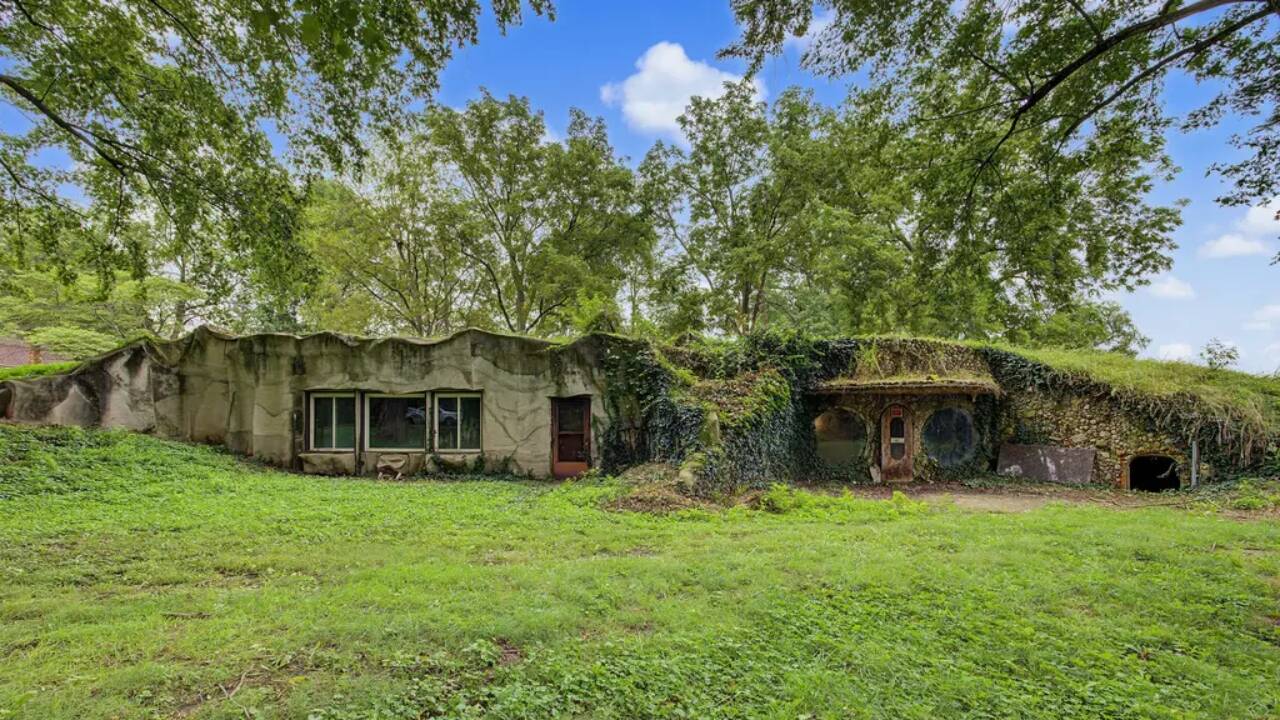
You scroll through your feed and see a 2,300-square-foot home sitting underground in central Illinois with a price tag of just $59,000. It looks like a cross between a Flintstones set and an earth-sheltered bunker. Naturally, your first thought is that you've stumbled upon the ultimate real estate cheat code. Twenty-six dollars a square foot? Sign me up.
Stop right there.
That viral "caveman" house located at 508 S. Jefferson St. in Armington, Illinois, is capturing headlines and topping property-browsing lists. Built originally in 1977 by Andy "Caveman" Davis during the height of the national energy crisis, it was designed to thumb its nose at utility companies using earth-sheltered insulation and hand-collected Colorado river rocks. Nearly fifty years later, the internet is rediscovering it. But before you drain your savings account to buy a subterranean project home, you need to understand what you are actually getting into.
The Reality Behind the $59,000 Price Tag
Let's look at the math that real estate listings love to hide. A cheap purchase price almost always points to a massive deferred maintenance bill. This property isn't a quirky turnkey cabin waiting for you to bring your overnight bags. It is a raw, unfinished construction project that has sat through decades of Midwestern weather.
The interior is essentially a concrete and stone shell. The kitchen is completely incomplete. Plumbing lines and electrical wiring look like an afterthought punched through rock faces rather than a professional installation. When you tour the place via the listing photos, you see raw masonry, damp corners, and water damage that tells a story of moisture control battles. Underground architecture is notoriously unforgiving. If the waterproofing membrane fails fifty years down the line, fixing it means excavating the earth right off your roof and walls.
That $59,000 sticker price is just the cover charge to enter the arena. By the time you hire professionals to safely run modern HVAC, remediate potential mold, pour new surfaces, and build out a functional kitchen, you could easily surpass the cost of a traditional, move-in-ready home in the same region.
The Origin Story of the Colorado Rock House
To understand why this house looks the way it does, you have to wind the clock back to 1977. Energy prices were spiking, and everyday people were panicking over heating bills. Andy Davis decided to stop fighting utility companies and started building into the ground instead.
He didn't just grab local gravel. The legend—backed by local lore and listing details—is that the family hauled river rocks back from trips to Colorado. As construction moved forward, neighbors and curious onlookers started dropping off extra stones. People would set up lawn chairs on weekends just to watch the strange underground house take shape.
That grassroots novelty turned into a real business. Davis eventually launched a company called Davis Caves because so many people wanted earth-sheltered housing of their own. This specific home in Armington is the prototype of that movement. It features undulating concrete curves, hobbit-style circular windows, a rock-lined bathtub, and a masonry fireplace. Structurally, the core concept was brilliant for energy conservation. Earth naturally insulates against extreme summer heat and bitter winter freezes.
Why Most Buyers Should Walk Away
Internet curiosity makes for terrible long-term financial planning. If you aren't a seasoned general contractor or a hardcore DIYer with an unlimited budget and free weekends for the next three years, buying this house is financial suicide.
Earth-sheltered homes don't age like standard stick-built houses. You aren't dealing with simple drywall repairs and a coat of paint. You are managing concrete structural shifts, moisture migration, and non-standard layouts that defy normal furniture placement. Even the listing tries to sweeten the pill by throwing in two brand-new, uninstalled Argon gas circular windows valued at $15,000, admitting implicitly that the current ones are begging for replacement.
If you buy this place, you aren't buying a home. You are buying a second job.
Who Wins With a Property Like This
Does that mean the Armington cave house is completely worthless? Not at all. It just means the buyer pool is microscopically small.
If you want to turn a property into an eccentric, highly targeted Airbnb rental in central Illinois—and you have the capital to burn on heavy renovations—this could become a viral destination. Campers and novelty seekers love quirky architecture. Placed near regional hubs, a fully restored stone earthship could pull in steady weekend revenue.
For an individual looking for a quiet, low-maintenance place to live? Keep walking. Admire the historical quirkiness from your screen, appreciate the ingenuity of a 1970s energy-crisis DIY project, and let someone else empty their bank account trying to waterproof a concrete cave.
A $59,000 Underground House — What's the Catch?
This video offers a closer look at the interior layout, the rock-lined walls, and the unique architectural features of the viral Armington cave house.