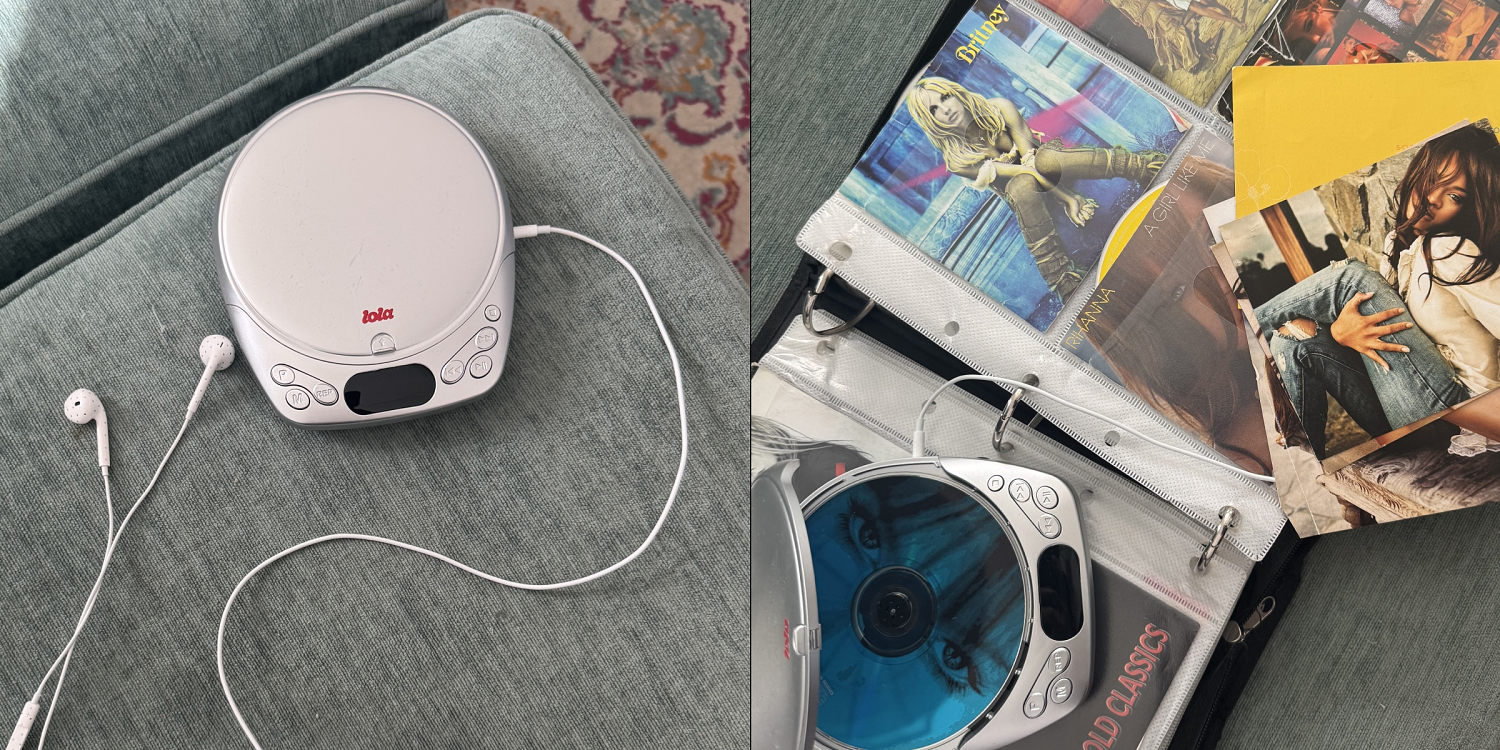
Ditching your music subscription for a $99 CD player feels rebellious for about forty-eight hours. Then you realize you just traded a personalized algorithm for a plastic frisbee spinner and a shelf full of scratched polycarbonate.
Every few months, another tech publication runs the exact same story. A writer gets tired of doomscrolling playlists, buys a retro-styled CD player—usually a $99 minimalist box like the Lola—and declares physical media a spiritual awakening. They talk about "intentionality." They praise album sequencing. They act like pressing an eject button cures modern digital fatigue.
That is lazy consensus wrapped in nostalgia.
I have spent over fifteen years in consumer audio, digital distribution, and product design. I have watched hardware startups burn millions trying to sell "mindful" single-purpose gadgets to people who secretly refuse to give up convenience. I have seen retro revival products fly off crowdfunding pages and end up buried inside junk drawers by Q3. Buying a $99 CD player does not fix how you listen to music. It just moves the friction around while leaving the real problem untouched.
The Lazy Consensus Around "Intentional" Listening
The standard pitch behind a $99 CD player goes like this: streaming makes music disposable, while physical discs make music deliberate. Put a CD in the tray. Sit down. Read the liner notes. Listen start to finish.
Sounds noble. Falls apart under scrutiny.
First, intentionality is a habit, not a piece of industrial design. If you lack the discipline to queue up an album on a streaming app without skipping to track three, a motorized door is not going to rewire your dopamine receptors. Plenty of people bought CDs in the late 1990s and treated tracks seven through eleven as bathroom breaks. Album cohesion was never universal; it was an artifact of storage limits and track ordering.
Second, look at what you actually get for $99 in a modern CD player. You get an entry-level optical transport, basic digital-to-analog conversion, and industrial styling meant to look good on a credenza. None of that magically creates better sound than a lossless stream routed through a decent DAC. A Red Book audio CD—the standard introduced by Philips and Sony in 1982—stores uncompressed 16-bit/44.1kHz PCM audio. That is CD-quality audio. Many streaming tiers already offer 16-bit/44.1kHz or 24-bit lossless files straight from the label's master distribution.
So why do people swear a $99 CD player sounds "warmer" or "more present"?
Because volume and expectation do heavy lifting. A new physical setup often gets played at a slightly different gain level than a phone earbud setup. Plus, when you spend a hundred bucks and clear space on a table, your brain rewards the effort with perceived value. That is confirmation bias, not acoustic superiority.
Acoustic Physics vs. Aesthetic Nostalgia
Let us get the technical definitions straight before someone claims laser beams are warmer than servers.
Lossless audio means the digital data representing the sound wave has not been thrown away during compression. Both a standard audio CD (1,411 kbps bitrate for stereo PCM) and a FLAC or ALAC lossless stream deliver bit-identical audio samples when decoded properly. A CD does not contain "extra" musical information that vanished in the cloud. If the streaming service is serving the same digital master, the underlying waveform numbers are the same.
Where versions do differ is the mastering—the final EQ, dynamic range, and limiting applied before release. Sometimes a physical pressing uses an older or slightly less aggressively squashed master than a streaming catalog entry. That is a real difference, though it has nothing to do with the $99 player itself. A $99 transport cannot invent dynamic range that was crushed out during mastering.
Even worse, optical discs have physical vulnerabilities that cloud files do not. Disc rot, surface scratches, dust on the lens, and skipping from vibrations are real mechanical headaches. If you buy used CDs at a thrift store for two dollars apiece, half of them look like ice skating rinks. You end up spending half your "mindful" listening session wiping fingerprints off shiny plastic.
Imagine a scenario where you host a dinner party and want background music for three hours. With a streaming queue, you build a mood that shifts gradually from ambient dub to late-night soul without standing up every forty minutes. With a single-disc CD player, every forty-five to seventy minutes someone has to walk over, swap a disc, close the lid, and wait for the TOC (Table of Contents) to read. That is not immersive culture. That is unpaid hospitality labor.
Are People Asking the Wrong Question About Music?
Most reviews of a $99 CD player ask, "Does this make listening more enjoyable than streaming?"
Wrong question.
The real question is: Why did streaming start feeling hollow in the first place?
Streaming did not ruin music discovery or focus on its own. Algorithmic recommendation engines optimized for engagement velocity—getting you to stay on the platform, click fast, and accept passive background noise. When every song is one tap away and personalized mixes are auto-generated around your mood tags, music stops being a chosen experience and becomes ambient wallpaper.
Swapping to a $99 CD player attacks the surface symptom (the interface) while ignoring the root cause (passive consumption habits and algorithmic curation).
Let us hit a few common questions people type into search bars right after reading a glowing review of a tabletop CD player.
Does a CD player actually sound better than Spotify or Apple Music?
Not automatically. If you compare a $99 CD player against compressed lossy audio (like low-bitrate MP3 or AAC), a CD can sound cleaner, especially on cymbals and dense arrangements where lossy codecs smear high frequencies. If you compare it against true lossless streaming over a clean connection, the digital source quality is essentially tied. Your speakers, room acoustics, and amplifier matter vastly more than whether the bits came off a spinning disc or a fiber line.
Is buying physical CDs a good way to support artists?
Sometimes, and often less than people assume. A typical $15 to $18 new CD splits money across manufacturing, packaging, distribution, retail margins, label recoupment, and artist royalties. Buying directly from an independent artist at a show or on a direct-to-fan storefront usually puts a much higher slice in the creator's pocket than buying a mass-market disc at a big-box store. Streaming payouts per stream are notoriously tiny, yes, unless you have massive volume—so direct support matters regardless of format.
Why are tabletop CD players like the Lola suddenly everywhere?
Because hardware makers spotted a cultural fatigue trend and packaged it into an object. People miss owning things that cannot vanish due to a licensing dispute or a server outage. A physical disc on a shelf feels permanent. A $99 price tag lowers the barrier enough to impulse-buy the aesthetic of "slowing down."
What Actually Works Instead of Cosplaying 1998
If your goal is deeper focus, better sound, and real ownership without turning your living room into a Tower Records clearance bin, skip the gimmick and change your workflow.
- Curate hard, regardless of format. Pick five full albums a week. Put them in a dedicated playlist or folder. Listen to them in order with no shuffle button. Discipline lives in your choices, not in a plastic tray.
- Rip or buy true lossless files. If you want offline ownership that never skips and fits ten thousand albums on a single SSD, buy DRM-free FLAC or ALAC downloads directly from labels or independent platforms. Back them up on two drives. Zero disc rot. Instant search.
- Upgrade the weakest link in your chain. If you are listening through cheap laptop speakers or worn-out earbuds, a $99 CD player will not save you. Put that money toward decent bookshelf speakers, studio monitors, or a reliable pair of open-back headphones.
- Create a phone-free listening window. Leave your phone in another room for forty-five minutes. Sit in a chair. Close your eyes or read the lyric sheet on a tablet in airplane mode. That single behavioral shift beats every retro gadget on the market.
The Blind Spots of My Own Take
I am not going to pretend my position is spotless. Going all-in on digital files and disciplined habits has real downsides.
First, digital libraries can feel invisible. Scrolling through a folder of 4,000 FLAC files lacks the tactile thrill of pulling a booklet out of a jewel case and smelling printed ink. For people who learn and bond through physical objects, digital collections can feel sterile.
Second, hardware standards shift. Optical drives are legacy components. Replacement lasers for budget CD players can be hard to source years down the road, whereas an audio file is just data that can be migrated from drive to drive forever. Still, if someone gets genuine joy out of spinning a physical disc once a week and it gets them off their phone, that joy is real—even if the tech hype around it is exaggerated.
The Real Verdict on the $99 CD Player Trend
Industry veterans like Dieter Rams famously argued for honest, unobtrusive design that serves a clear function rather than chasing novelty. Classic audio engineers from Bob Ludwig to Tom Dowd spent careers making sure recordings translated faithfully across real-world systems. None of them built a career on pretending a budget disc spinner is a cure for modern distraction.
A $99 CD player is a fine little toy if you want a neat bedside or desk object for casual spins. It is a terrible answer to streaming fatigue. Fix your listening habits, respect the full album, invest in decent transducers, and stop expecting a ninety-nine-dollar box to do your thinking for you.