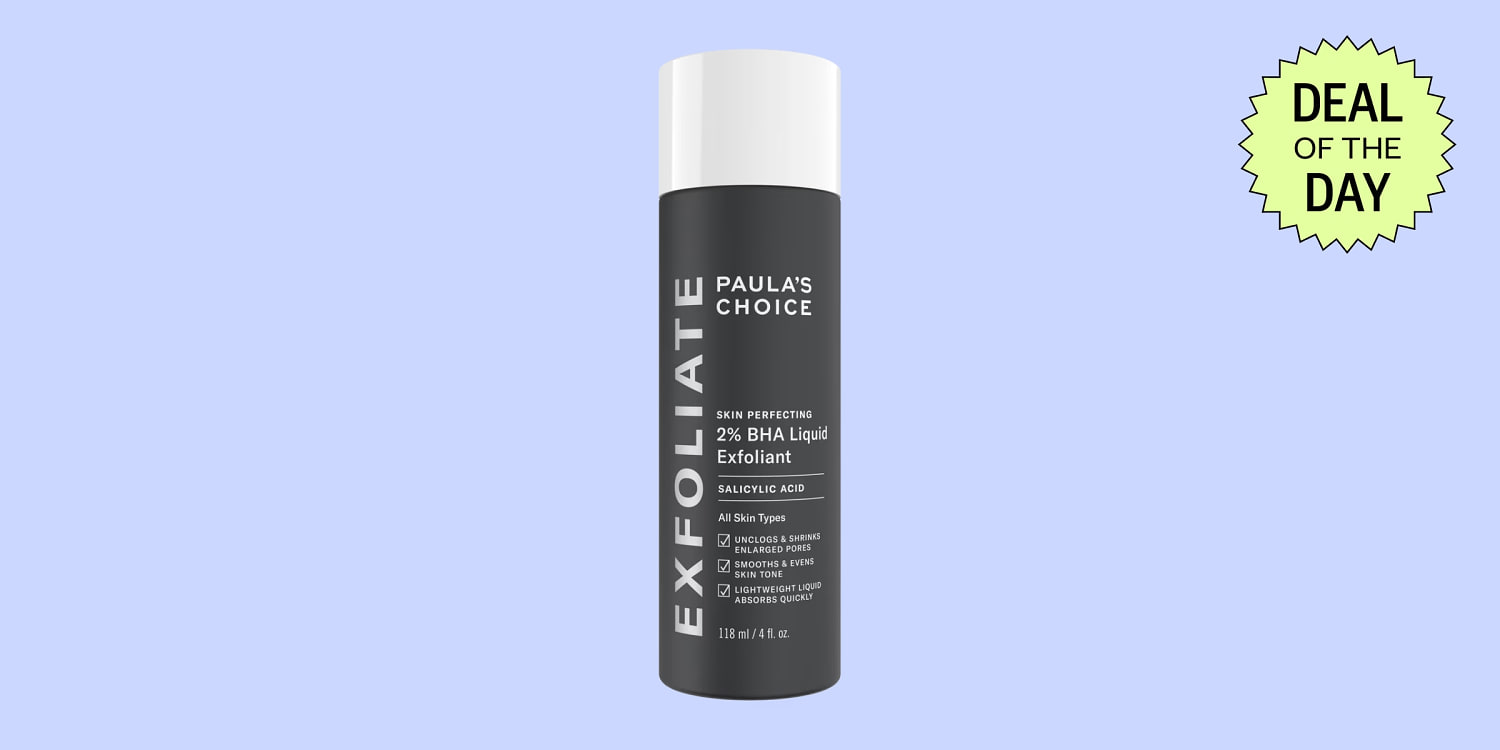
Sale alerts trigger herd behavior. A 20% discount drops. Carts fill up. Nobody stops to ask if the bottle actually fits their skin barrier.
Competitor roundups treat skincare sales like clearance racks at a hardware store. Slap a percentage off on a Paula’s Choice BHA exfoliant and seven other crowd-pleasers, add a few enthusiastic blurbs about glowing skin and cleared pores, and call it a buying guide. That lazy consensus assumes bestsellers earn their status through universal compatibility. They do not. Bestsellers win because they appeal to the broadest middle, have massive marketing budgets, or happen to work well for one specific skin type under forgiving conditions.
When a discount hits a famous leave-on salicylic acid formula, people treat it like a free pass to over-exfoliate. They buy backup bottles. They layer it over retinoids. They apply it twice a day because the label mentions daily use. Two weeks later, their skin is shiny, tight, stinging when water hits it, and breaking out worse than before. The sale didn't save them money. It bought them a compromised stratum corneum and a whole new basket of "repair" products they wouldn't have needed otherwise.
The Bestseller Trap Nobody Wants to Admit
Popularity is a terrible proxy for formulation fit. A product becomes a bestseller when its texture feels pleasant, its marketing hits the right pain points, and enough people see a short-term win to leave five-star reviews. None of that tells you how a 2% beta hydroxy acid will behave on your skin in your climate, paired with your cleanser, sunscreen, and stress levels.
Salicylic acid is oil-soluble. Unlike alpha hydroxy acids such as glycolic or lactic acid, which work primarily on the surface of the skin, salicylic acid can penetrate into sebum-filled pores to help loosen dead cells and excess oil. That mechanism is well established in dermatology. When pores are congested and sebum production is active, targeted BHA use can make a real difference.
Here is what bestseller roundups gloss over: oil solubility does not mean zero irritation. Acid is still acid, and repeated chemical exfoliation strips intercellular lipids when pushed too hard or layered carelessly. A 20% sale encourages volume buying, and volume buying encourages over-application. You don't suddenly need three bottles of exfoliant just because the price dipped. Skin cells turn over on their own biological clock. Pouring more acid onto the surface does not force faster, healthier renewal; it just thins out protective layers faster than your barrier can rebuild them.
I have watched plenty of people—and plenty of brands—fall into the "more active, more often" trap. In clinical and product formulation circles, you see the same pattern repeat: someone buys a cult-favorite chemical exfoliant on sale, uses it aggressively to chase fast clarity, damages their moisture barrier, panics, and blames the ingredient instead of their routine. Usually the formula isn't evil. The dosage and frequency are reckless.
When a Sale Turns Good Products Into Bad Routines
Discounted bestsellers rarely fail in isolation. They fail in crowded routines.
Picture a typical bathroom shelf right now. Morning brings a foaming cleanser, maybe a vitamin C serum, and a sunscreen. Night brings micellar water or a cleansing balm, a gentle wash, a leave-on BHA exfoliant, a retinoid on alternating nights, and a heavy barrier cream. Add a 20% markdown on a viral exfoliant or a popular hydrating serum or mask, and suddenly the routine has zero breathing room.
Exfoliation is controlled disruption. You are nudging corneocytes to shed more evenly so texture looks smoother and pores look less congested. That disruption requires recovery time. If you stack a leave-on BHA on top of prescription tretinoin, over-the-counter retinol, benzoyl peroxide, or harsh cleansing brushes, you aren't optimizing your skin. You are picking at a scab every twelve hours.
Imagine a scenario where two people with mild congestion buy the exact same discounted 2% BHA liquid. Person A has resilient, oily skin, uses a mild non-stripping cleanser, applies the BHA twice a week at night, and wears broad-spectrum sunscreen every morning. Person B has dry, reactive skin, uses a harsh sulfate cleanser, applies the BHA every morning and night because it's "gentle enough for daily use," and skips moisturizer when skin feels oily. After a month, Person A looks clearer and calmer. Person B has flaking around the nose, redness on the cheeks, and stubborn bumps that look like acne but behave like irritation. Same bottle. Opposite outcomes. The sale price didn't protect Person B from bad habits.
You Are Probably Asking the Wrong Question
Most shoppers looking at a list of marked-down bestsellers ask: "Which of these deals should I grab before it sells out?"
That is the wrong question. The right question is: "What specific bottleneck is actually holding my skin back right now—and does any product on sale solve it without creating a bigger problem?"
A discount is not a diagnosis. If your main issue is dehydration, a BHA exfoliant won't fix tightness. If your main issue is hyperpigmentation from past breakouts, salicylic acid alone is a slow, indirect tool compared to consistent sunscreen, azelaic acid, or retinoids. If your main issue is rosacea or eczema-prone sensitivity, a leave-on acid—even a beloved one—can trigger flushing, burning, and barrier setbacks.
Brutal Answers to "People Also Ask" Questions
Can you use a BHA exfoliant every day?
Sometimes, if your skin tolerates it and the rest of your routine is calm. Many people can't, even when a label says "gentle enough for daily use." Labels describe intended positioning and typical test panels, not your personal tolerance threshold. Starting two or three times a week and watching how your skin responds over three to four weeks beats following a marketing claim blindly.
Is a 20% sale on skincare actually a good deal?
Only if you were already going to buy that exact formula, you have a clear slot for it in your routine, and you won't use it up twice as fast just to justify stocking up. A 20% discount on a product you don't need—or one that over-exfoliates your face—is a 100% waste of money.
Should you buy multiple "bestsellers" at once during a sale?
Usually no. Introducing three or four popular products at the same time makes it impossible to tell what is helping, what is doing nothing, and what is causing breakouts or irritation. Buying a bundle because it's discounted often leads to clutter and confusion rather than better skin.
Does salicylic acid shrink pores permanently?
No. Pore size is largely genetic and influenced by factors like oil production, age, and sun damage. Salicylic acid can help clear out sebum and debris that stretch pores or make them look darker, which makes them appear smaller. Once you stop using it and oil and dead skin accumulate again, that temporary visual improvement fades.
What Dermatologists and Formulators Actually Care About
When you strip away influencer hype and sale banners, serious skin care comes down to boring fundamentals backed by clinical evidence—names like Albert Kligman, who helped advance our understanding of retinoids and skin aging, and dermatological consensus on barrier function, photoprotection, and targeted actives.
Dermatologists rarely get excited about a flash sale on a single bottle. They look at the whole system. Is there daily broad-spectrum sun protection? Sunscreen is non-negotiable whenever you use exfoliating acids or retinoids, both because UV exposure degrades skin quality and because compromised or newly revealed surface cells are vulnerable to photodamage. Is the cleanser non-stripping? Are active ingredients spaced out instead of piled on? Is there consistency over months rather than frantic switching every time a new trend peaks?
Good formulation matters, too. Vehicle, pH, soothing ingredients, and overall routine balance determine how an active feels on real human skin. A well-formulated BHA can be genuinely useful for blackheads, whiteheads, and rough texture. It just isn't a magic wand, and it doesn't belong in every single routine.
My Contrarian Take Has Real Drawbacks
Being cautious about sales and skeptical of bestsellers isn't cost-free. I will own the downsides of taking this stance.
First, you can miss genuine value. If a product is a true staple in your routine and you know your skin loves it, waiting around out of pure contrarianism when it's 20% off just leaves money on the table. Second, overthinking every purchase can turn simple care into analysis paralysis. Some people don't need a ten-step strategic audit to buy a cleanser or an exfoliant; they just need one solid product and the patience to stick with it.
Third, playing it conservative with exfoliation can feel slow. If you have stubborn congestion and you start BHA twice a week instead of going all-in every night, progress takes longer to see. Patience isn't sexy, and it doesn't get clicks like a dramatic "before and after" in ten days.
How to Shop Sales Without Wrecking Your Face
If you want to take advantage of a sale—whether on a BHA exfoliant or any other skincare bestseller—do it on your terms, not the brand's promotional calendar.
- Audit your current shelf first. Check what you already own and what is running low. If you still have half a bottle of exfoliant sitting in the cabinet, you don't need a backup unless you go through it steadily over a few months without irritation.
- Match the active to one clear job. Pick BHA if congestion, blackheads, or excess oil are real issues for you. Skip it if your skin is already peeling, raw, or stinging from wind, cold weather, or other actives.
- Keep the rest of the routine boring. Pair any exfoliating acid with a gentle cleanser, a dependable moisturizer, and daily sunscreen. Cut out redundant "brightening," "resurfacing," or "purifying" steps that compete for the same real estate.
- Introduce one change at a time. Give a new product—or a new frequency—at least two to three weeks before adding another active. If your skin flares up, you will actually know why.
- Walk away from FOMO. Sales come back. Flash discounts happen all year. Your skin barrier takes a lot longer to heal than a promo code takes to expire.
Skip the panic cart. Buy what your skin actually needs, use less than you think you should, and let time do the heavy lifting.