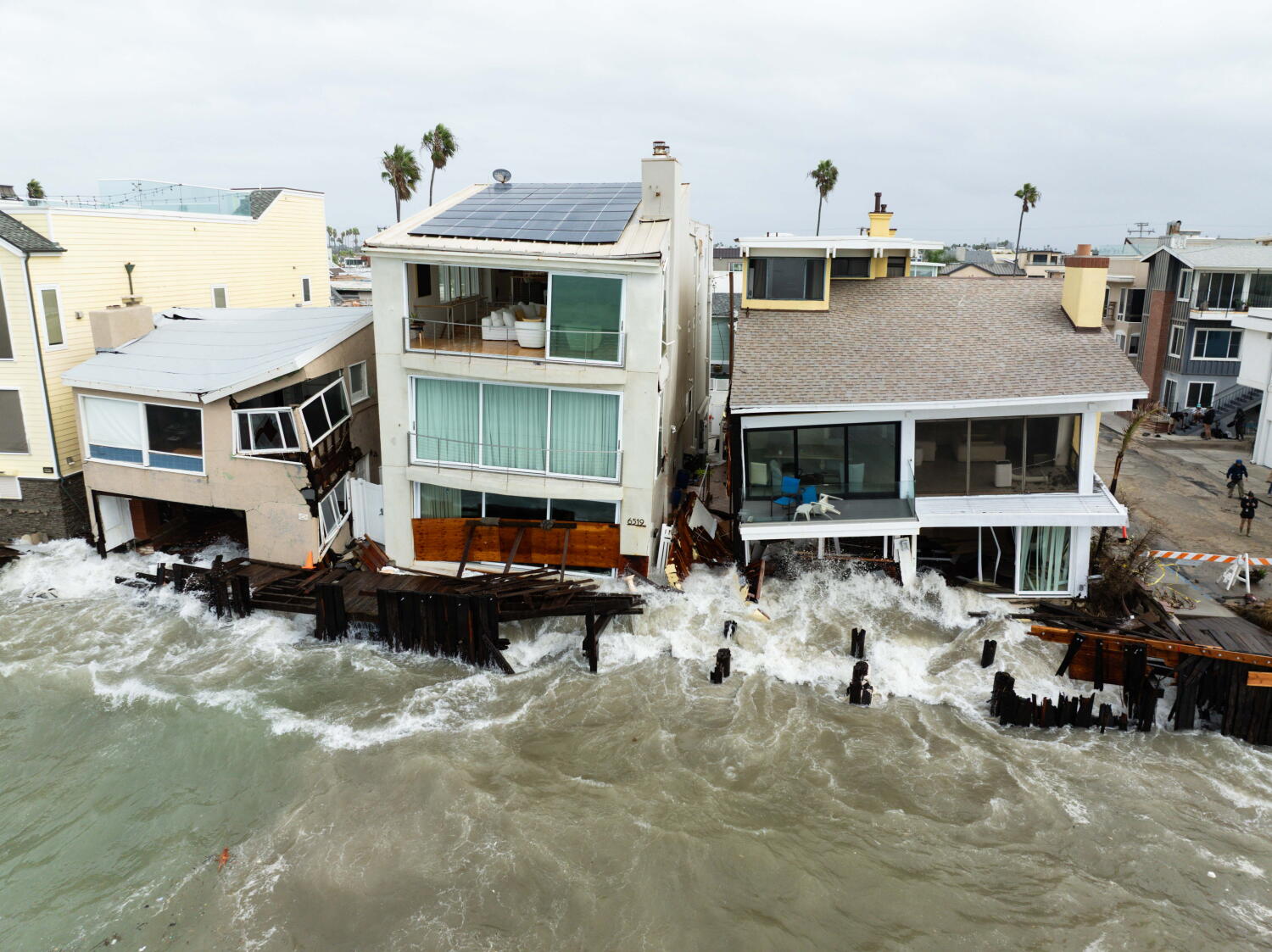
Most homebuyers run the second they see water on a living room floor. That reaction makes total sense until you look at how coastal real estate actually works in places like Long Beach.
A property that takes a hit from rough surf isn't automatically a money pit, and sometimes that exact event is the only thing that makes a prime lot financially accessible. Think about the viral story behind the Long Beach home nobody wanted until waves literally crashed into its living room. On paper, storm surge pouring through sliding glass doors looks like a nightmare scenario that guarantees condemnation. In reality, structural engineers, coastal architects, and seasoned investors view oceanfront damage completely differently than a typical residential buyer does.
When a property sits directly on the sand or perched along a low bulkhead, you aren't buying drywall and hardwood floors. You're buying dirt, elevation rights, and an irreplaceable view corridor.
Why Storm Damage Scares Off the Wrong Buyers
Retail buyers shop with their eyes and their anxieties. Walk them into a house where saltwater has warped the subfloor, stained the baseboards, and left a faint smell of kelp in the drywall, and they'll mentally add half a million dollars to the renovation budget before reaching the kitchen.
They aren't entirely wrong to be cautious. Saltwater is brutal on standard residential building materials. Unlike fresh water from a burst pipe, ocean water leaves behind corrosive minerals that eat through standard nails, ruin electrical wiring, and rot untreated framing much faster than people expect.
Yet there's a massive difference between cosmetic interior flooding and structural foundation failure. Most people can't tell them apart during a twenty-minute open house.
If waves crash through a ground-floor window during a king tide or an unusually violent winter swell, the damage looks catastrophic on camera. Glass shatters. Furniture floats. Sand piles up against the hallway stairs. A listing like that can sit on the market for months because traditional lenders get nervous and everyday buyers assume the house is sliding into the ocean.
What those buyers miss is simple. The house itself might only represent twenty or thirty percent of the property's total value.
The Land Value Equation in Long Beach
Whether you're looking at Long Beach, California—specifically areas like the Peninsula or Belmont Shore—or Long Beach, New York on the barrier island, oceanfront land operates under strict scarcity rules. Nobody is making more beachfront dirt.
Coastal commissions and municipal zoning boards heavily restrict new oceanfront footprints. If a house already exists on a beachfront parcel, that existing footprint carries enormous legal and financial weight. Tearing down a structure completely can sometimes trigger modern setback requirements that shrink the buildable area by thirty or forty percent.
Keeping an existing structure and renovating it—even down to the studs—often preserves grandfathered proximity to the high-tide line. That single legal distinction is why experienced developers actively hunt for the ugliest, most water-damaged house on the block.
What Actually Happens When Waves Hit a Living Room
Let's get specific about what saltwater intrusion does to a coastal house, because fear usually comes from not knowing what's behind the walls.
When surf breaches the first floor, three things need immediate attention.
- Electrical and mechanical systems. Any outlet, breaker box, HVAC unit, or water heater touched by ocean water is toast. Even if it still turns on the next day, salt corrosion will cause short circuits and fire hazards within months. You rip it all out.
- Insulation and drywall. Standard fiberglass insulation acts like a sponge for brine. Drywall wicks moisture upward like a paper towel, often two or three feet higher than the actual waterline. Everything gets cut out at least four feet above the high-water mark.
- Framing and fasteners. Fresh lumber can actually survive brief saltwater exposure surprisingly well if it's rinsed with fresh water, treated with antimicrobials, and dried out fast with commercial dehumidifiers. The real weak point is cheap metal. Standard steel joist hangers and framing nails rust rapidly, so contractors swap them for 316 marine-grade stainless steel.
Notice what isn't on that list for a well-built coastal home. The pilings.
Homes built properly near the surf zone sit on deep timber, steel, or concrete pilings driven far below the scour line—the depth to which sand washes away during a major storm. Waves can blow out every single window on the ground floor and sweep away the patio furniture while the actual skeleton of the house doesn't move a millimeter.
Breakaway Walls Are Designed to Fail
Here is something most non-coastal buyers have never heard of. Under FEMA guidelines and modern coastal building codes, the lowest level of a beachfront home is often supposed to cave in when a massive wave hits.
They're called breakaway walls.
Instead of anchoring ground-floor walls rigidly to the main structural pilings, engineers design them with weaker connections. If a wall of water slams into the lower level, those walls collapse cleanly without transferring deadly hydraulic pressure to the pilings holding up the second and third stories.
To a casual observer—or a viral video viewer—watching waves crash straight into a lower-level living area looks like total destruction. To a coastal engineer, it means the house just did its job.
The Hidden Math Behind Buying Damaged Coastal Property
So why would someone suddenly jump on a Long Beach property after wave damage made headlines? Because the price finally dropped enough to make the math work, or the publicity exposed an undervalued lot to buyers who actually understood the numbers.
Let's break down how a savvy buyer evaluates a wave-damaged home using an illustrative example based on typical coastal renovation economics.
Imagine an oceanfront home listed at $2.8 million that sits untouched because the ground floor looks like a shipwreck. Traditional buyers pass. The seller drops the price to $2.1 million just to move on from the headache and the insurance fight.
A buyer who knows coastal construction walks in with a structural engineer and a general contractor. They spend $1,500 on inspections before making an offer. Here is what they're calculating:
- Acquisition price: $2,100,000
- Gut and remediation of lower level: $60,000
- Marine-grade electrical, plumbing, and HVAC relocation: $85,000
- Impact-rated coastal glazing and flood vents: $95,000
- Interior rebuild with flood-resilient finishes: $160,000
- Total all-in cost: $2,500,000
Once the work is finished, that home sits right next to renovated neighbors selling for $3.2 million to $3.5 million. Even after holding costs and property taxes, the buyer just created roughly $700,000 in instant equity—and they got to customize the layout, windows, and finishes from scratch.
Try getting a $700,000 discount on a pristine, turnkey beachfront home. It doesn't happen.
How You Design a Living Room That Can Take a Punch
If you're going to own a house where the ocean occasionally knocks on the glass, you stop decorating it like a suburban colonial in Ohio.
Smart coastal renovations assume water will get in again someday. Instead of fighting nature with delicate materials, you build a ground floor that can be hosed out with a garden hose in an afternoon.
Ditch the wood floors completely. Even engineered hardwood will cup and delaminate if a rogue wave sneaks under the door threshold. Large-format porcelain tile laid over a waterproof uncoupling membrane looks sleek, handles sandy feet effortlessly, and shrugs off standing saltwater.
Switch to closed-cell spray foam. Unlike fiberglass batts, closed-cell polyurethane foam doesn't absorb water. It adds structural rigidity to the wall cavity and won't turn into a mold factory if the exterior siding takes a beating.
Elevate your outlets and mechanicals. Move electrical receptacles four feet off the floor instead of the standard twelve inches. Put your furnace, air handler, and tankless water heater in the attic or on an elevated exterior platform above the Base Flood Elevation.
Install real wet-floodproofing. Smart engineered flood vents allow water to flow freely in and out of lower enclosures, equalizing hydrostatic pressure so walls don't buckle. Pair those with impact-rated laminated glass—the kind engineered for Category 5 hurricanes—and standard winter swells won't even crack the panes.
The Insurance and Financing Trap Nobody Mentions
Before you start browsing distressed coastal listings, you need to understand the biggest hurdle. It isn't construction. It's paperwork.
Standard mortgage lenders hate visible water damage. If an appraiser walks into a Long Beach home and sees missing drywall, exposed studs, or salt-stained subfloors, conventional financing dies on the spot. Fannie Mae and Freddie Mac guidelines require properties to be safe, sound, and structurally secure at closing.
That eliminates ninety percent of your competition right there.
Buyers who win these deals usually bring cash to the closing table, use a bridge loan, or secure a specialized renovation mortgage like a Fannie Mae HomeStyle loan where the repair funds sit in escrow.
Insurance is the second trap. If a property has an active flood claim or recent ocean-water intrusion, securing a private homeowner's policy takes legwork. You'll likely need a combination of:
- A federal policy through the National Flood Insurance Program (NFIP), which caps residential building coverage at $250,000
- An excess flood policy through a surplus lines carrier to cover the remaining replacement value
- A separate windstorm or coastal difference-in-conditions policy depending on the state
Knowing how to layer those policies before you submit an offer keeps you from getting trapped in escrow when an underwriter panics over a photo of waves hitting the patio.
Real Risks You Shouldn't Ignore
I'm all for seeing opportunity where other buyers see a mess, honestly, but you can't be reckless near the ocean. Some coastal homes really are doomed.
Erosion is a completely different beast than storm surge. Storm surge is temporary water pushed ashore by wind and low pressure; once the storm passes, the ocean goes back where it belongs. Chronic beach erosion means the shoreline itself is migrating landward, eating away the sand buffer that protects the foundation.
If the beach in front of a property has vanished and waves are slapping against the foundation every single day at normal high tide, walk away. No amount of porcelain tile or stainless steel nails will save a house if the ocean claims the dirt underneath it.
You also need to check the 50% Rule enforced by FEMA and local municipalities. If the cost of repairing storm damage equals or exceeds fifty percent of the structure's market value (excluding the land), local building codes generally force you to bring the entire house up to current flood elevation standards. That can mean jacking the entire building ten feet into the air on new pilings—a six-figure complication that destroys a tight renovation budget.
How to Spot a Smart Coastal Bargain Yourself
If you want to find undervalued waterfront properties before bidding wars break out, stop looking at pretty listing photos and start looking like a coastal engineer.
- Check the Base Flood Elevation (BFE) maps. Pull up the FEMA Flood Map Service Center and check how the home's lowest habitable floor compares to the local BFE. Homes built even two feet above BFE enjoy dramatically lower flood insurance premiums and far less wave risk.
- Inspect the foundation, not the finishes. Ignore ugly cabinets, ruined carpets, and broken patio doors. Crawl underneath or inspect the perimeter for exposed rebar, spalling concrete, or severely eroded pilings.
- Verify the pre-damage appraisal value. Before bidding on a storm-hit home, get an independent assessment of the structure's depreciated value so you know exactly how much room you have before triggering FEMA's 50% renovation threshold.
- Talk to local coastal contractors first. General contractors from inland neighborhoods routinely underestimate salt-air corrosion and municipal coastal permits by forty percent or more. Hire someone who pulls permits along the shoreline every week.
Waves crashing into a living room make for dramatic headlines and terrified open-house visitors. Once you understand how coastal structures actually handle water—and how much of a beachfront home's price is locked into the dirt underneath it—that chaos stops looking like a disaster and starts looking like an opening.