When a prominent human rights organization steps forward to accuse a state of carrying out an engineered system of elimination, people listen. The Israeli rights group B’Tselem didn't mince words in its recent report focusing on the occupied West Bank. They pointed directly at what they describe as a deliberate state-backed project aimed at pushing Palestinians out, destroying communities, and erasing the possibility of any viable future.
If you've been following the region casually, headlines about settlement expansion and military raids might blur together. You might think of these events as isolated clashes or political friction. B’Tselem argues the exact opposite. They frame these actions not as chaotic byproducts of conflict, but as coherent steps in a calculated strategy.
Let's look at what's actually happening on the ground.
Understanding the Shift in the West Bank
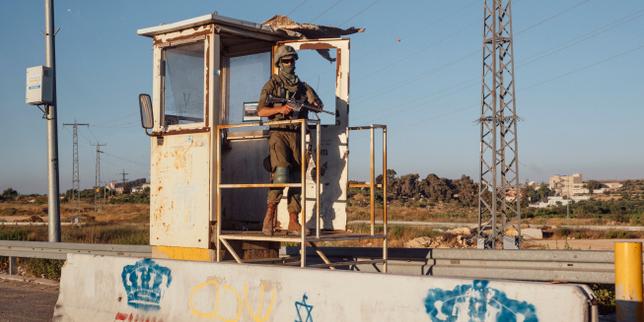
The dynamic in the West Bank has changed dramatically over recent years. It's not just about checkpoints and bureaucratic hurdles anymore. The pressure points have multiplied. settler violence has surged to record highs, often backed by military presence or quiet state approval. Entire herding communities have packed up and abandoned their ancestral lands because staying put became physically untenable.
When families wake up and find their water tanks smashed, olive groves burned, and access roads blocked by military gates, they face an impossible choice. Do they stay and risk everything, or do they leave?
B’Tselem's report digs deep into this mechanism of displacement. They call it a structural assault. The organization points to the rapid growth of unauthorized outposts that eventually receive retroactive government legalization. They highlight the freezing of Palestinian construction permits in Area C, which covers over sixty percent of the West Bank.
You build a home without a permit because you have no other choice. Then the state demolishes it. You try to graze your sheep, and armed settlers chase you off. This isn't random chaos. It's a squeeze play.
The Legal and Political Reality
To grasp the weight of these accusations, you have to look at how international law views the occupied territories. The Fourth Geneva Convention prohibits an occupying power from transferring parts of its own civilian population into the territory it occupies. It also forbids the forcible transfer of protected persons.
For decades, the official stance of successive Israeli governments has relied on legal gymnastics to bypass these definitions. They argue the territories aren't strictly "occupied" in the traditional legal sense because they lacked a recognized sovereign before 1967. International courts, the United Nations, and the vast majority of legal scholars reject this argument entirely.
B’Tselem's intervention pushes past the dry legal debates. They argue that the distinction between state policy and settler actions has completely dissolved. When state funding flows to outposts, when soldiers protect violent trespassers, and when military courts impose two entirely different systems of law—one for Israeli citizens, one for occupied Palestinians—the state's intent becomes clear.
How Daily Life Erodes
Living in the West Bank means navigating a grid of invisible walls.
Imagine waking up for a commute that should take twenty minutes, only to find the main road closed indefinitely because a new security barrier was erected overnight. Imagine your kids missing school because a checkpoint commander decided to shut down movement without warning.
This environment creates a profound sense of exhaustion. People get tired of fighting a system designed to wear them down. That's the core thesis of the B’Tselem warning. The "elimination" they talk about isn't always loud and explosive. Often, it's slow, quiet, and bureaucratic. It happens through land annexation, permit denials, and the steady erosion of economic survival.
Farmers can't reach their fields during harvest season. Olive trees, which represent both livelihood and cultural heritage for generations, get chainsawed overnight with zero accountability for the perpetrators. Small businesses wither under the weight of movement restrictions that strangle trade between towns like Ramallah, Nablus, and Hebron.
Looking at the Broader Regional Context
You can't separate what's happening in the West Bank from the broader geopolitical shockwaves rippling across the Middle East. While global attention remains fixated on Gaza, the situation in the West Bank has steadily deteriorated out of the primary media spotlight.
Rights monitors note that military raids in West Bank cities and refugee camps like Jenin and Tulkarm have taken on tactics previously reserved for full-scale warfare. Bulldozers tear up infrastructure, cutting off water and electricity lines. Thousands of workers who used to commute daily into Israel for employment have had their permits revoked, plunging families into sudden financial precarity.
This economic strangulation amplifies the pressure to leave. When you can't feed your family, the idea of relocating becomes less about choice and more about survival.
What Comes Next for Accountability
Accusations from domestic and international NGOs put immense pressure on diplomatic channels, but translating reports into concrete policy changes remains an uphill battle. Allies of Israel, particularly in Western capitals, face a growing dilemma. They issue statements condemning settlement expansion, yet practical consequences remain rare.
International bodies like the International Court of Justice have started issuing more assertive advisory opinions regarding the illegality of the occupation. Yet, enforcement mechanisms are weak.
If you want to understand where this is heading, watch the land registries and the outposts. The facts being established on the ground through concrete, asphalt, and barbed wire will outlast diplomatic communiqués. B’Tselem's warning serves as a stark reminder that what happens in the quiet hills of the West Bank carries profound consequences for the future of everyone living between the river and the sea.
Pay attention to the details. Look past the political rhetoric. The reality of displacement is written clearly in the daily struggles of the people whose homes and lands are slipping away.