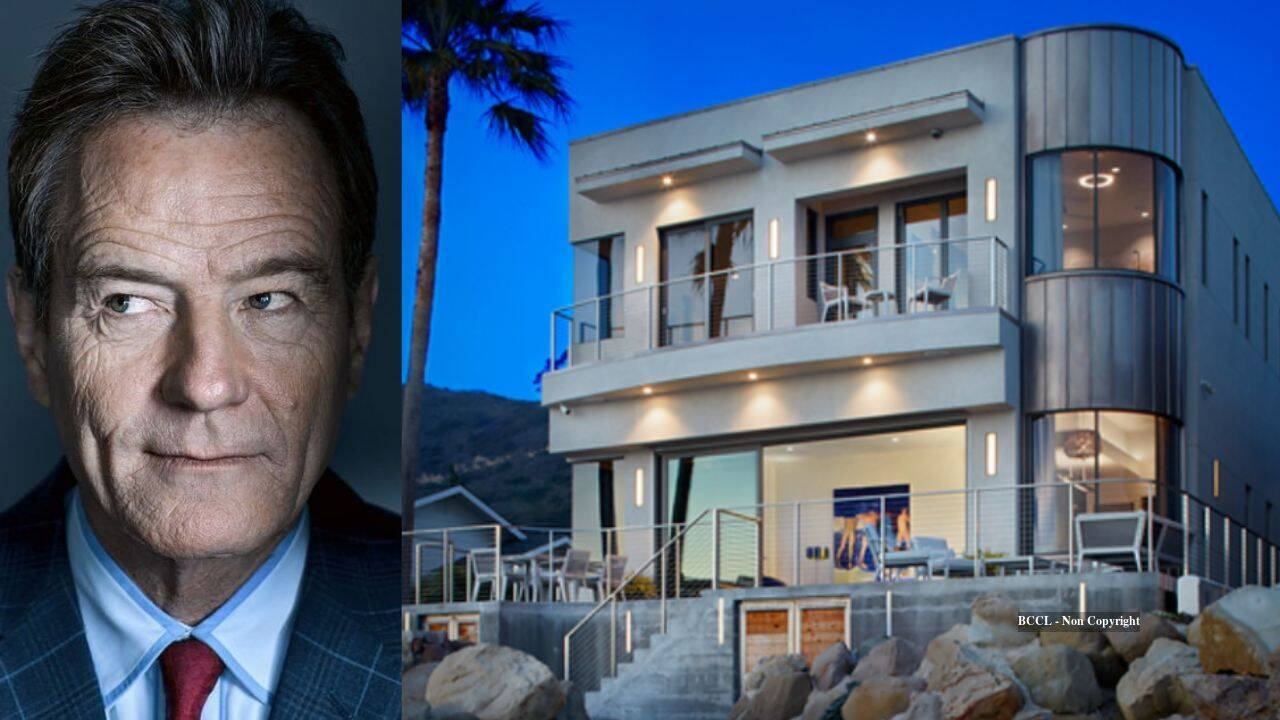
Celebrity real estate moves usually follow a predictable rhythm. A famous actor buys an outdated coastal property, brings in an army of interior designers to slap on white paint and quartz countertops, and flips the keys for a tidy profit two years later. Bryan Cranston’s venture into coastal Southern California real estate played by an entirely different rulebook.
When the Emmy-winning star acquired a modest, dated mid-century beach bungalow on a narrow slip of sand in Ventura County for $2.5 million, he did not just remodel the structure. He engaged in a grueling, four-year masterclass in high-performance architecture, transforming a deteriorating building into a certified net-zero energy home. Years later, that property commanded $5.45 million on the open market.
Real estate headlines treated the sale as a flashy celebrity transaction. Industry veterans viewed it as something far more significant: a proof-of-concept for luxury sustainability that exposes the deep structural inertia of traditional American housing.
The Economics of High Performance Building
Most luxury homeowners view sustainability as an aesthetic accessory. They install solar panels because the dark rectangles blend into a clay tile roof, or they choose bamboo flooring because it sounds environmentally progressive in a marketing brochure. Cranston and his architectural team, led by Marmol Radziner alongside energy consultants, approached the project from the building envelope inward.
A net-zero home generates as much renewable energy as it consumes over the course of a year. Achieving this balance on a coastal footprint requires an aggressive focus on thermal performance. Salt air, shifting winds, and marine layer humidity combine to punish traditional building materials. The structural overhaul demanded closed-cell spray foam insulation, triple-paned glass engineered to withstand oceanic wind loads without thermal bridging, and a tightly sealed envelope that eliminated drafts entirely.
The financial reality of this approach deters most commercial developers. Upfront costs for high-performance insulation, advanced HVAC heat pumps, and a commercial-grade photovoltaic array with battery storage add a heavy premium to construction budgets. In standard residential development, builders cut corners on the envelope because buyers cannot see behind the drywall. Cranston inverted that economic model. He proved that high-performance engineering creates long-term asset protection in environments where ordinary structures degrade rapidly.
Redefining Luxury on the Coast
Luxury has historically been defined by excess. Square footage, imported marble from quarries across the globe, and mechanical systems that brute-force indoor climates regardless of exterior weather conditions have long dominated high-end zip codes.
The Ventura beach house discarded that paradigm. Comfort came from passive solar orientation and continuous mechanical ventilation that filtered marine air before circulating it through the living spaces. Radiant floor heating, powered by high-efficiency electric systems rather than natural gas, kept the concrete and wood surfaces comfortable during chilly Pacific winters.
This shift reveals a growing disconnect in the luxury market. Wealthy buyers increasingly want to insulate themselves from utility volatility and climate disruption. A home that operates independently of municipal power grids during rolling blackouts offers a distinct form of security. The $5.45 million price tag was not merely a reflection of square footage and ocean views; it priced in the operational independence of the asset.
The Structural Hurdles of Sustainable Upgrades
Transforming an existing building footprint into a net-zero marvel is infinitely more difficult than building from scratch. Municipal zoning boards, coastal commission regulations, and historic preservation guidelines frequently clash with modern energy efficiency requirements.
Navigating the California Coastal Commission alone can derail residential projects for years. Securing permits for advanced solar integration, rainwater catchment systems, and alternative wastewater management on a beachfront parcel demands legal endurance and deep financial reserves. Most developers lack the patience or the capital to sustain years of regulatory friction for a single residential lot.
Cranston’s project succeeded because the capital backing allowed his team to absorb delays and pivot when engineering hurdles arose. For ordinary homeowners, retrofitting an older home to net-zero standards remains a logistical maze. Building codes often favor outdated construction methods, penalizing innovative insulation or graywater systems through rigid interpretations of setback and height rules.
The Market Signal
The successful exit at $5.45 million sends a clear signal to suburban and coastal developers alike. Sustainable architecture is shedding its reputation as a niche pursuit for idealistic hobbyists. When high-profile figures put their capital behind rigorous environmental engineering, the broader market takes notice.
Yet, the true test of this movement lies outside the gated communities of coastal California. Until building techniques pioneered in celebrity net-zero projects become standardized for middle-market housing, sustainable architecture will remain a luxury good rather than a societal fix. The technology exists. The economic models are proven. The remaining barrier is the institutional inertia of an industry built on short-term margins and outdated assumptions about how we should shelter ourselves.