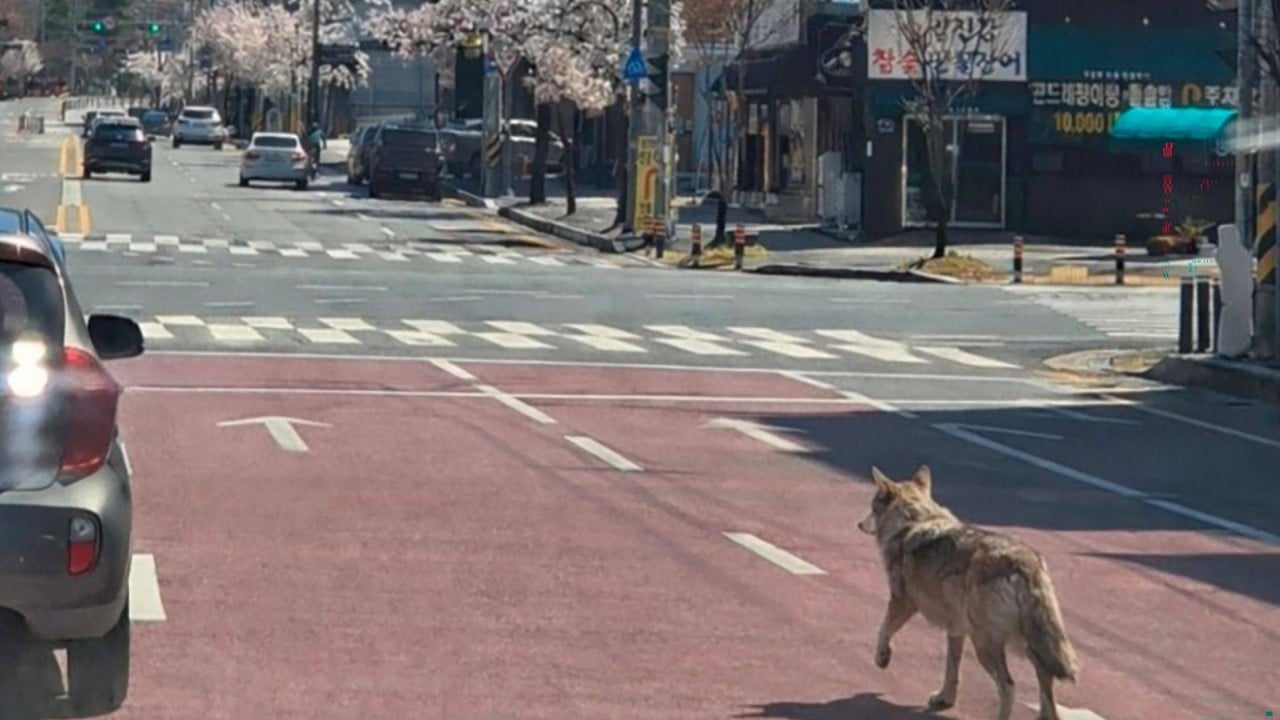
When an apex predator slips through a gap in a chain-link fence, the countdown to a state-sanctioned execution begins. In South Korea, the recent escape of a captive wolf sparked an immediate, high-stakes standoff between public safety officials and a growing movement of animal rights activists. The core issue is simple but grim: the South Korean government's default protocol for escaped "dangerous" wildlife is lethal force rather than sedation. This "shoot-to-kill" policy has turned a local containment issue into a national debate about the ethics of captivity and the rigid bureaucracy of the Ministry of Environment.
While officials argue that the density of the South Korean population makes any delay in neutralizing a predator a risk to human life, critics point to a lack of investment in non-lethal capture technology. The activists "howling with rage" aren't just upset about a single animal; they are challenging a systemic failure to provide humane alternatives in a country where exotic animal cafes and private zoos are under-regulated.
The Illusion of Safety in a High Density State
South Korea is one of the most densely populated nations on earth. When a wolf escapes—as seen in the recent case in the Gyeongsang province—the proximity of residential areas creates a state of instant panic. Local authorities view a 40-kilogram predator not as a biological entity to be recovered, but as a mobile liability.
The protocol is driven by a fear of litigation and public outcry if a civilian is harmed. Police and fire departments, often the first responders in these scenarios, are rarely equipped with high-grade tranquilizer rifles or the specialized training required to track and sedate an animal in thick brush. Instead, they carry service sidearms or call in local hunters. The result is a foregone conclusion. The animal is usually dead within hours of the first sighting.
This approach ignores the reality that captive-bred wolves are often terrified and disoriented, rather than predatory. They have spent their lives being fed by humans. Their first instinct is rarely to hunt people; it is to find a place to hide. By treating every escape as an active shooter situation, the government prioritizes optics over actual wildlife management.
The Private Zoo Loophole
Why was the wolf there in the first place? This is the question the government avoids answering. South Korea has struggled for years with the regulation of "zoo-cafes" and small-scale private menageries. These facilities often operate with minimal oversight, focusing on profit over enclosure integrity.
- Substandard Fencing: Many private facilities use residential-grade fencing rather than the reinforced, double-layered barriers required for large carnivores.
- Lack of Redundancy: Professional zoos use airlocks and secondary perimeters. Private collections often rely on a single gate.
- Poor Enrichment: Boredom leads to "stereotypical behaviors," including pacing and testing fence lines for weaknesses.
The wolf that escaped was a product of this lax system. Activists argue that the state is essentially killing an animal for the state's own failure to regulate the business that housed it. It is a cycle of negligence followed by a "cleanup" via bullet. If the Ministry of Environment held these facilities to international standards, the escapes wouldn't happen. Since they do not, the animal pays the ultimate price for a human business's overhead savings.
The Science of Sedation vs the Speed of Lead
Logistical excuses frequently dominate the official narrative. Authorities claim that tranquilizers take too long to work—sometimes up to 10 or 15 minutes—during which the animal could run into a road or attack a passerby. While $C_{17}H_{19}NO_{3}$ derivatives and other sedative cocktails do require a "down time," modern veterinary medicine has evolved.
The real hurdle is not pharmacology; it is the lack of a standing Wildlife Rapid Response Team. Currently, when an animal escapes, the response is fractured between local police, who want the threat gone, and regional environment offices, who lack the budget for 24-hour veterinary standby teams.
A wolf moving through a forest at dusk is a difficult target for a dart. It is an easy target for a shotgun. The choice to kill is a choice of convenience and cost-cutting. By refusing to fund specialized capture units, the government ensures that death is the only possible outcome for any creature that dares to find a hole in its cage.
Global Precedents and the South Korean Outlier
In parts of Europe and North America, a wolf escape triggers a massive mobilization of non-lethal assets. Drones with thermal imaging are used to track the animal without spooking it. Professional trackers push the animal toward "funnels" where sedation is viable.
In South Korea, the narrative is dictated by a "zero-risk" mandate. This mandate is culturally reinforced by a historical disconnect from large predators. Having hunted its own native wolf population to extinction decades ago, the Korean public—particularly the older generation—views the wolf through a lens of folklore and fear rather than ecology. The activists representing the younger, more urbanized demographic see a sentient being. The clash is as much about a generational shift in values as it is about animal rights.
The Cost of the Death Penalty for Animals
Every time a captive animal is shot, the public's trust in the Ministry of Environment erodes. The "howl of rage" from activists is a symptom of a broader frustration with a government that seems to value bureaucratic ease over the lives of the creatures it is tasked with protecting.
There is also a financial irony at play. The state spends thousands of dollars on the "hunt"—manpower, helicopters, and police resources—only to destroy a valuable and often endangered animal. That same money, if redirected into a centralized wildlife emergency fund, could outfit every province with the tools necessary to bring an animal back alive.
We are seeing the consequences of a policy that treats wildlife like a glitch in the system. The wolf didn't choose to be born in a cage in South Korea, and it didn't choose to be failed by the inspectors who signed off on its enclosure.
The next time an alarm sounds in a rural village, the rifles will be cleaned and loaded. Until the legal framework shifts from "public clearance" to "wildlife recovery," the mountains of South Korea will remain a graveyard for animals that were never supposed to be there in the first place. The solution isn't more hunters; it is a total overhaul of the private exhibition laws and a mandatory requirement for non-lethal response kits in every district.
Stop the hunt before the gate even opens.