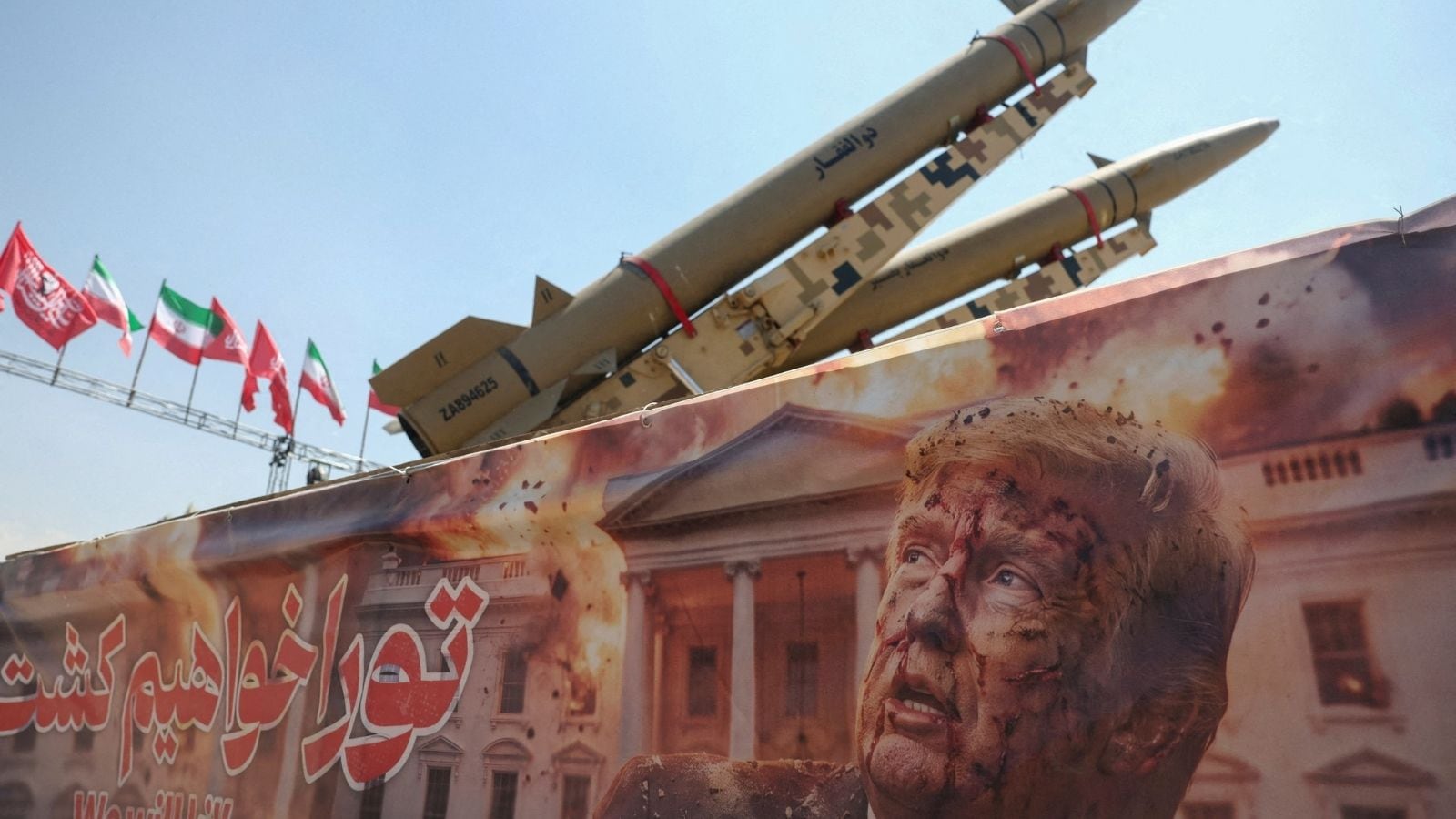
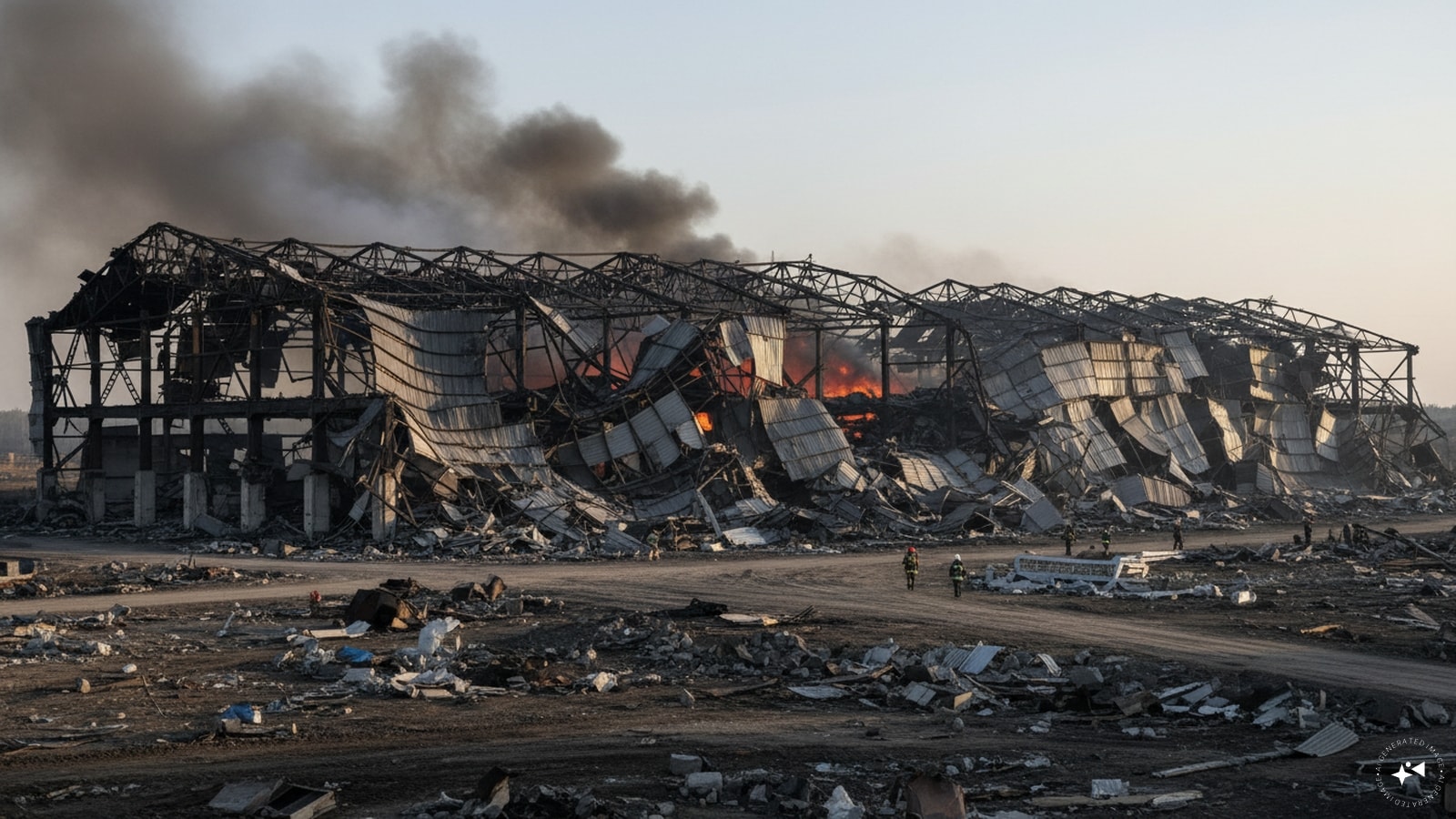
The headlines are designed to trigger a visceral reaction. When alerts flash across screens warning that Vladimir Putin has fired a nuclear-capable ballistic missile into a combat zone, the immediate public assumption is that World War III has begun. The reality is colder, far more calculated, and requires looking past the panic-inducing chyrons.
Firing a weapon designed to carry a nuclear warhead, but stripping it of that payload to deliver a conventional strike, is a masterclass in communicative violence. It is not an erratic lash-out from a desperate autocrat. It is a highly choreographed signal aimed directly at Washington, London, and Brussels. Understanding why this happens requires ignoring the hysteria and examining the cold mechanics of strategic deterrence, arms control, and the exhaustion of conventional military power.
The Weaponization of Ambiguity
The phrase "nuclear-capable" does extraordinary heavy lifting in modern media. It sounds apocalyptic. Yet, in the modern theater of war, almost every significant long-range delivery system is technically nuclear-capable. An F-16 fighter jet can carry a nuclear gravity bomb. A standard cruise missile can be fitted with a tactical warhead. Even legacy artillery systems were originally designed with the potential to fire localized nuclear shells.
What makes the launch of an intermediate-range ballistic missile (IRBM) or intercontinental ballistic missile (ICBM) different is the delivery method. Ballistic missiles exit the atmosphere, travel through space at hypersonic speeds, and re-enter to strike their targets with terrifying kinetic force.
When a launch is detected, early warning satellites instantly pick up the massive infrared bloom of the rocket engines. At that exact second, command centers in the United States and NATO do not know what is inside the nosecone. They only know the trajectory, the speed, and the estimated point of impact. This creates a terrifying window of ambiguity. For a few agonizing minutes, the computers tracking the warhead cannot definitively tell operators whether they are watching a conventional strike or the opening salvo of a nuclear exchange.
Russia knows this. They understand exactly what happens in the underground bunkers of their adversaries when a ballistic missile leaves the pad. Therefore, to prevent a retaliatory nuclear strike, these launches are heavily deconflicted. Back-channel communications buzz to life. Moscow quietly notifies Washington through established nuclear risk reduction centers that a launch is coming and that the payload is conventional.
They provide the warning to avoid ending the world, but they execute the launch to ensure the world remembers they have the power to end it.
The Mechanics of a Warning Shot
To view a ballistic missile strike solely as a military operation is to misread the chessboard entirely. These weapons are exceptionally expensive, highly complex, and relatively few in number. Using a multi-million-dollar strategic asset to destroy a single factory or military installation is incredibly inefficient from a purely tactical standpoint.
The target is never just the physical building reduced to rubble. The true target is the psychology of the adversary's political class.
When Russia fires an advanced ballistic system like the Oreshnik or Kinzhal into a target, it is demonstrating a capability that current air defense systems struggle to intercept. The message is blunt. Moscow is proving that it can bypass Patriot batteries and reach any coordinate it chooses. By using a delivery vehicle historically reserved for nuclear armageddon, the Kremlin forces Western policymakers to visualize exactly what would happen if that same missile carried a different payload.
It is deterrence by demonstration. Russia is relying on the Western media to amplify the fear, turning a localized military strike into a global psychological event.
The Exhaustion of Conventional Power
Why lean so heavily on nuclear posturing? The math is unforgiving. A nation only rattles its nuclear saber constantly when its conventional sword is chipped, dulled, and failing to achieve its objectives.
Before recent conflicts exposed the systemic rot within its armed forces, Russia projected the image of a peer military superpower. That illusion has been shattered by years of grueling, attritional warfare. Elite tank guards have been decimated. The Black Sea fleet has been forced into hiding by a nation without a functional navy. The aerospace forces have proven incapable of establishing total air supremacy just across their own borders.
When conventional deterrence collapses, a state must fall back on its ultimate guarantor of sovereignty. For Russia, that is the nuclear arsenal.
By constantly reminding the world of its strategic rocket forces, Moscow attempts to compensate for its conventional battlefield failures. They are attempting to draw an artificial red line, warning NATO that while they may be struggling in trench warfare, they still possess the undisputed capability to vaporize European capitals. It is a strategy born of fundamental weakness, which ironically makes it highly dangerous. A desperate player with a massive arsenal is far less predictable than a confident one.
The Silent Collapse of Global Treaties
To understand the current crisis, you have to look at the treaties that no longer exist.
For decades, the Intermediate-Range Nuclear Forces (INF) Treaty kept the most destabilizing weapons out of Europe. Signed in 1987, it banned ground-launched ballistic and cruise missiles with ranges between 500 and 5,500 kilometers. These were the weapons most likely to start an accidental war because their short flight times gave leaders only minutes to decide whether to retaliate.
Both the United States and Russia walked away from the INF Treaty, accusing each other of violations. The suspension of the New START treaty further stripped away the verification mechanisms that allowed each side to inspect the other's arsenals.
We are now living in the exact environment those treaties were designed to prevent. Unrestrained by legal frameworks, Russia has rapidly developed and deployed the very weapons the INF banned. When they fire these missiles in combat, they are field-testing systems that were illegal just a few years ago. They are gathering live telemetry data. They are mapping the response times of Western early warning radar.
The guardrails are completely gone. The architecture of global arms control has been dismantled, leaving only raw, unchecked military capability in its place.
Rewriting the Red Lines
Simultaneous with these ballistic launches, Moscow has actively revised its official nuclear doctrine.
Historically, Soviet and Russian doctrine maintained relatively strict conditions for nuclear use, generally limited to a retaliatory strike or a situation where the very existence of the state was threatened by conventional attack. The newly revised doctrine aggressively lowers that threshold.
The updated framework explicitly states that aggression against Russia by any non-nuclear state, if supported or participated in by a nuclear state, will be considered a joint attack. Furthermore, it outlines that a massive launch of conventional aerospace weapons crossing the Russian border could trigger a nuclear response.
This is a legalistic net designed to capture Western military aid to Ukraine. By rewriting the doctrine, Putin is attempting to codify his red lines, making the threat of escalation seem mandatory rather than optional.
Does this mean a nuclear strike is imminent if a Western missile hits Russian soil? No. Doctrines are pieces of paper; they do not launch missiles. Leaders do. But by publicly lowering the threshold, Moscow increases the risk of miscalculation. They are forcing the West to constantly guess where the actual tripwire lies.
Where Washington and Brussels Miscalculate
The Western response to this nuclear coercion has been characterized by deep internal division.
On one side are the incrementalists. These policymakers believe that Putin's threats must be taken at face value. They advocate for a slow, measured drip of military aid, constantly self-deterring out of fear that giving a specific weapon system will cross an invisible line and trigger a ballistic response. This approach inadvertently rewards the Kremlin's nuclear blackmail. If threatening to launch a ballistic missile successfully delays the delivery of fighter jets or long-range artillery by six months, the threat has achieved its tactical purpose.
On the other side are the hawks, who argue that Putin is entirely bluffing. They point to the dozens of red lines that have already been crossed—from the provision of HIMARS to the invasion of Russian territory in Kursk—without triggering a nuclear response. They push for maximum pressure, dismissing the ballistic missile launches as empty theater.
Both camps fundamentally misunderstand the adversary.
Putin is not a madman eager to end the world, nor is he a paper tiger incapable of pulling the trigger. He is a rational actor operating under a vastly different risk calculus than Western democracies. He uses nuclear coercion not as a prelude to armageddon, but as a dial to control the tempo of the conflict.
When the West completely ignores the threats, Moscow dials up the pressure by firing a ballistic missile to prove they are serious. When the West panics and stalls, Moscow dials it back and consolidates its gains. The Kremlin is managing the escalation ladder with ruthless efficiency.
The Beijing Factor
There is an unseen hand constantly resting on Moscow's shoulder, and it belongs to Xi Jinping.
Russia's entire economic survival currently depends on the massive export of discounted hydrocarbons to China and India. Both nations, particularly China, have a vested interest in global stability to maintain their export-driven economies.
Beijing has been uncharacteristically public in its opposition to nuclear use. While China is perfectly happy to watch Russia bleed Western resources and distract Washington, they have firmly drawn the line at the deployment of nuclear weapons. If Moscow were to cross that threshold, the economic lifeline from Asia would sever overnight.
This is the ultimate check on Putin's power. He can fire conventional ballistic missiles all he wants. He can rewrite his doctrine to sound as aggressive as possible. But he cannot authorize a nuclear strike without immediately collapsing his own war economy. The threat is for the West; the restraint is for the East.
The Erosion of the Ultimate Taboo
The immediate danger is not a sudden, civilization-ending exchange of nuclear fire. The danger is much slower, much quieter, and infinitely more insidious.
By utilizing nuclear-capable ballistic missiles for conventional strikes and political messaging, Russia is actively degrading the nuclear taboo. Since 1945, there has been an unspoken global consensus that these delivery systems and the apocalyptic power they represent sit entirely outside the realm of normal warfare. They were reserved strictly for the survival of the state.
That firewall is now collapsing. We are entering an era where firing an intermediate-range ballistic missile into a European city is treated as a severe, yet standard, diplomatic protest. The shock value diminishes with every launch.
When the abnormal becomes routine, the threshold for actual catastrophe quietly drops. A generation of military planners is currently learning that you can blur the line between conventional and nuclear warfare without suffering immediate consequences. This normalizes a level of brinkmanship that relies entirely on no one making a mistake, no radar system experiencing a glitch, and no leader misinterpreting a warning signal.
The question is no longer what weapon Moscow will fire next. The question is how much of this new reality the West is willing to absorb before the deterrence equation breaks entirely.